Does 7-Eleven In Japan Do Luggage Delivery?
Yes, as a Yamato TA-Q-BIN drop-off counter. Here is how sending a suitcase from a Tokyo 7-Eleven works, what it costs, the size limits, and when storage or a locker beats forwarding.
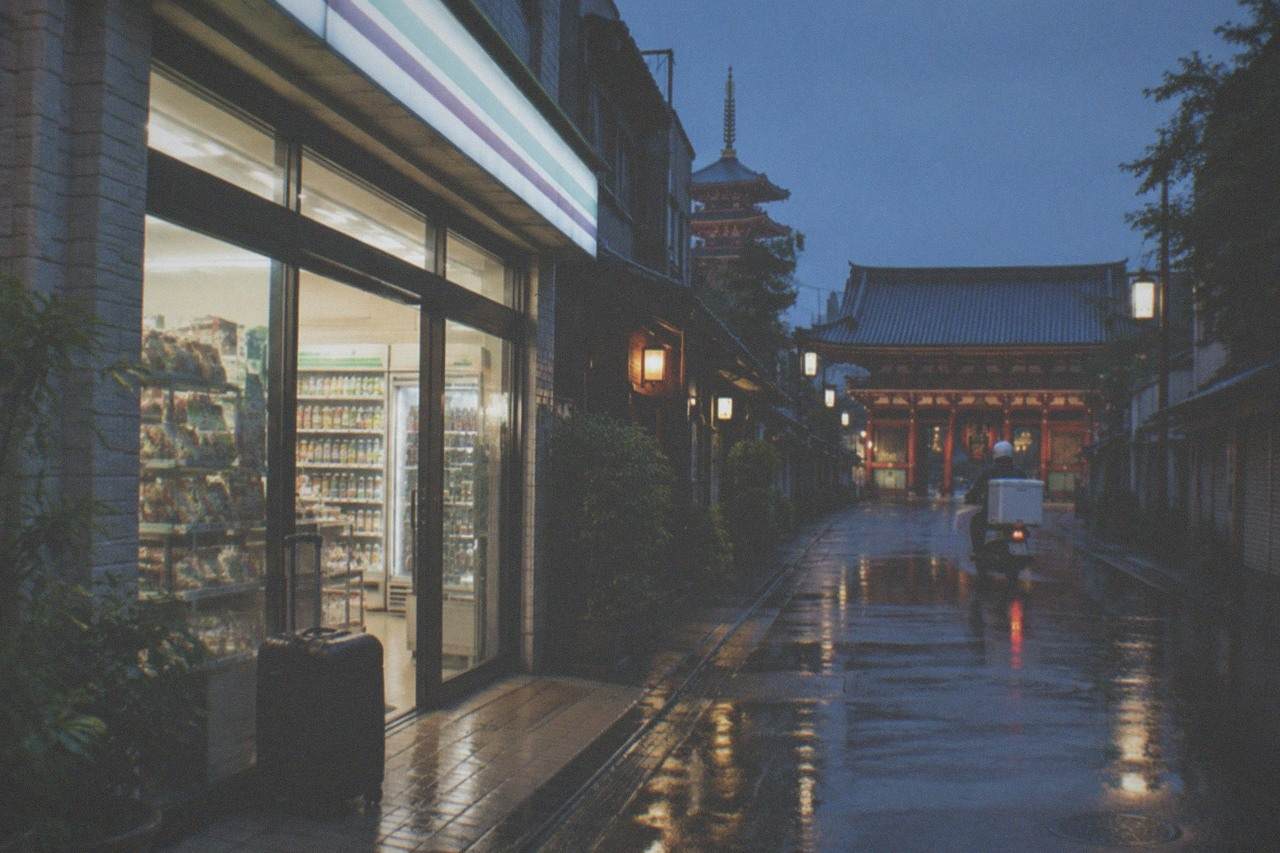
Does 7-Eleven In Japan Do Luggage Delivery?
Yes, but as a drop-off counter for Yamato Transport's TA-Q-BIN parcel service, not as a storage service and not with its own delivery product. The clerk accepts a suitcase, Yamato measures and prices it, and the parcel travels to an address such as a hotel or an airport. Seven-Eleven takes Yamato parcels; Lawson does not, because Lawson is a Japan Post counter.
That single distinction trips up a lot of travellers. The green and orange signage of a Japanese convenience store, konbini, suggests every chain does everything, and mostly they do: bill payment, concert tickets, ATMs, printing, hot food. Luggage delivery is different, because it is not the store's service at all. The store is a counter for a carrier, and which carrier depends on the chain. Seven-Eleven and FamilyMart accept Yamato TA-Q-BIN parcels. Lawson works with Japan Post's Yu-Pack instead, and Yu-Pack has its own size and weight ceilings, 170 cm and 25 kg, that a large suitcase can exceed.
The service you are actually buying is takuhaibin, Japan's domestic luggage forwarding network, and Yamato's TA-Q-BIN is the version most visitors meet. A suitcase handed over at a 7-Eleven counter is treated as a parcel: it is measured on three sides, weighed, assigned a size band, and priced from Yamato's published fare table. There is no special tourist tariff and no special suitcase tariff. A suitcase is charged at its measured size, within a hard ceiling of 200 cm on the three-side total and 30 kg in weight, exactly as Yamato's own size page states.
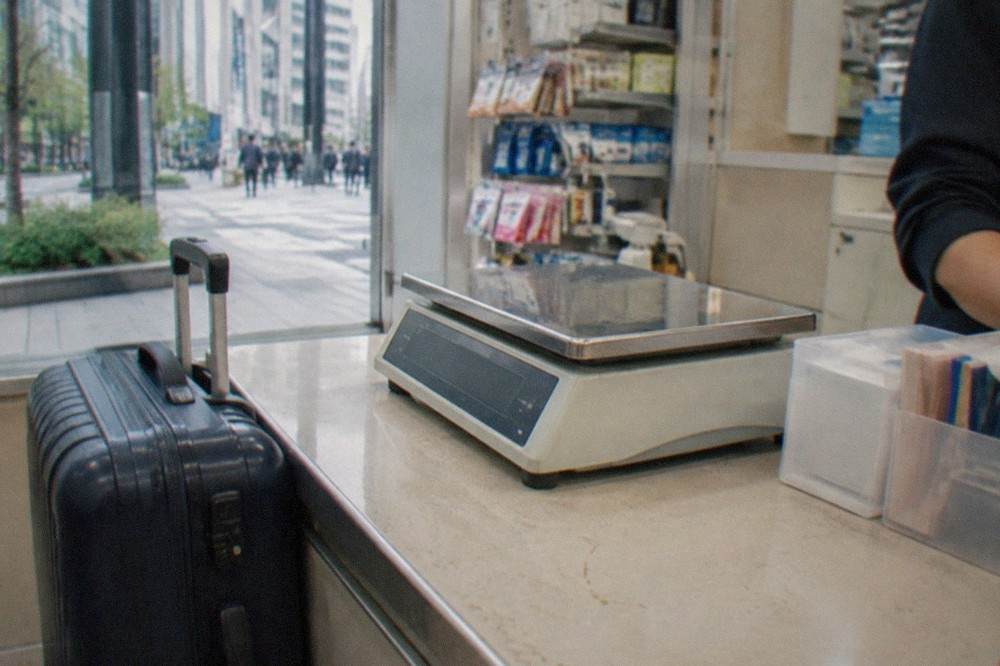
What you cannot do at a 7-Eleven is leave a bag and come back for it. No Japanese convenience chain holds luggage for later pickup, not for an hour and not for a day. The question of dropping a bag for a few hours is a different one, covered in full elsewhere on this site, including a dedicated look at 7-Eleven luggage storage in Japan. Delivery out and storage in place are separate products with separate providers, and mixing them up is the most common mistake on this topic.
How Sending A Suitcase From A 7-Eleven Actually Works
Walk in with the bag, tell the clerk you want to send a TA-Q-BIN parcel, and fill in a waybill with the destination address and your name and phone number. The clerk weighs and measures the suitcase, prints the label, takes the payment, and hands back a receipt copy. From that moment the parcel is in Yamato's network and its tracking number follows it to the door.
The practical part is the address. A hotel front desk in Japan receives forwarded luggage as a matter of course, and the parcel will be held there until check-in. Sending to a private apartment, an Airbnb or any unstaffed lodging is where the rules tighten: Yamato's own conditions require that somebody is certainly present to receive the parcel, and convenience stores are not a delivery destination for this product. JAL's parallel hotel-delivery services, for comparison, are hotels only. If nobody can sign at the far end, the practical destination is an airport counter or a staffed hotel.
Payment and paperwork are simpler than most first-timers expect. There is no need to book anything in advance; the counter is walk-up. You can bring a pre-printed address in Japanese, which speeds things up enormously, or write the Latin-alphabet version and let the clerk convert it. A digital waybill prepared in Yamato's app saves 60 yen against the paper version, and carrying the parcel to the counter yourself rather than having it collected saves 100 yen. Two or more parcels to a single address each get 100 yen off. These are small sums, but they stack, and they come straight from Yamato's own discount table.
One part of the process is worth flagging before it happens rather than after. The store can decline. Yamato's published caveat is that some convenience stores cannot accept parcels at the 180 size band or above, because the larger boxes do not fit the store's back-room handling setup. A full-size checked suitcase often lands in exactly that band, which means the store three minutes from the hotel may take the parcel and the one nearer the station may not. The rule of thumb: ask before you count on it, and have the nearest FamilyMart as a fallback, since it runs the same Yamato counter.
What It Costs To Send A Suitcase From A Tokyo 7-Eleven
The fare is set by the size band, which is the greater of the three-side total in centimetres or the weight in kilograms. From Tokyo to another address in Tokyo, a 140-band suitcase costs 2,090 yen; from Tokyo to Kyoto or Osaka, the same band costs 2,780 yen. Kyoto and Osaka share one tariff zone, so the famous question of which city is dearer has one answer: neither.
These are Yamato's own published cash fares, tax included, for a Kanto origin, and they are worth reading as a table because the bands jump in steps rather than smoothly. A 120-band case and a 140-band case are different money on the same trip, and the border between the two bands is only twenty centimetres of three-side total.
| Yamato size band | Tokyo to Tokyo (yen) | Tokyo to Kyoto or Osaka (yen) |
|---|---|---|
| 120 (≤120 cm or ≤15 kg) | 1,730 | 2,170 |
| 140 (≤140 cm or ≤20 kg) | 2,090 | 2,780 |
| 160 (≤160 cm or ≤25 kg) | 2,410 | 3,160 |
| 180 (≤180 cm or ≤30 kg) | 3,030 | 4,480 |
| 200 (≤200 cm, max) | 3,690 | 5,410 |
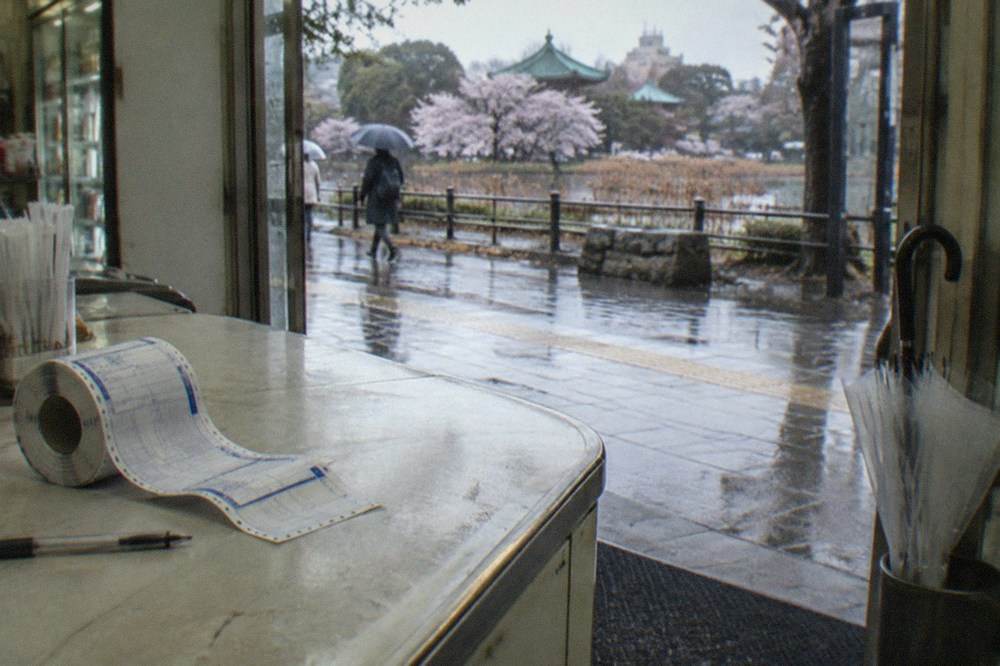
Two surcharges and discounts sit around that table. Sending a parcel to an airport adds 660 yen on top of the band fare, tax included, which matters for the fly-out scenario below. The discounts already named, 100 yen for self-drop-off, 60 yen for a digital waybill, 100 yen per parcel for two or more to one address, come off the other side. The fare the counter quotes already includes consumption tax; there is no separate checkout fee of the kind storage bookings carry.
Against storage, the arithmetic is straightforward. A 140-band suitcase forwarded from Tokyo to Kyoto costs 2,780 yen once. The same bag parked for two days at a Radical Storage point costs 850 yen per bag per day, plus a 355 yen per-bag fee charged once at checkout, which is 1,205 yen for the first day and 850 yen for the second, on Radical Storage's own published figures. Forwarding costs more but the bag travels a few hundred kilometres. Storage costs less but the bag stays where you left it. The 7-Eleven question is really a question about which of those two things you need, and the fuller comparison, including the trade-offs of each, is laid out in the guide to luggage forwarding versus storage in Tokyo.
Sizes, Weight And What A 7-Eleven Counter Will Refuse
Yamato's ceiling is 200 cm on the three sides combined, 30 kg in weight, and no single side over 170 cm, and a suitcase is charged at its measured size rather than at any assumed size. Above that, TA-Q-BIN cannot take the parcel at all. Below it, the store can still refuse, because some convenience stores decline parcels from the 180 band upward, and agency counters stop at the 200 band and 30 kg.
The size band is the number that decides the fare, and it is not obvious from the outside of a suitcase. A typical 26-inch spinner clears 140 cm on three sides once the wheels are counted, so it lands in the 160 band, not the 140 band its owner usually expects. A 29-inch case can push past 170 cm on three sides into the 180 band, and a genuinely oversized case, a ski bag, a golf bag or a bike box, runs into the 200 cm wall. The practical advice: measure the case at home, all three sides including handles and wheels, and know the band before the clerk does.
Where the case exceeds what Yamato will carry, the alternative carrier matters. Sagawa Express's large-size service accepts up to 260 cm and 50 kg, which makes it the only one of the three national carriers that will take a genuinely heavy or oversized case, at published fares of 2,570 yen for a 160 band 30 kg parcel to Kansai and 4,480 yen for a 200 band one. Japan Post's Yu-Pack caps out lower, at 170 cm and 25 kg. Neither Sagawa nor Japan Post counters sit in a 7-Eleven, so an oversized parcel means a trip to a proper counter or a pickup booking.
Three exclusions also bear on luggage specifically. Refrigerated parcels, Yamato's Cool TA-Q-BIN, and its express Time Service cannot be handed in at any convenience store, though neither applies to a suitcase. And the returning parcel, the one sent back the way it came, is likewise barred from the konbini counter, so the return leg of a round trip has to start somewhere else.
What is covered if a parcel goes missing is a real question with a real answer. Yamato's liability is 300,000 yen, tax included, per parcel, but the mechanism is narrower than the headline: the payment is the parcel's value within a declared-value field on the waybill, 300,000 yen is simply the ceiling of that field, and Yamato's terms refuse any single package worth more than that. Nobody should forward a laptop and camera body through any counter while believing the headline figure covers them. Declare honestly, keep the receipt copy, and track the parcel with the number on it.
When To Forward From A 7-Eleven, And When To Store The Bag Instead
Forward from a 7-Eleven when the bag travels one way without you: to the next city's hotel, or to the airport for a flight home. Store it instead when you need it back the same day, on a loop trip, or when nobody can receive a parcel at the far end. Airport cut-off times decide the fly-out case: Yamato takes Narita-bound parcels only until 10:30 at Terminal 1 and 09:50 at Terminal 3.
The airport numbers deserve their own reading. Yamato's same-day service from Narita delivers between 18:00 and 21:00 to addresses in eight prefectures, and from Haneda it delivers from 18:00 to the 23 wards and beyond, with parcels needing to be handed in by 11:00. Fares from Haneda to a 23-ward hotel run from 2,450 to 7,550 yen by size. But Yamato will not run a same-day delivery from the city to Narita, its own notice says so plainly, while Sagawa will, with an 11:00 cut-off at its seven Tokyo city counters. Flying home from Narita with a morning to fill and a bag to kill is therefore a Sagawa or a storage problem, not a 7-Eleven one. The full airport-to-city picture is in the guide on Narita to Tokyo with luggage.
The loop-trip case is the one travellers get wrong most often. Send the suitcase ahead to Kyoto and the day bag you kept becomes the only luggage you have in Tokyo, but the suitcase now needs a second forwarding leg, a return parcel, which cannot start at a convenience store and costs the same fare again. Two one-way forwards at 2,780 yen each cost more than five days of bag storage, and the bag spends the whole trip out of reach. The Kyoto lane in detail, including what the size bands do to the fare there, is covered in the guide to sending luggage from Tokyo to Kyoto.
For the hours-in-the-middle case, storage wins on its own terms. Radical Storage's Tokyo network, which this site's directories cover area by area, prices a regular bag at 850 yen per day plus the 355 yen per-bag checkout fee, so 1,205 yen for one bag for one day, arithmetic on Radical Storage's own published figures. Its advertised 490 yen per day is a small-bag rate found at 11 of its 249 Tokyo points, not what a suitcase costs. Its guarantee is not insurance, its own terms say so, and payouts are capped at EUR 3,000 per claim. The honest trade against a forwarded parcel is simple: a Radical Storage point hands the bag straight back to you, on the spot, while a Yamato parcel takes a transit time this site will not state, because the carrier publishes none for personal customers, and no honest writer should invent one.
The nearest storage to a departure, for most visitors, is a station cluster. Around Tokyo Station, three Radical Storage points sit within about 558 m of the concourse, rated 4.89 across 213 reviews, and the station itself adds seven attended baggage rooms with published tiered prices and a 30-day maximum stay, one of the longest in the city. The station area is the natural last stop before a Narita or Haneda train with hands free.
Ueno makes a strong second anchor for a east-side loop: eight points there, rated 4.87 across 285 reviews, the closest about 171 m from the gates, and the JR East baggage room on the third-floor concourse inside the Park Gate holds bags for up to 30 days at 500 to 2,000 yen by size. For a traveller doing Asakusa and the museums before an evening flight, the Tokyo Station storage options and the Ueno cluster together cover the whole morning without a parcel in sight, and the comparison of areas is on Luggage Storage in Tokyo rather than scattered across a dozen booking pages.
A coin locker is the third leg of the decision and the cheapest for a single day. Tokyo Metro lockers run one price ladder network-wide, 300 to 1,000 yen by tier, with only the mix of door sizes varying by station; JR East lockers cost more and vary by station, 700 to 1,100 yen for a large door at Tokyo Station itself. The catch is capacity and duration: the deepest common door is about 34 cm, only the LW tier at 86 by 56 by 65 cm swallows a wide case flat, and Metro lockers max out at four days including the start day while JR East's Multi Ecube units stop at three, with no extension by paying more. A locker cannot forward anything anywhere, and a 7-Eleven counter cannot hold anything for an afternoon. Between them sits the whole rest of this decision, and the longer version is in the guide on how long you can leave luggage in Tokyo.
Common Questions About 7-Eleven Luggage Delivery
Does 7-Eleven in Japan do luggage delivery?
Yes, as a Yamato TA-Q-BIN drop-off counter. The store itself runs no delivery service; it accepts a parcel, takes payment, and Yamato's network carries the suitcase to the address on the waybill, within a 200 cm and 30 kg ceiling. Seven-Eleven and FamilyMart take Yamato parcels, while Lawson takes Japan Post ones.
Can I send a suitcase from a 7-Eleven to the airport?
Yes. The parcel is a TA-Q-BIN shipment to an address, with a 660 yen airport surcharge added to the band fare. Same-day delivery into Narita does not exist from the city on Yamato, only from the airport outward, so an outbound flight day usually means Sagawa's 11:00 city-counter cut-off or storage near the departure station instead.
How much does it cost to send luggage from a 7-Eleven in Japan?
The fare follows Yamato's size band, the greater of the three-side total in centimetres or the weight in kilograms. Tokyo to Kyoto or Osaka costs 2,170 yen at the 120 band rising to 5,410 yen at the 200 band; within Tokyo the same bands run 1,730 to 3,690 yen. A typical 26-inch spinner lands in the 160 band.
What size luggage can 7-Eleven send?
Whatever Yamato accepts: up to 200 cm on the three sides combined, up to 30 kg, and no single side over 170 cm. Some stores decline parcels from the 180 band upward, so a large case can be refused at one counter and accepted at another. Genuinely oversized or heavy items need Sagawa, which goes to 260 cm and 50 kg, at a proper counter.
Can I leave my bag at a 7-Eleven and pick it up later?
No. No convenience chain in Japan holds luggage for later pickup, not for an hour and not for a day. Short-term parking of a bag is a storage product, and the alternatives that actually hold bags are coin lockers, station baggage rooms, airport counters and Radical Storage points, each covered in detail elsewhere on this site.
What happens if a parcel sent from a 7-Eleven is lost?
Yamato's liability is capped at 300,000 yen, tax included, per parcel, and the mechanism is a declared-value field on the waybill rather than an open promise, with the carrier refusing single packages worth more than that figure. Keep the receipt copy and the tracking number. High-value items such as laptops should travel with you rather than through any counter.