Where To Leave Large Luggage In Japan?
Large suitcases defeat most Tokyo coin lockers. This guide covers the staffed baggage rooms, airport counters, forwarding services and Radical Storage points that take a big checked case.
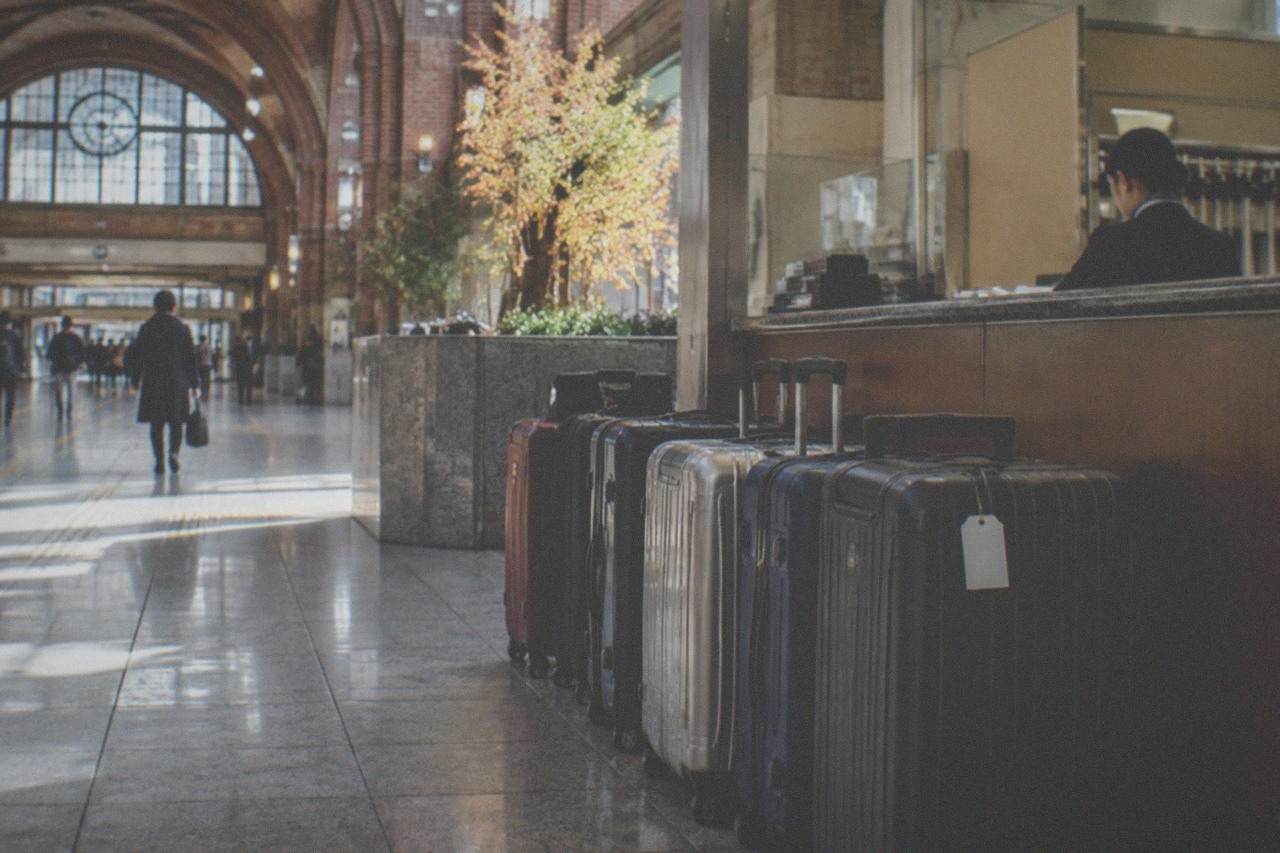
Where To Leave Large Luggage In Japan?
For a suitcase too large for a coin locker, Japan's staffed options are station baggage rooms, airport attended counters, luggage forwarding by takuhaibin, and staffed storage points in the Radical Storage network. Tokyo Station and Ueno both hold staffed baggage rooms charging 500 to 2,000 yen per bag per day for up to 30 days. A large case has real choices beyond the locker wall.
The question usually arrives at a specific moment. A traveller has landed with a 29-inch spinner, or is between hotels, or has checked out and faces a full day before a night flight. The locker banks near the ticket gates look promising, then the bag goes in at an angle and the door will not close. That failure is not bad luck, it is geometry: most locker tiers in Tokyo are built around a depth of roughly 34 cm, and a hard-shell checked suitcase is typically deeper and far taller than the standard tiers allow.
The good news is that Tokyo Station has seven attended baggage rooms; many other giant stations in the city have none. Tokyo Station alone holds seven attended baggage rooms. Both major airports run attended counters with published daily tariffs. Yamato's takuhaibin forwarding network will carry a case across the country for the price of a locker and a half, and Sagawa's large-size service accepts bags the other carriers refuse. The difficulty is knowing which option fits which situation, because the rules are set operator by operator and the differences genuinely matter.
This page walks through each option in the order a large-bag traveller usually needs them: the staffed station rooms, the airports, forwarding as the alternative to storing at all, the Shinkansen rule that decides whether the bag travels with you, and the staffed Radical Storage points that cover the districts where stations offer nothing.
Why Large Suitcases Defeat Most Coin Lockers
Most coin lockers are built for overnight bags, not checked suitcases. The largest common JR East tier, L, measures 86 x 34 x 65 cm, and the deeper LW tier, 86 x 56 x 65 cm, is the only common tier that swallows a wide checked case lying flat. Depth near 34 cm is the binding limit. A 26-inch spinner fits the depth and then fails the height on the standard tiers.
The numbers come from the operators' own dimension tables, and they deserve a look before anything else, because they decide the whole day. JR East's Multi Ecube lockers publish five tiers, SS through LW. The L tier at 86 x 34 x 65 cm takes a slim suitcase or a duffel. The LW tier, at 86 x 56 x 65 cm, is the quiet star of the lineup: 22 cm deeper than every other tier, it is the only common locker in Tokyo that fits a wide checked suitcase lying flat, and English-language coverage of Tokyo lockers almost never mentions it. Toei Subway's large lockers in Asakusa publish internal dimensions of 85.6 x 34.2 x 66.3 cm, a similar silhouette.
| Operator and tier | Internal size | Published price |
|---|---|---|
| JR East Multi Ecube, L | 86 x 34 x 65 cm | 700 to 1,100 yen per day |
| JR East Multi Ecube, LW | 86 x 56 x 65 cm | 800 to 1,000 yen per day |
| JR East, reserving a unit in advance | any tier | plus 500 yen per box |
| Tokyo Metro, top price tier | size not published | 1,000 yen per day |
| Toei Subway, large | 85.6 x 34.2 x 66.3 cm | price not published |
Two catches come with those rows. Tokyo Metro publishes one price ladder, 300 to 1,000 yen, at every one of its stations, but never states which size each price buys, so there is no way to know from the price alone whether the 1,000-yen doors take a large case. And JR East's reservation service, which costs 500 yen extra per box, runs on units that are 55 cm deep rather than 65 cm, so the reservable LW box is shallower than the walk-up one with the same name.
The duration rules bite harder than the prices. Tokyo Metro's locker terms allow 4 days including the day you start; JR East Smart Logistics allows 3, and its terms state plainly that paying more does not extend the period, with the bag pulled on the fourth day. The day rolls over at 2 a.m., not midnight. If the period expires, the operator opens the locker, moves the contents to a separate holding area, keeps charging the same daily rate for up to 30 days, and requires the receipt, photo ID and the same IC card you paid with to hand the bag back, with the holding fee payable in cash only. JR East disposes of food immediately, with no grace period at all.
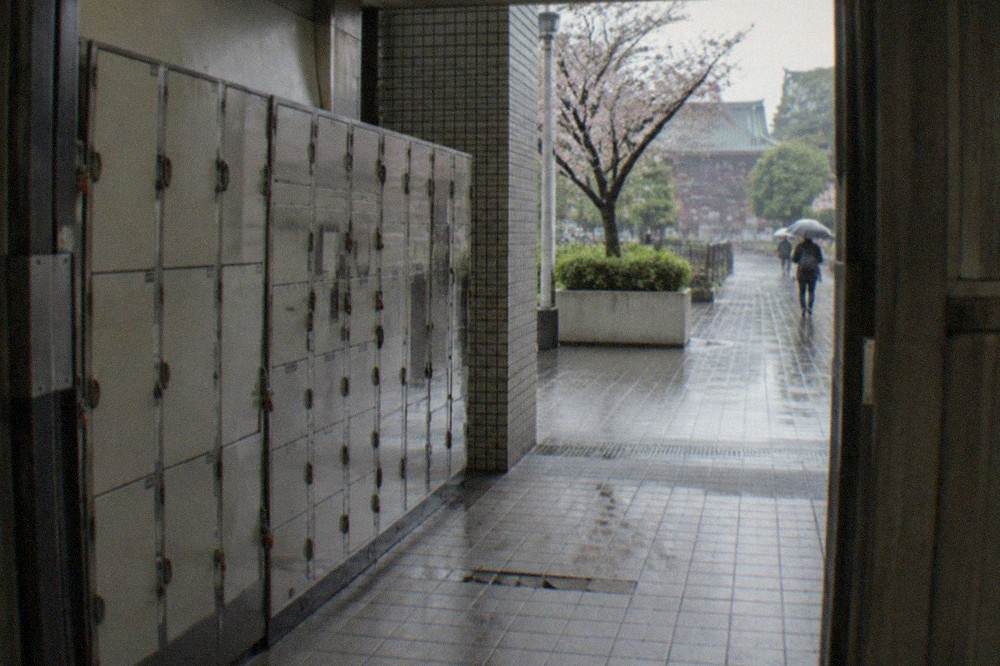
One more limit shapes every locker decision, and it is the one travellers least expect. All four major locker operators cap their liability for lost or damaged contents at 30,000 yen, and their terms prohibit storing anything worth 30,000 yen or more in the first place, along with cash, cameras and jewellery. The ban threshold and the payout cap are the same number, which means the contract never contemplates paying for a valuable, because a valuable was never allowed inside. A large suitcase full of clothing fits a locker's legal frame comfortably; a large suitcase containing a laptop does not.
When the locker wall fails, the staffed answer near Ueno is worth knowing before the trip: Ueno holds 8 staffed Radical Storage points, the nearest 171 m from the station, every one of them a staffed bag drop rather than an automated box.
Station Baggage Rooms: The Staffed Answer For Oversized Bags
Seven attended baggage rooms operate inside Tokyo Station, and Ueno, Shinagawa, the Shinjuku Busta terminal, Asakusa and Tokyo Skytree each hold one. JR East Logistics charges 500 yen for a bag under 100 cm, 1,000 yen under 200 cm and 2,000 yen above that, per bag per day, for up to 30 days. Shibuya and Ikebukuro have none at all.
A staffed baggage room is a counter where a person takes the bag, tags it, and shelves it, which removes every dimension limit a locker imposes and stretches the storage period from days to a month. JR East Logistics runs four of the Tokyo Station rooms itself, including the Yaesu South counter outside the gates, open 09:30 to 20:00, and its size-tiered price of 500, 1,000 or 2,000 yen per bag per day with a 30-day maximum is the benchmark every other option gets measured against. The full counter list is published on the operator's own JR East Logistics baggage service page.
| Location | Hours | Price per bag per day | Maximum stay |
|---|---|---|---|
| Tokyo Station, Yaesu South | 09:30 to 20:00 | 500 / 1,000 / 2,000 yen by size | 30 days |
| Tokyo Station, BAGGAGE STORAGE+ Gransta B1 | 09:30 to 20:00 | 500 / 1,000 / 2,000 yen by size | 30 days |
| Ueno Station, 3F, inside the Park Gate | 10:00 to 20:00 | 500 / 1,000 / 2,000 yen by size | 30 days |
| Shinagawa Station, Event Space YK, inside the Central Gate | 10:00 to 19:00, closed 1 January | 800 / 1,000 yen medium, 1,600 / 2,000 yen large | not published |
| Shinjuku Busta 3F, Sagawa Express | 06:30 to 21:00 | 800 / 1,000 / 1,500 yen | not published |
| Tokyo Skytree, Solamachi 1F, Sagawa Express | 10:00 to 21:00 | 800 yen under 100 cm, 1,000 to 160 cm, 1,300 above | not published |
The gaps in that table matter as much as the rows. Shibuya and Ikebukuro, two of the busiest stations in the city, appear on no operator's baggage-room list at all, and JR East's own Travel Service Center page states its luggage storage is available at Tokyo Station only, which disposes of the service centres at Shinjuku, Shibuya, Ikebukuro and Ueno in one line. Shinjuku's answer is the Sagawa counter in the Busta bus terminal, open from 06:30, which is the earliest opening of any staffed option in the city. Shinagawa's counter adds a wrinkle: its lower prices apply on weekdays, with the higher figure on Saturdays, Sundays and public holidays, and the higher rate is also forced onto weekdays during the late April to early May holidays, mid-August and the year-end period.
Asakusa carries a warning that most English travel content still gets wrong. The Asakusa Culture Tourist Information Center ran a luggage storage service for years, and Taito City terminated it on 31 March 2026, citing street congestion from travellers' suitcases as one cause. Any page still directing large-bag visitors there is sending them to a closed desk. The live options in Asakusa are the Sagawa counter at Kaminarimon street level, which charges a single 800 yen per day regardless of size, and the 13 staffed Radical Storage points across the district.
Ueno is the strongest all-round answer in the east of the city for a traveller holding a large case. The JR East Logistics room on the 3F concourse inside the Park Gate takes a 2,000-yen oversize bag for up to 30 days, and the district around the station holds 8 staffed Radical Storage points rated 4.87 from 285 reviews, with the nearest 171 m from the gates. Between them, a large bag can be parked almost any hour the district is awake. For shorter needs, the same area data feeds the guide on storing a bag in Tokyo for a few hours.
Leaving Large Luggage At Tokyo's Airports
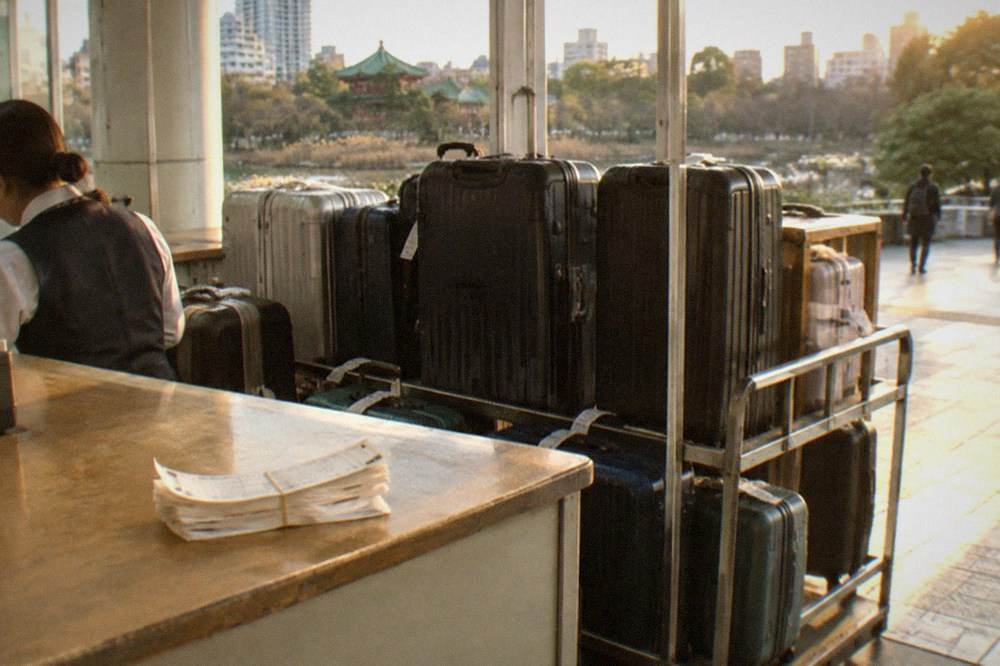
Narita runs 11 attended counters across Terminals 1 and 2, from 500 yen per piece per day at the Promotion Foundation desk to 2,000 yen at JAL ABC. Haneda's own desks charge 800, 1,000 or 2,000 yen by size and store a bag for up to two weeks. Narita Terminal 3 has no attended storage counter of any kind.
Airports are the one place in Japan where large-luggage storage is thick on the ground, because every counter is staffed and none of them cares about a 32-inch case. Narita's airport page publishes no prices itself, directing visitors to ask each company, but the three operators publish their own tariffs. The Narita Airport Promotion Foundation desk in Terminal 2, 06:30 to 22:00, is the cheapest attended storage at the airport at 500, 700 or 1,100 yen by size, and it takes clothing at 1,220 yen per garment for up to 5 days. Sagawa's counters charge 500, 700 or 1,150 yen. JAL ABC, with 7 counters, charges 800, 1,000 or 2,000 yen, counts by calendar day rather than by the hour, and takes payment on collection.
| Counter | Small | Medium | Large |
|---|---|---|---|
| Narita, Promotion Foundation, Terminal 2 | 500 yen | 700 yen | 1,100 yen |
| Narita, Sagawa Express, 3 counters | 500 yen | 700 yen | 1,150 yen |
| Narita, JAL ABC, 7 counters | 800 yen | 1,000 yen | 2,000 yen |
| Haneda, all terminals | 800 yen | 1,000 yen | 2,000 yen |
Haneda is the more generous airport for a large bag, and the airport publishes its own tariff. Its sitewide rule allows storage for up to two weeks, with a maximum combined three-side length of 300 cm and a weight of 30 kg, thresholds no checked suitcase will ever trouble. Terminal 1 and Terminal 2 desks, both on B1F, run 08:00 to 19:30 and price per day. Terminal 3's desks, on 2F and 3F, are open 24 hours and price per 24 hours instead, the same numbers on a different clock, a distinction the English-language travel web reliably misses. The full tariff sits on the airport's own baggage checkroom page. Yamato also runs one attended storage point at Haneda Terminal 2 with no stated limit on the storage period, which sits oddly against the airport's two-week sitewide rule; both are the operators' own published positions.
Narita Terminal 3 is the trap. It exists, it handles low-cost carriers, and it has not one attended baggage-storage counter: the only baggage desk of any kind in the terminal is a Yamato delivery counter. A large-bag traveller arriving into T3 needs to take the free shuttle to Terminal 2 or use Narita's coin lockers, which run 400, 600 or 800 yen per day with an 8-day maximum and a midnight day boundary.
The practical alternative at both airports is not to store the bag at all but to send it. Sagawa delivers Narita to Tokyo hotels from 2,120 yen for a small bag up to 4,690 yen for a case under 200 cm, with a 14:00 cut-off, and Haneda to the same area from 910 yen with a 13:00 cut-off. Yamato runs Haneda to a 23-ward hotel from 2,450 yen, but does not deliver city-to-Narita same day at all, while Sagawa does, an asymmetry worth knowing before a night flight out of Narita.
Forwarding A Large Suitcase Instead Of Storing It
Yamato's TA-Q-BIN takes a case up to 200 cm three-side total and 30 kg, sending Tokyo to Kyoto or Osaka at 3,160 yen for the 160 band. Sagawa's large-size service is the only one of the three national carriers that goes to 260 cm and 50 kg. LUGGAGE EXPRESS moves a bag by Shinkansen, hotel to hotel, at 13,200 yen per item. Transit times are not published for personal customers.
Takuhaibin, luggage forwarding, is the option most visitors underuse, and for a large bag it is often better than storage, because it makes the question of where to leave the suitcase disappear. Drop it at a counter, a convenience store or your hotel front desk, and it travels ahead of you. Yamato's size bands run from 60 to 200 cm, charged on the greater of the three-side total or the actual weight, and a suitcase is charged at its measured size. Tokyo to Kyoto or Osaka, both in the same tariff zone, costs 2,170 yen for a 120-band bag up to 5,410 yen for a 200-band case; inside Tokyo the same bands run 1,730 to 3,690 yen.
Sagawa matters for genuinely oversized luggage, the cases that fail everything else. Its large-size service accepts up to 260 cm and 50 kg, past both Yamato's 200 cm and Japan Post Yu-Pack's 170 cm ceilings, at 2,570 yen for a 160-band case to Kansai. Japan Post's 170 cm and 25 kg caps rule out many full-size spinners before the price is even discussed.
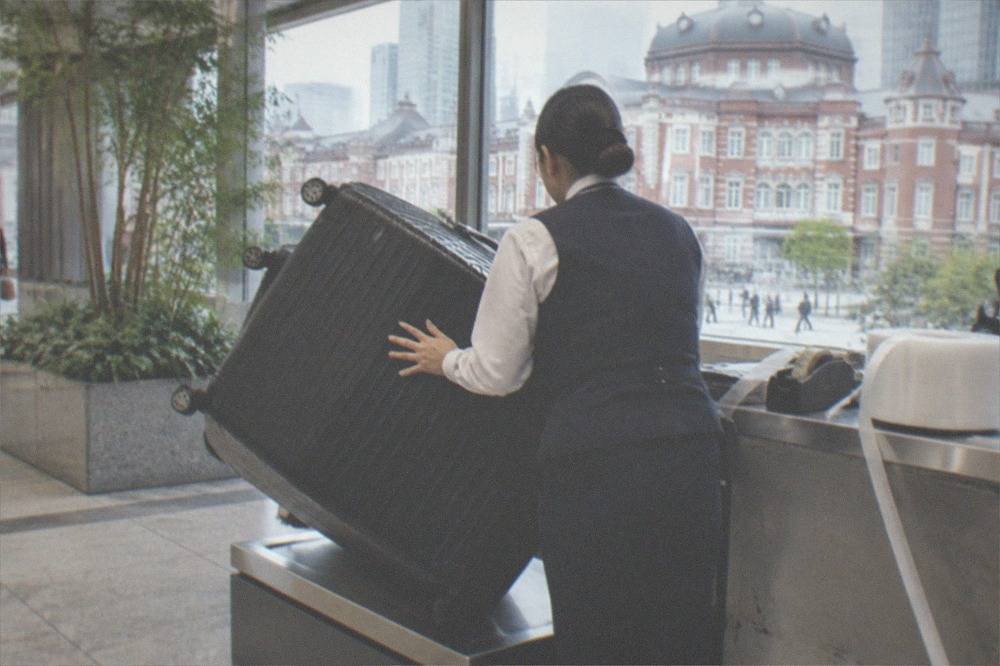
The premium option is LUGGAGE EXPRESS, a JTB and JR Central service that carries a bag on the Shinkansen itself, hotel to hotel, same day, for 13,200 yen per item between Tokyo and Kyoto or Osaka, capped at 200 cm and 30 kg and payable by card only. It is roughly four times the price of Yamato, and it buys speed and certainty rather than size.
One gap in the forwarding story must be stated plainly: no transit time for any personal forwarding lane could be sourced from any operator. Yamato publishes delivery times only through an interactive postcode tool and provides no public service-level table. Any page promising a delivery time for a forwarded suitcase is filling a gap the operators themselves have not filled, so plan forwarding a day or more ahead rather than against a stated clock.
Large Luggage On The Shinkansen: The 160 Cm Rule
A bag whose three sides total over 160 cm needs a mandatory, free oversized-baggage seat on the Tokaido, Sanyo, Kyushu and Nishi-Kyushu Shinkansen lines, and boarding without one costs 1,000 yen. JR East's Shinkansen lines from Tokyo require no reservation, but offer no guaranteed space either. The absolute maximum on board is 250 cm and 30 kg.
The oversized-baggage rule is the piece of Japanese rail policy most likely to surprise a large-bag traveller, and the details live on JR Central's official oversized baggage page. Measure the three sides and add them: over 160 cm, and the bag needs a seat in a row with an oversized baggage space behind it. The reservation is mandatory and free, costing the same as an ordinary reserved seat, and the conductor can charge a 1,000 yen carry-on fee, once per journey, to a passenger who boards without one. The rule applies only on the Tokaido, Sanyo, Kyushu and Nishi-Kyushu lines, which covers Tokyo to Kyoto, Osaka and points west. The allowance regardless of the rule is two items, each up to 250 cm and 30 kg, and no item over 2 m long.
JR East's Shinkansen lines out of Tokyo, the Tohoku, Hokkaido, Joetsu, Hokuriku, Yamagata and Akita lines, have neither the reservation nor the penalty, and JR East's own guide states carry-on is free with no reservation required for suitcases within the standard allowance. The caveat that travels with that freedom is that no reservation also means no guaranteed space: storage areas exist on some trains only, first come, first served. A reader taking a big case to Sendai or Kanazawa has no reserved slot waiting.
Since 1 July 2025, six deck baggage corners per 16-car set on the western lines became reservation-free storage. The trap is that those free deck areas may not hold a bag over 160 cm; a genuinely oversized case still needs the reserved seat. The full picture, including the seat-map mechanics, is in the site's guide to the Shinkansen oversized baggage rule.
Radical Storage Points For A Large Bag In Tokyo
Staffed Radical Storage points in Tokyo charge 850 yen per bag per day for a regular bag, plus a 355 yen per-bag fee charged once at checkout, so one bag for one day is 850 plus 355, 1,205 yen. Ueno holds 8 points, rated 4.87 from 285 reviews, with the nearest 171 m from the station. All 8 are staffed bag drops, none are lockers.
Where the stations offer no staffed room and the airports are far away, the Radical Storage network covers the districts a traveller actually walks through. Every point is a real partner location, a hotel front desk, a shop, a cafe, where a staff member takes the bag and issues a booking reference, and the network, not this site, operates every one of them. The advantage for a large case is the same one the station baggage rooms have: a person handles the bag, so the 34 cm locker depth never enters the conversation. The Tokyo data states no centimetre cap on the area pages, so a traveller with an unusually large case does well to confirm dimensions when reserving.
The price is uniform across the city: 850 yen per bag per day for a regular bag at 244 of the 249 Tokyo points on file, with a 355 yen per-bag fee added once at checkout, never per day. Radical Storage advertises from 490 yen per day, but that is a small-bag rate found at 11 points only, not what a suitcase costs. There is no hourly tariff either; a few hours bills as a full day. The Radical Storage Guarantee is not insurance, its own terms say so and reserve the right to withdraw it, and payouts are capped at EUR 3,000 per claim.
The area guides on Luggage Storage in Tokyo break the network down district by district with the points, ratings and distances for each. Asakusa is the deepest coverage in the network, 13 staffed points rated 4.85 from 268 reviews with the nearest 193 m from the station, spread wide enough that a large bag rarely needs to be dragged far. Ginza runs a lean single point, rated 4.84 from 118 reviews, with the nearest 1,131 m out, so Ginza is a district to plan ahead for rather than to count on at the door.
For bags past what any of this comfortably handles, and for the multi-week stays that outlast every baggage room and locker rule, the site's guide to oversized luggage storage in Tokyo works through the long-stay and outsize options in detail, including where the 30-day baggage-room ceiling stops being the answer.
The short version of the whole question: measure the three sides before anything else. Under 160 cm total and under about 65 cm in any dimension, the locker tiers and the Shinkansen both work with a little planning. Over that, a staffed baggage room, an airport counter, a Sagawa large-size forwarding label or a Radical Storage point is the honest answer, and each of those is a real, bookable, priced thing in Japan.
Common Questions About Leaving Large Luggage In Japan
Where to leave large luggage in Japan?
Staffed options: the JR East Logistics baggage rooms at Tokyo Station and Ueno, the Sagawa counters at Shinjuku Busta, Asakusa and Tokyo Skytree, the attended airport counters at Narita and Haneda, and staffed Radical Storage points across Tokyo districts. Forwarding the bag ahead by takuhaibin removes the storage question entirely.
Can a large suitcase fit in a Tokyo coin locker?
Only in the largest tiers. JR East's L tier measures 86 x 34 x 65 cm inside, and the LW tier, 86 x 56 x 65 cm, is the only common tier that fits a wide checked case. Tokyo Metro publishes no sizes for its price tiers, and Toei's large lockers measure 85.6 x 34.2 x 66.3 cm inside.
How long can a large bag stay in a station baggage room?
Thirty days at the JR East Logistics rooms at Tokyo Station and Ueno. The Sagawa counters at Shinjuku Busta and Tokyo Skytree publish no maximum. Coin lockers allow less: 4 days including the start day at Tokyo Metro, 3 days at JR East Smart Logistics, and paying more does not extend either period.
Do I need a reservation for oversized luggage on the Shinkansen?
On the Tokaido, Sanyo, Kyushu and Nishi-Kyushu lines, yes: a bag over 160 cm three-side total needs a mandatory oversized-baggage seat, free of charge, and boarding without one can cost 1,000 yen. On JR East's Shinkansen lines from Tokyo, no reservation is required, but no space is guaranteed either.
Is there anywhere to leave a large suitcase at Narita Terminal 3?
No attended baggage-storage counter exists in Narita Terminal 3. The terminal's only baggage desk is a Yamato delivery counter. Take the shuttle to Terminal 2 for the attended counters, or use the T3 coin lockers at 400, 600 or 800 yen per day, maximum 8 days.
What is the cheapest way to send a large suitcase ahead in Japan?
Yamato TA-Q-BIN within Tokyo runs 2,410 yen for a 160-band case, and to Kyoto or Osaka 3,160 yen, up to 200 cm and 30 kg. Sagawa's large-size service costs more but is the only one of the three carriers accepting 260 cm and 50 kg.