Can You Leave Luggage At Train Station Japan?
Coin lockers exist at almost every Tokyo station, but staffed baggage rooms exist at only a handful. The full picture of what each station type offers, what it costs and how long it holds a bag.
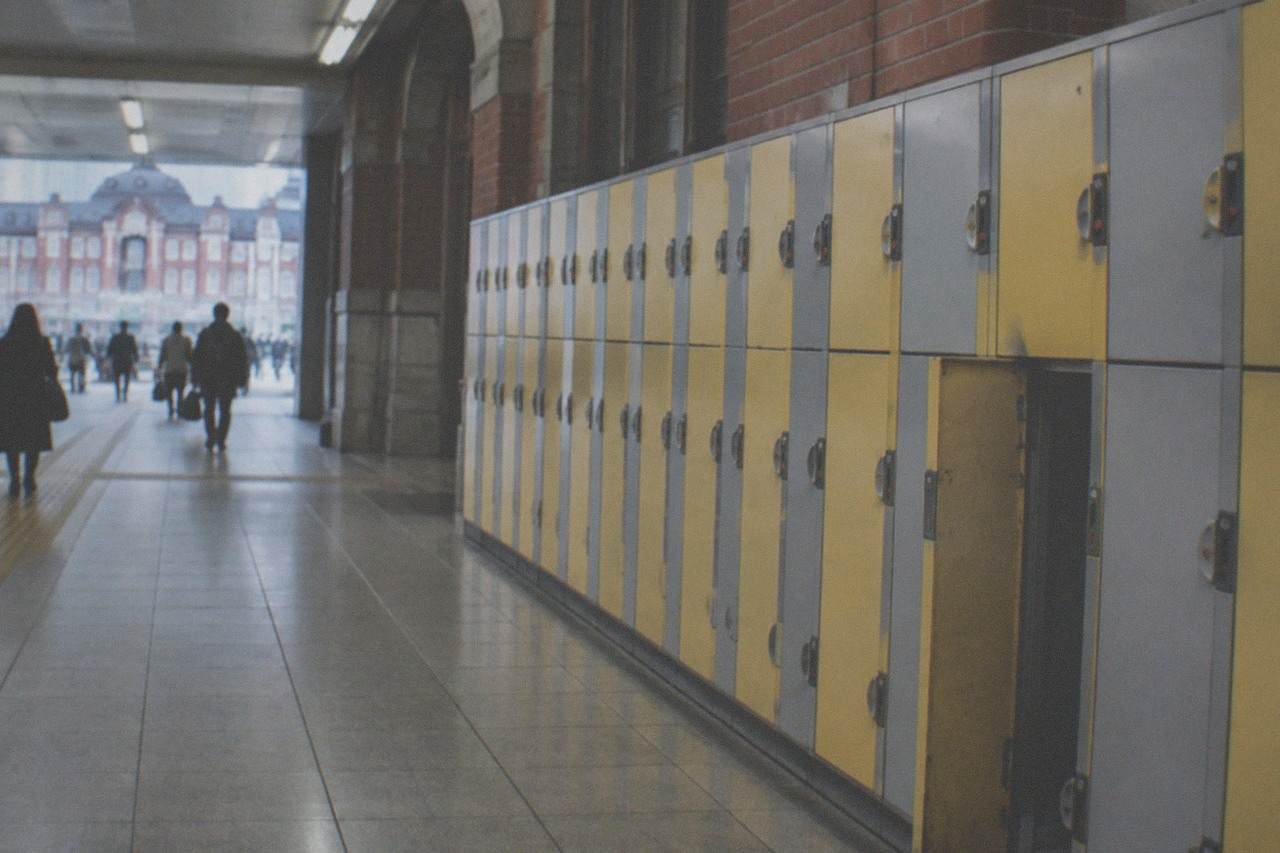
Tokyo Station has seven attended baggage rooms. Shinjuku, the busiest station complex on the planet, has none of its own. That single contrast shapes the whole answer to the question this page exists for, because "leaving luggage at a train station in Japan" means two very different things depending on which station you are standing in.
Almost every station has coin lockers. Only a handful have a human being who will take your suitcase and give you a ticket. The prices, the size limits and above all the time limits differ between them, and between the rail operators that run them, in ways that surprise people who assumed one national rule applied. This page walks through the real picture, using the operators' own published terms.
Can You Leave Luggage At Train Station Japan?
Yes. Japan's major stations take bags in one of two ways: coin lockers, found at almost every station in Tokyo and priced from ¥300 to ¥1,100 a day depending on size and operator, and attended baggage rooms, which exist at only a handful of stations. Tokyo, Ueno, Shinagawa, Shinjuku and Asakusa each have at least one staffed option.
The locker route is the default. Tokyo Metro alone publishes 4,830 locker doors across its network, from 100 at Tokyo Station to 146 at Shibuya and 127 at Ueno. JR East's Multi Ecube system covers 267 stations with 848 units. Between the two, virtually any station a visitor will pass through has lockers of some kind, and the bigger the station, the more banks of them, often on several floors and both inside and outside the ticket gates.
The staffed route is far thinner on the ground. JR East Logistics runs baggage rooms at six locations in the whole of its territory, and its own pages concentrate them heavily: Tokyo Station holds most of them, with single rooms at Ueno and Shinagawa. No JR baggage room exists at Shinjuku or Ikebukuro, and Shibuya's operators list none either. Other companies fill some of the gaps, the Odakyu travel counter at Shinjuku's west exit and Sagawa Express counters at Busta Shinjuku, Asakusa and Tokyo Skytree among them.
A third option sits outside the stations entirely. Radical Storage, the storage network this site partners with, lists 249 points across Tokyo, in shops and hotels within a few minutes of most major stations. The rate is 850 yen per bag per day for a regular bag plus a 355 yen per-bag fee charged once at checkout, so one bag for one day comes to 1,205 yen on Radical Storage's own published figures. It suits a bag that does not fit a locker, or a stay longer than a locker's maximum period.
The choice between these routes usually comes down to three questions. Does the bag physically fit a locker? How many days will it stay? And does the station you are using have a staffed counter at all? The rest of this page answers each one with the operators' own numbers.
Which Stations Actually Have An Attended Baggage Room?
Tokyo Station has seven, including four JR East Logistics rooms, a Gransta cloak and the JR EAST Travel Service Center on the Marunouchi side. Ueno has one, inside the Park Gate. Shinagawa has one, inside the Central Gate. Shinjuku and Shibuya have none run by JR itself, though Odakyu and Sagawa counters at Shinjuku partly cover the gap.
The full staffed picture, from each operator's own pages, looks like this:
| Station | Operator | Where | Hours | Max days |
|---|---|---|---|---|
| Tokyo, Yaesu South | JR East Logistics | Outside the gates | 09:30 to 20:00 | 30 |
| Tokyo, Gransta B1 | JR East Logistics | Inside the North gate | 09:30 to 20:00 | 30 |
| Tokyo, Shinkansen South Transfer Gate | JR East Logistics | Inside | 09:00 to 21:00 | 30 |
| Tokyo, Marunouchi Central | JR East Logistics | Inside | 10:00 to 20:00 | 30 |
| Tokyo, Gransta cloak | Gransta | B1 | 08:30 to 21:00, drop-off closes 20:30 | Same day only |
| Tokyo, JR EAST Travel Service Center | JR East | 1F Marunouchi, outside the gates | 08:30 to 20:00 | Same day only |
| Tokyo, Ichibangai 1F | Sagawa Express | Ichibangai | Published at the counter | Not published |
| Ueno | JR East Logistics | 3F concourse, inside the Park Gate | 10:00 to 20:00 | 30 |
| Shinagawa | JR East Logistics | Event Space YK, inside the Central Gate | 10:00 to 19:00, closed 1 January | Not published |
| Shinjuku, Odakyu Travel Center | Odakyu | West Exit | Published at drop-off | 3 |
| Shinjuku, Busta 3F | Sagawa Express | Tokyo Tourist Information Center | 06:30 to 21:00 | Not published |
| Asakusa, Tobu TIC | Tobu | Inside Tobu Asakusa Station 1F | 07:20 to 19:00, year-round | Not published |
| Asakusa, Kaminarimon | Sagawa Express | Street level | Published at the counter | Not published |
| Tokyo Skytree | Sagawa Express | Solamachi Tower 1F | 10:00 to 21:00 | Not published |
The pattern is stark once you see it in one place. Tokyo Station absorbs almost the entire staffed capacity, and the other giant stations lean on non-JR counters or nothing at all. JR East's own Travel Service Center page states that its luggage storage is available at Tokyo Station only, a scoping line that quietly rules out the Shinjuku, Shibuya, Ikebukuro and Ueno service centers in one sentence.
One closure matters for anyone who read older advice. The Asakusa Culture Tourist Information Center stopped taking suitcases on 31 March 2026. Taito City announced it directly, explaining that travellers' bags were contributing to street congestion. A great deal of English travel content still points people there, so treat any guide naming it as a place to park a suitcase as out of date.
For Ikebukuro specifically, the staffed answer is Radical Storage's network rather than a station counter: ten points sit around the station, the closest about 227 m away, and the area carries a 4.73 rating across 89 reviews. More on the no-baggage-room stations further down.
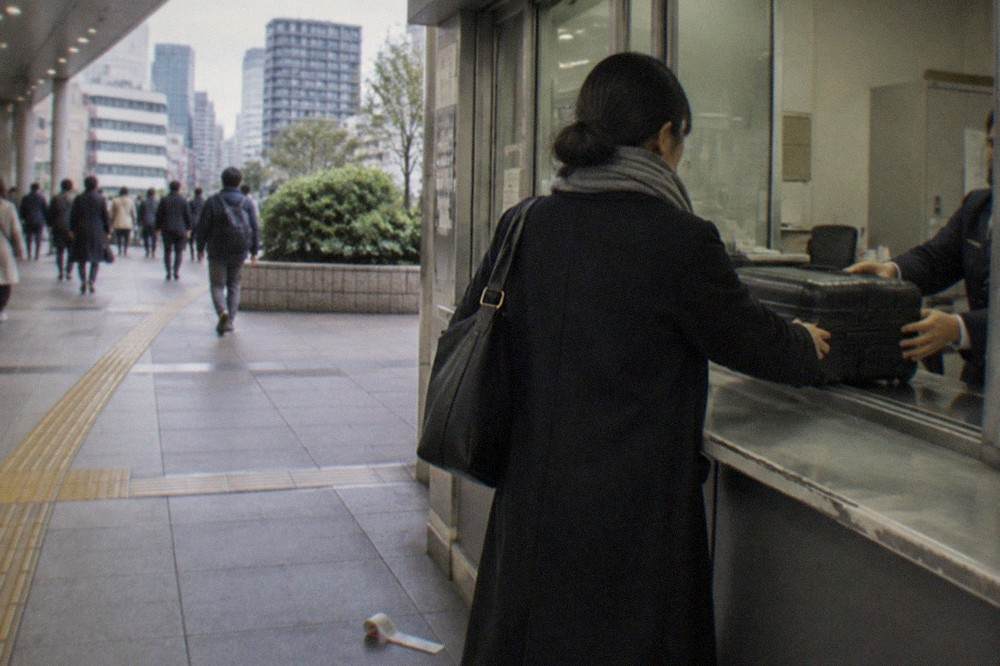
What Does A Station Baggage Room Cost, And How Long Can It Hold A Bag?
JR East Logistics charges by size: ¥500 for a bag up to 100 cm three-side total, ¥1,000 up to 200 cm, ¥2,000 above that, per bag per day, and holds bags for up to 30 days. Shinagawa runs different weekday and weekend prices. The same-day options at Tokyo Station are cheaper to enter but will not keep a bag overnight.
The 30-day ceiling at JR East Logistics rooms is the single biggest advantage a baggage room holds over a locker. A locker frees you for three or four days at most, depending on the operator, while the staffed rooms at Tokyo and Ueno will hold a suitcase for a month at the published daily rate. For anyone leaving Tokyo for a stretch and coming back, that difference decides the whole plan.
Shinagawa's room prices by day of the week. Medium bags cost ¥800 on a weekday and ¥1,000 on a weekend or holiday, and large bags ¥1,600 against ¥2,000, with the weekend rate also applied on weekdays during 27 April to 6 May, 10 to 19 August, and 28 December to 6 January. Anyone storing over those windows should budget the higher figure.
| Counter | Small | Medium | Large | Notes |
|---|---|---|---|---|
| Tokyo and Ueno, JR East Logistics | ¥500, up to 100 cm | ¥1,000, up to 200 cm | ¥2,000, above 200 cm | 30-day maximum |
| Shinagawa, JR East Logistics | not tiered this way | ¥800 weekday, ¥1,000 weekend | ¥1,600 weekday, ¥2,000 weekend | Max days not published |
| Shinjuku, Busta 3F, Sagawa | ¥800 | ¥1,000 | ¥1,500 | Hours 06:30 to 21:00 |
| Asakusa, Kaminarimon, Sagawa | flat ¥800 a day | flat ¥800 a day | flat ¥800 a day | No size tiers |
| Tokyo Skytree, Solamachi, Sagawa | ¥800, up to 100 cm | ¥1,000, up to 160 cm | ¥1,300, 161 cm and up | 10:00 to 21:00 |
The Odakyu counter at Shinjuku's west exit is the one staffed place that declines to publish a price at all: the operator's own page says to check at drop-off. It caps storage at 3 days. The Tobu tourist information center at Asakusa does not publish its fee either, so anyone planning to use it should ask at the window rather than budget from a blog figure.
Against these, Radical Storage's 850 yen per bag per day for a regular bag, plus the one-off 355 yen per-bag checkout fee, sits in the same band as the station counters, with the difference that there is no maximum period of three or four days and the bag size does not decide the price. One bag, one day, totals 1,205 yen as arithmetic on the network's own published figures.
A comparison worth reading alongside this one is the rundown of how long you can leave luggage in Tokyo, which sets every operator's time limit side by side, including the forwarding services.
How Long Can You Leave A Bag In A Station Coin Locker?
Tokyo Metro lockers hold a bag for 4 days including the day you start, with a day added at 2 a.m., not midnight. JR East's Multi Ecube lockers hold a bag for 3 days, and paying more does not extend the period. Each operator sets its own rule, so there is no single nationwide locker duration.
The two big operators genuinely disagree, and both rules come from their own terms. Metro Commerce, which runs Tokyo Metro's lockers, states the period as 4 days including the start day. JR East Smart Logistics states 3 days for its Multi Ecube units and adds, in so many words, that money added after the deadline does not buy a fourth day. A traveller who assumed "a week in a locker" was fine has, in both systems, already overstayed.
The clock is stranger than the day count suggests. Metro's terms run the locker from first train to last train, and any use past the last train adds a day at 2 a.m. The first day and the last day each count as a full day however briefly you used the locker. Drop a bag at 23:50 and collect at 06:10 the next morning, and that is two days on the meter.
| Operator | Maximum period | Day boundary | What the terms say |
|---|---|---|---|
| Tokyo Metro, Metro Commerce | 4 days including the start day | 2 a.m. | First and last days each count as one day |
| JR East, Multi Ecube | 3 days | 2 a.m. | Extra payment does not extend the period |
| JR East, ordinary station lockers | not published | not published | JR East's own rule could not be sourced |
| Haneda T1 and T2 airport lockers | 7 days | 24 hours | Then moved to storage for 30 days |
| Narita airport lockers | 8 days | midnight | Hourly tariff exists at only two locations |
One detail in that table deserves its own warning. JR East's rule for its ordinary, non-Multi Ecube station lockers is not published anywhere the research behind this page could reach, so a confident-sounding number quoted for "JR lockers" generally belongs to the Multi Ecube system alone. If a station's lockers are not the Multi Ecube type, the honest answer is to read the notice posted on the locker bank itself.
The day-counting trap is the same one that catches people with shop-based storage too. A few hours is a full day in every system here: lockers, baggage rooms and Radical Storage's points all bill by the day, and no hourly tariff exists for a regular bag. Radical Storage's 850 yen day rate applies whether the bag sits for ninety minutes or nineteen hours, with the 355 yen per-bag checkout fee on top once.
The sizing question runs in parallel with the time question, and it is where most plans fail. The guide to coin locker sizes at Tokyo stations sets out the real internal dimensions, including the LW tier at JR East, 86 x 56 x 65 cm, which is the only common tier that takes a wide checked suitcase lying flat, and the 342 mm depth that is the true binding constraint on a hard-shell case.
What Happens If You Overstay A Locker's Time Limit?
The operator opens the locker, inspects the contents and moves them to a separate storage place. The same daily rate keeps running for up to 30 days from your original start date, collection requires the receipt, photo ID and the same IC card you paid with, and the separate storage fee is cash only. After 30 days the contents are deemed abandoned.
This is the part of the process nobody reads until it is too late. Both major operators' terms describe materially the same sequence: the locker is emptied, the bag is held elsewhere, and the meter does not stop. Retrieval then needs the original receipt, photo identification and, on Metro's terms, the very same IC card used to pay. Lose the card and the receipt together and you have a conversation with station staff rather than a door opening.
The 30-day holding period is counted from the start date of the original rental, not from the day the locker was cleared. The disposal that follows is contractual, not a police lost-property procedure, and JR East's terms add a detail worth knowing before you shop for snacks to leave in a locker: food is disposed of immediately, with no grace period at all.
Practically, the advice that follows from all of this is simple. Do not plan a locker around a flight that lands five days later. If the trip outlasts the operator's maximum, move the bag to a 30-day baggage room before the deadline, or to a Radical Storage point, where a multi-day booking is priced as days times 850 yen plus the single 355 yen per-bag fee rather than as a violation.
There is a second, quieter trap for anyone using JR's reservation-capable lockers. One opening ends the rental: take the bag out halfway and you cannot put it back, and a multi-day reservation is forfeited with no refund. The only grace is a reopen button on the unit that gives about 15 minutes, which is enough to fetch a forgotten charger and not much else.
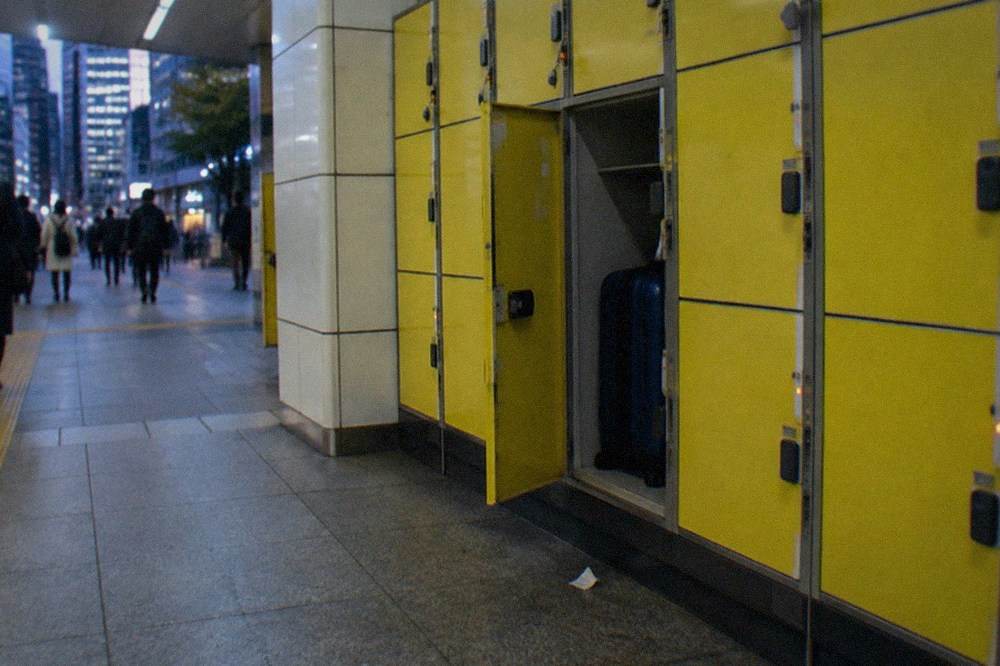
Can You Leave A Bag At Shinjuku, Shibuya Or Ikebukuro?
Not at a JR baggage room: none of the three has one, and JR East's own lists confirm the gap. Each station still has lockers and non-JR options. Shinjuku has the Odakyu counter, Sagawa at Busta, and 8 Radical Storage points. Shibuya has 7 Radical Storage points. Ikebukuro has 10, the most on this site's station list.
These three are the stations where the question gets asked most, because they are the stations people actually stay near, and the honest answer is that the staffed-JR route simply does not exist there. The evidence is of a specific kind, worth understanding so you can judge it yourself: no operator lists a baggage room at any of them, across JR East Logistics' six-station list, the Travel Service Center scoping line and the subway operators' facility lists. Station facility maps cannot prove an absence, since their legends have no baggage-room category at all, so the absence rests on the operators' own service lists rather than on a blank map.
Ikebukuro is the strongest storage station of the three by this site's data. Ten Radical Storage points surround it, the closest about 227 m from the station, and the area holds a 4.73 rating across 89 reviews. Two of those points are automated lockers within the network, and two list 24-hour access, which matters for anyone with a late train or an early start.
Shibuya runs Ikebukuro close on availability with seven Radical Storage points, a 4.75 rating across 163 reviews, and the deepest locker bench in the research behind this page: Tokyo Metro alone publishes 146 locker doors there. Shinjuku has eight Radical Storage points with a 4.75 rating across 384 reviews, plus the Odakyu and Sagawa counters described earlier, which makes it the only one of the three with a true staffed station-side option, even if JR itself provides none of it.
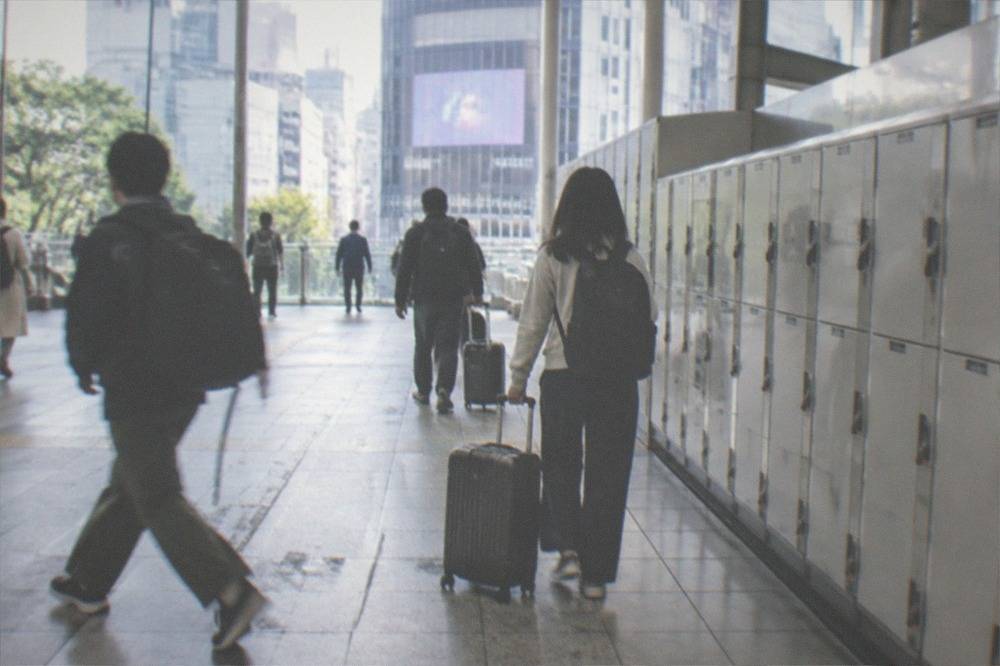
Can You Leave A Bag At A Station You Are Not Travelling From?
Yes. Neither lockers nor baggage rooms check a ticket, and every storage option described on this page is open to anyone who walks up with a bag. The only constraints are size, the maximum period, and the payment methods the specific locker or counter accepts, several of which are cash or IC card only.
This matters more than it sounds. A common plan is to sleep in one part of Tokyo, spend the last day in another, and fly out of a third, and station storage is what makes that plan work without dragging a suitcase across the Yamanote line. You can drop a bag at Tokyo Station's baggage room in the morning, spend the day anywhere, and collect it before the counter's 20:00 closing. The same is true of lockers, with the day-counting rules from earlier applying from the moment you close the door.
The station you choose should be chosen for the exit you will actually use. A bag stored inside the ticket gates at Ueno, in the Park Gate baggage room, needs you to pass through the gates again to reach it. Lockers marked as outside the gates, like the Toei Asakusa banks, all 72 doors of which sit outside the ticket gates, are reachable without a fare.
For bags that will sit for more than a few days, or that do not fit a locker tier, the network option becomes the practical one, and that is the gap a directory such as Luggage Storage in Tokyo exists to fill: 249 Radical Storage points across the city, priced at 850 yen per bag per day for a regular bag with the 355 yen per-bag fee charged once at checkout. The Radical Storage Guarantee is capped at EUR 3,000 per claim under its own terms and is not insurance, which is worth knowing before you store anything valuable, the same way a coin locker's ¥30,000 liability cap is worth knowing: that cap is a contract term, not law, and it never contemplates a valuable, because valuables are on every locker operator's prohibited list.
One more option belongs in this conversation because it behaves like station storage. Many Tokyo hotels will hold bags for guests, and quite a few will hold them for non-guests too; the post on leaving luggage at a hotel you are not staying at covers what to expect, including how to ask in Japanese. Between hotel desks, station counters, lockers and the Radical Storage network, almost no itinerary in Tokyo needs a suitcase in hand.
Common Questions About Leaving Luggage At Train Stations In Japan
can you leave luggage at train station japan?
Yes. Almost every station has coin lockers, priced from ¥300 to ¥1,100 a day depending on size and operator, and a handful of stations have attended baggage rooms: Tokyo, Ueno, Shinagawa, Shinjuku, Asakusa and Tokyo Skytree. Lockers hold a bag for 3 to 4 days; baggage rooms hold up to 30 days.
Can I leave my luggage at the train station?
Yes, at almost any Japanese station, either in a coin locker or, at the staffed stations listed above, with an attendant. No ticket is checked. The constraints are size, the maximum storage period and payment: some locker banks take cash or IC card only, and Metro's terms say to use whatever payment is displayed on the locker body itself.
Do Shinjuku, Shibuya or Ikebukuro have a baggage room?
No JR baggage room exists at any of the three. Shinjuku has the Odakyu travel counter at the west exit, with a 3-day limit and the price confirmed only at drop-off, plus a Sagawa counter at Busta Shinjuku. Shibuya and Ikebukuro rely on lockers and on Radical Storage points, seven at Shibuya and ten at Ikebukuro.
How long can you leave luggage in a coin locker at a Tokyo station?
Tokyo Metro lockers allow 4 days including the day you start, with a new day added at 2 a.m. rather than midnight. JR East's Multi Ecube lockers allow 3 days, and paying more does not extend that. Both operators then hold the bag for 30 days at the same running daily rate.
Can I leave my bag overnight at a Japanese train station?
Yes. Lockers bill by the day, so an overnight stay is one day, or two if you drop the bag after the last train and collect after 2 a.m. under Metro's terms. Baggage rooms at Tokyo and Ueno hold bags for up to 30 days, and Radical Storage points have no 3 or 4 day ceiling at all.