Tokyo Neighbourhoods For A Short Stay: Where To Base With A Bag
A short stay in Tokyo rewards a base chosen by bag logistics as much as by sightlines. This is how the main neighbourhoods compare on staffed storage points, coin lockers and walking distance, with the prices that actually apply.
Short answer
Asakusa, Shinjuku and Akihabara are the easiest bases for a short stay with a bag: each has staffed Radical Storage points within 200 m of the station, and the rate is 850 yen per bag per day with a one-off 355 yen fee. Akihabara's nearest point sits 31 m from the gates.
Which Tokyo Neighbourhoods Work Best For A Short Stay With A Suitcase?
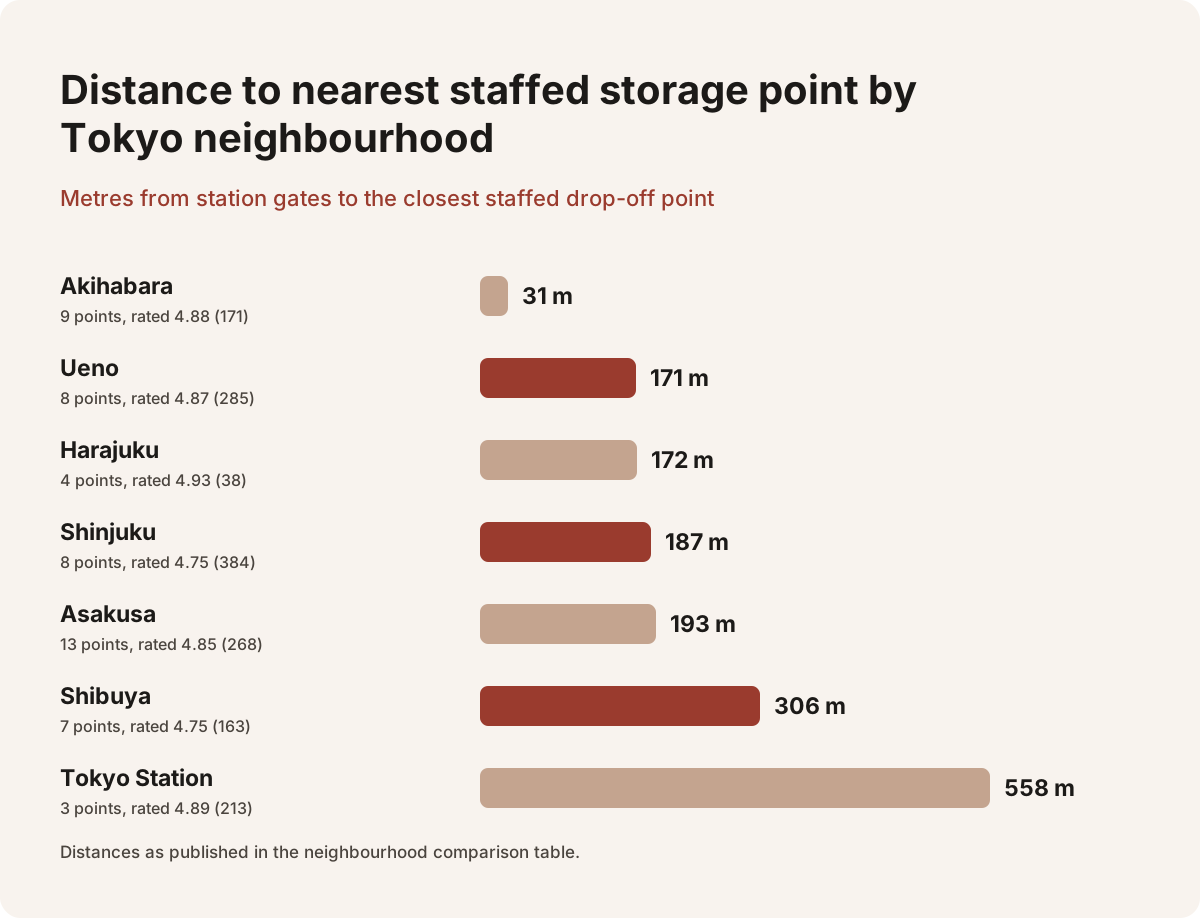
Asakusa, Shinjuku and Akihabara are the three easiest bases for a short stay, because each has staffed Radical Storage points within 200 m of the station and the same 850 yen day rate applies city-wide. Akihabara's closest point sits 31 m from the gates, Asakusa's 193 m, Shinjuku's 187 m.
Tokyo is not one city centre but a chain of them, and a visitor staying two or three nights usually picks one cluster and stays put. The research behind Luggage Storage in Tokyo ranks those clusters by a single practical measure: how far the nearest staffed drop-off sits from the station, and how many alternatives surround it. Sightlines, food streets and nightlife matter, but a base that forces a 20 minute detour with a wheeled case every morning wears thin fast.
Every storage point named in this guide is a partner location in the Radical Storage network. This site neither owns nor operates any of them and holds no bags itself; the figures below come from the network's own Tokyo data plus the rail operators' published tariffs. That separation matters when a reader is handing a suitcase to a shop they have never entered.
The comparison table uses each area's published point count, its Radical Storage rating with the review pool beside it, and the distance to the nearest point. Ratings belong to Radical Storage, not to this site, and a small pool such as Harajuku's 38 reviews should be read as exactly that.
| Neighbourhood | Radical Storage points | Rating (reviews) | Nearest point |
|---|---|---|---|
| Asakusa | 13 | 4.85 (268) | 193 m |
| Shinjuku | 8 | 4.75 (384) | 187 m |
| Akihabara | 9 | 4.88 (171) | 31 m |
| Ueno | 8 | 4.87 (285) | 171 m |
| Tokyo Station | 3 | 4.89 (213) | 558 m |
| Shibuya | 7 | 4.75 (163) | 306 m |
| Harajuku | 4 | 4.93 (38) | 172 m |
Two caveats travel with that table. Ueno's nearest point sits 171 m from the station, but the rating pool of 285 reviews makes it one of the best evidenced clusters in the city. Tokyo Station's three points sit 558 m out, which sounds thin until the station's own attended baggage rooms are counted: Tokyo Station has seven of them, a fact covered in full lower down this page.
For a stay measured in hours rather than nights, the maths is different again, and the guide to where to store bags for a few hours covers that case separately. Short-stay planning starts here, with the clusters.
Where Can You Store A Bag On The East Side, Around Asakusa And Tokyo Skytree?
Asakusa has 13 staffed Radical Storage points, the deepest coverage of any area in the city, rated 4.85 across 268 reviews; the closest is 193 m from the station. Near Tokyo Skytree there are 3 points, nearest 85 m, rated 4.77 across 132 reviews. The temple quarter's visitor centre no longer takes bags.
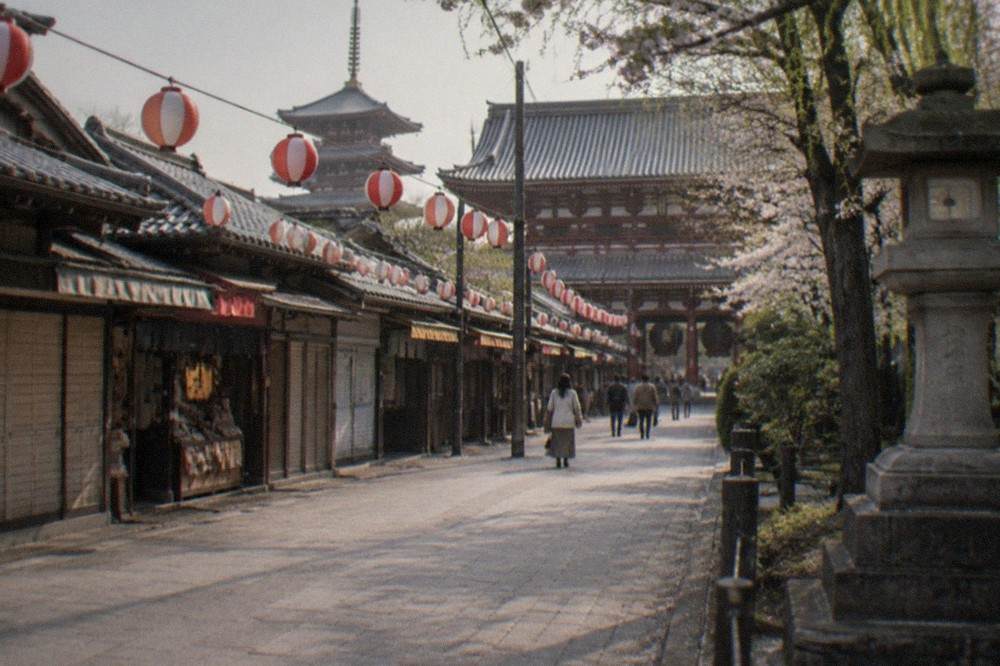
Asakusa is the strongest storage cluster on the east side, and it is staffed throughout: all 13 points are attended drop-offs rather than lockers, and none publishes a 24-hour clock, so opening times need checking on Radical Storage's Tokyo map before an early morning arrival. The area rating of 4.85 across 268 reviews is the second largest pool on the roster after Shinjuku.
The closure worth knowing about is the Asakusa Culture Tourist Information Center. Taito City ended its luggage acceptance on 31 March 2026 and explains the decision on its own page: travellers' suitcases were contributing to street congestion around Kaminarimon. English-language coverage has been slow to catch up, and a visitor who plans around that service will arrive to find it gone. The Sagawa Express counter at street level near Kaminarimon still takes bags, at a single 800 yen day rate with no size tiers.
The Tobu Tourist Information Center inside Tobu Asakusa Station on 1F also holds luggage, from 07:20 to 19:00 year-round, though it publishes no price list, so the cost has to be asked for at the counter rather than assumed. Toei Subway's Asakusa lockers run to 72 doors across four banks, all of them outside the ticket gates, and the large Toei tier measures 856 x 342 x 663 mm inside, a depth of 342 mm being the number that decides whether a hard-shell case fits. Tokyo Metro's Asakusa page counts 57 doors of its own.
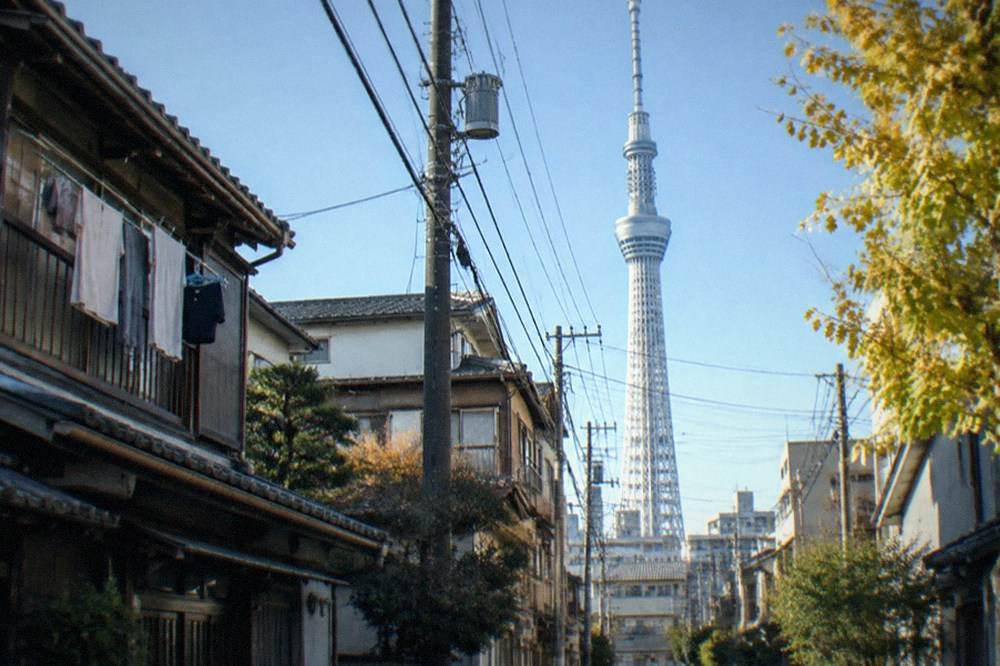
Tokyo Skytree is a different proposition because the venue forces the decision. Its own visitor rules prohibit any item with a side over 60 cm, enforced by bag inspection at entry, and a cabin bag around 55 cm passes while any checked case does not; the rules are published at tokyo-skytree.jp. The tower's own page names its two sanctioned alternatives: coin lockers in Skytree Town, or the paid Sagawa counter. That counter sits in Solamachi Tower 1F, runs 10:00 to 21:00, and charges 800 yen for a bag up to 100 cm, 1,000 yen up to 160 cm and 1,300 yen beyond that, per piece per day.
Radical Storage's own cluster near the tower is small but well placed: 3 staffed points, the nearest 85 m from the entrance, rated 4.77 across 132 reviews. For a Skytree afternoon the choice is between those points, the Solamachi counter and the lockers, and at 850 yen a day the staffed options are close to Sagawa's tariff for a mid-size case.
Can You Store Luggage Near Shinjuku And Shibuya?
Shinjuku has 8 Radical Storage points, 6 of them staffed and 2 of them lockers, rated 4.75 across 384 reviews, the largest review pool on the Tokyo roster; the closest point is 187 m from the station. Shibuya has 7 points, 5 of them lockers, rated 4.75 across 163 reviews, and its nearest is 306 m out.
Shinjuku is the busiest terminal in the world by passenger count, and it shows in the storage maths. Tokyo Metro alone publishes 52 locker doors at Shinjuku, and the Busta Shinjuku bus terminal adds its own coin lockers on a 72 hour maximum, with no attended baggage room of its own in the terminal's facility list. JR East runs no baggage room at Shinjuku either; its logistics arm lists Tokyo, Ueno and Shinagawa but not this station, so the staffed options on the west side are the Radical Storage points and two independents.
Of the eight Radical Storage points at Shinjuku, two are listed as open 24 hours, which matters for a late arrival on an airport bus into Busta. Two are automated lockers rather than staffed shops, and the rating pool of 384 reviews is the largest on the Tokyo roster. The nearest sits 187 m from the gates.
The non-network option worth naming is the Odakyu Travel Center at the west exit, which holds bags up to 3 days but deliberately publishes no price, asking travellers to check at drop-off. Sagawa Express runs a counter inside the Tokyo Tourist Information Center on Busta 3F, open 06:30 to 21:00 at 800, 1,000 or 1,500 yen a day by size.
Shibuya skews the other way: five of its seven Radical Storage points are lockers and only two are staffed, with three listed as open 24 hours. The nearest point is 306 m from the station, the longest walk among the major clusters, though Tokyo Metro's own Shibuya page counts 146 locker doors, the deepest locker bank on the Metro network. For a short stay built around Shibuya Crossing and the shopping district, the practical plan is a locker by day and a staffed point for anything overnight that will not fit the 342 mm depth.
The three areas below are the ones a short-stay visitor actually books between, and the band that follows puts them side by side.
Is Akihabara Or Tokyo Station The Better Base With A Suitcase?
Akihabara is the tighter cluster: 9 staffed Radical Storage points, rated 4.88 across 171 reviews, with the nearest just 31 m from the station. Tokyo Station has 3 staffed points rated 4.89 across 213 reviews, but its closest is 558 m out, and the station's own attended baggage rooms are the better-known option there.
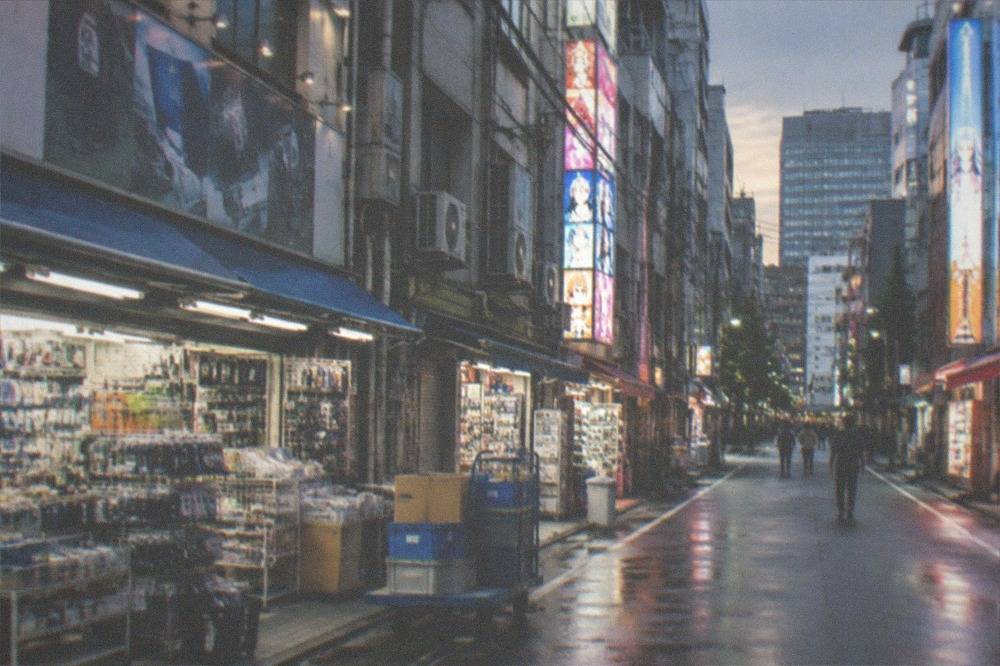
Akihabara's selling point is proximity. All nine of its Radical Storage points are staffed, none is a locker, and the nearest is 31 m from the station, the shortest distance of any cluster on the roster. The rating, 4.88 across 171 reviews, sits high with a pool large enough to mean something. For a one or two night stay on the east side of the centre, with the Tsukuba Express and Hibiya lines on the doorstep, it is the least-friction base in the city for a traveller arriving with a case and wanting it gone within a minute of the gates.
Ueno belongs in the same conversation. Eight staffed points, the nearest 171 m out, rated 4.87 across 285 reviews, and a JR East Logistics baggage room on the 3F concourse inside the Park Gate holding bags up to 30 days at 500, 1,000 or 2,000 yen by size, open 10:00 to 20:00. One widely repeated number about Ueno deserves correction: JR East's own figure of 19 counts locker locations, meaning nineteen banks, while Tokyo Metro alone publishes 127 doors at Ueno. Any count of lockers should say what it counts.
Tokyo Station is the opposite trade: the fewest Radical Storage points of any major cluster, three, and the longest walk to the nearest at 558 m, but the deepest attended infrastructure in the city. JR East Logistics runs four rooms there on the same 500 / 1,000 / 2,000 yen tiers with a 30 day maximum: Yaesu South outside the gates from 09:30 to 20:00, BAGGAGE STORAGE+ inside the North gate, the Shinkansen South transfer gate from 09:00 to 21:00, and Marunouchi Central from 10:00 to 20:00. The Gransta cloak on B1 and the JR EAST Travel Service Center both take bags for the same day only, and Sagawa's Ichibangai counter charges 1,000 to 2,000 yen by three-side total.
Akihabara's points carry the same opening-hours caveat as the rest of the network: none of the nine publishes a 24-hour clock, so a very early drop or a late collection needs the hours confirmed on Radical Storage's Tokyo map before the itinerary is locked. Against Tokyo Station's staffed rooms, which close between 19:00 and 21:00 depending on the room, the two clusters suit different rhythms: Akihabara for speed at the gates, Tokyo Station for a long hold with a named operator.
Between those two bases the rest of the roster fills in quickly: Ueno for depth, Shibuya for locker banks, Harajuku for a compact four-point cluster near the shrine. The band below returns to the three this page recommends most often.
What Does Luggage Storage Cost In Tokyo?
Every Radical Storage point in the city charges the same published figures: 850 yen per bag per day for a regular bag, and a 355 yen per-bag fee charged once at checkout. One bag for one day is 850 and 355, which is 1,205 yen. There is no hourly tariff; a few hours is billed as a full day.
The uniformity is the point. A regular suitcase costs 850 yen per bag per day at 244 of the 249 Tokyo points on file, and the 355 yen per-bag fee is charged once at checkout rather than per day, so a longer stay does not multiply it. Radical Storage advertises a from-490 yen day rate, but that is a small-bag rate found at 11 points only, and it should never be read as the price of storing a suitcase in Tokyo.
One comparison trap is worth disarming here. A location card showing 750 yen is not cheaper than one showing 850: staffed points display the small-bag rate while automated lockers display the regular rate, and the same size tiers sit underneath both. The like-for-like figure for a normal suitcase is 850 everywhere.
| Cost item | Amount | How it is charged |
|---|---|---|
| Day rate, regular bag | 850 yen | Per bag, per day |
| Checkout fee | 355 yen | Per bag, once, not per day |
| One bag, one day | 1,205 yen | 850 plus 355, arithmetic on Radical Storage's published figures |
| Small-bag rate | 490 to 750 yen | At the minority of points that publish it; not a suitcase price |
| Hourly rate | Does not exist | A part-day is billed as a full day |
The guarantee question follows the price one. Radical Storage's Guarantee is not insurance, its own terms say so, and payouts are capped at EUR 3,000 per claim, with the terms allowing withdrawal at any time. A traveller storing a laptop or camera body should know that cap exists before choosing any point, staffed or otherwise. The full price picture, including multi-day arithmetic and what the small-bag rates cover, is laid out in the guide to Tokyo luggage storage prices.
How Do Coin Lockers Compare With A Staffed Storage Point?
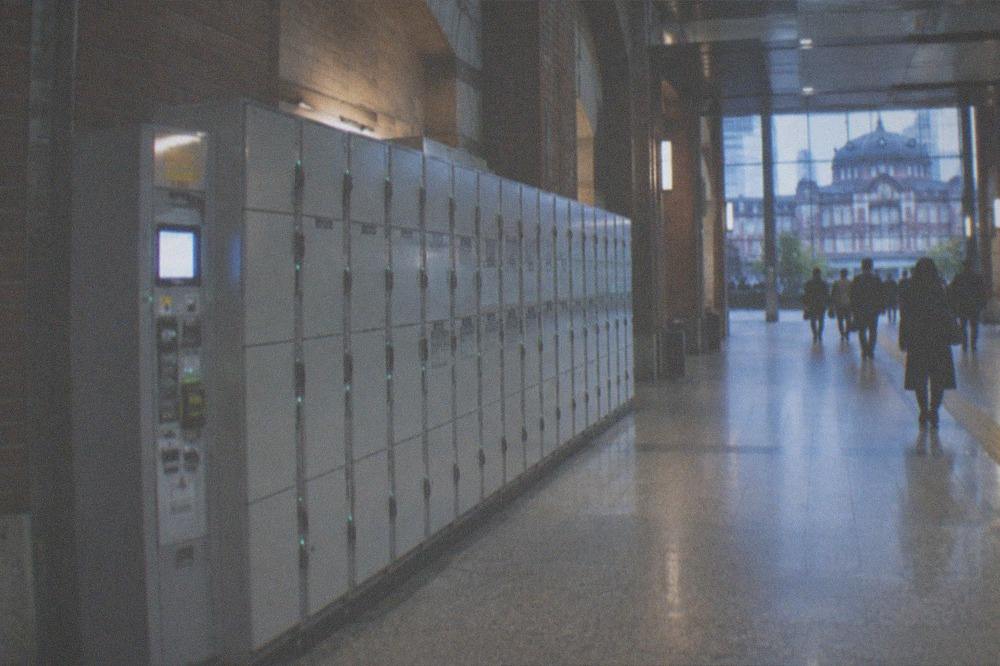
A mid-to-large Tokyo Metro locker costs 600 to 1,000 yen for one day, and Metro charges the same prices at every Metro station, so a locker is usually cheaper than a staffed point for a single day. The trade-off is size: standard Toei tiers are 342 mm deep, and Metro limits locker stays to 4 days including the start day.
Coin lockers are the default thing a traveller in Tokyo reaches for, and they are a genuine alternative with real advantages, so they belong in an honest comparison rather than a footnote. Tokyo Metro publishes a single price ladder across all 141 station rows on one page at metocan.co.jp: 300, 500, 600, 900 and 1,000 yen. Metro locker prices do not vary by station; only the mix of door sizes does. That single sentence contradicts a great deal of English travel writing, which describes Tokyo locker pricing as station-dependent across the board.
JR East is different: its Multi Ecube prices do vary by station, and JR East's own Ueno guide gives SS at 300 yen, S at 500, M at 700 to 800 and L at 900 to 1,100, with sizes explained tier by tier at media.jreast.co.jp. Reserving a Multi Ecube locker in advance adds a 500 yen charge per box, and JR East's own media documents a 100 to 200 yen peak-season surcharge on the M and L tiers.
| Operator | One-day price | Where it applies | Maximum stay | Extras |
|---|---|---|---|---|
| Tokyo Metro | 300 / 500 / 600 / 900 / 1,000 yen | Same prices at every Metro station | 4 days including the start day | Day rolls at 02:00 |
| JR East Multi Ecube | 300 to 1,100 yen by tier | Varies by station | 3 days | +500 yen to reserve; peak +100 to 200 yen on M and L |
| Haneda Terminal 3 lockers | 500 / 700 / 900 yen per 24h | Terminal 3 only | 7 days | Priced per 24 hours, not per day |
| Narita lockers | 400 / 600 / 800 yen | Airport, day boundary at midnight | 8 days | Hourly tariff exists at only two locations |
Two locker facts decide most itineraries. First, the duration rules genuinely disagree: Metro allows 4 days including the start day, JR East Smart Logistics allows 3, and paying more does not extend the period, a point JR East states outright on its own terms page. Second, the expiry process is unforgiving. After the period ends the operator opens the locker, moves the contents to a designated place, holds them for 30 days while the same daily rate keeps running, requires the receipt, photo ID and the same IC card used to pay, and takes cash only for the separate storage fee. JR East disposes of food immediately with no grace period at all. The depth constraint matters as much as the clock: 342 mm on a Toei locker and 340 mm on a JR East one, which is what stops a deep hard-shell case, not the width. The tier-by-tier measurements are in the guide to Tokyo coin locker sizes, and the duration rules in full, including what happens to an overstayed bag, are in how long you can leave luggage in Tokyo.
Liability caps the comparison. Four operators, Metro Commerce, JR East Smart Logistics, Tokyu and Keio, all publish the same 30,000 yen limit on compensation for locker contents, and that cap is a contract term rather than Japanese law. The terms also ban anything worth 30,000 yen or more from going into the locker in the first place, so the cap and the ban meet at the same number: a valuable was never an allowed item, and a locker will not make a traveller whole for a laptop. A staffed point does not remove that caution, given the EUR 3,000 per-claim cap on the Radical Storage Guarantee, but it does put a person between the bag and the street.
Which Neighbourhood Should You Pick For A One-Night Stopover?
For one night, Tokyo Station and Ueno are the strongest clusters: Tokyo Station has 3 staffed points within 558 m and JR East Logistics baggage rooms that hold a bag up to 30 days, while Ueno has 8 staffed points, the nearest 171 m from the gates. If the stopover runs through Haneda, Terminal 3 has attended storage open 24 hours.
A one-night stopover compresses every decision, because the bag has to be dropped, the evening enjoyed and the bag collected inside about eighteen hours. Tokyo Station's seven attended rooms make it the safest cluster for that pattern, and Ueno's baggage room inside the Park Gate keeps the same 10:00 to 20:00 window with the same 30 day maximum. Shinagawa is the sleeper option on paper, with a JR East Logistics room inside the Central Gate, but its weekday discount has forced-peak dates: weekend rates of 800 to 2,000 yen apply on weekdays during 27 April to 6 May, 10 to 19 August, and 28 December to 6 January, and the room closes on 1 January.
| Stopover hub | Radical Storage points | Station-run option | Watch out for |
|---|---|---|---|
| Tokyo Station | 3 staffed, nearest 558 m | Seven attended rooms, 500 to 2,000 yen, up to 30 days | Gransta cloak and Travel Service Center are same-day only |
| Ueno | 8 staffed, nearest 171 m | JR East Logistics room, 500 / 1,000 / 2,000 yen, 30 days | Room is inside the Park Gate, 10:00 to 20:00 |
| Shinagawa | 3 points, nearest 1,205 m | Event Space YK, M 800 yen weekday | Forced-peak dates; closed 1 January |
| Haneda Terminal 3 | None in any terminal | Attended desks open 24 hours, 800 / 1,000 / 2,000 yen per 24 hours | Nearest Radical point is about 3.4 km away in Kawasaki |
The airport row deserves its own paragraph, because the terminal distinction is where stopover planning goes wrong. Haneda's Terminal 3 desks are open 24 hours and price at 800 yen for a bag under 120 cm, 1,000 up to 200 cm and 2,000 up to the 300 cm three-side maximum, published by the airport itself at tokyo-haneda.com, and the airport's sitewide rule caps storage at two weeks. But Haneda Terminal 1 and Terminal 2 price per day while Terminal 3 prices per 24 hours: same numbers, different clock, a distinction the English-language travel web routinely misses. Yamato's international counter at Terminal 2 publishes no limit on the storage period at all, which contradicts the airport's own two-week rule; both are recorded here, neither resolved. And no Radical Storage point sits inside any Haneda terminal, so a reader who assumes a terminal drop-off through this site will be walking about 3.4 km into Kawasaki to find the nearest one.
Harajuku deserves a final mention for a short stay built around Meiji Shrine and Omotesando: 4 points, the nearest 172 m from the station, one locker and three staffed, with a 4.93 rating that rests on 38 reviews. A high score from a small pool is a real signal from a small number of people, and it should be read that way. Roppongi, with 3 points at 199 m and a 4.88 rating from 47 reviews, and Ginza, with just 1 point rated 4.84 from 118 reviews and the nearest 1,131 m out, are thinner clusters where a locker-first plan makes more sense.
For anything longer than a stopover, the picture widens again: forwarding a bag between hotels, the Shinkansen oversized-baggage rule and the multi-week options each change the arithmetic, and the overnight and long-term guide covers those cases in depth.
Common Questions About Tokyo Neighbourhoods For A Short Stay
Which Tokyo neighbourhood is best for a short stay with luggage?
Akihabara for proximity, with nine staffed points and the nearest 31 m from the station; Asakusa for depth, with thirteen staffed points; Tokyo Station if a long hold matters more than distance, since its attended rooms keep a bag up to 30 days at 500 to 2,000 yen.
Can I store a suitcase at Shinjuku Station?
Yes. Shinjuku has eight Radical Storage points, six staffed and two lockers, the nearest 187 m out, and two of the eight are listed as open 24 hours. Tokyo Metro also runs 52 locker doors there, and Busta Shinjuku has lockers on a 72 hour maximum, though no JR attended baggage room exists at the station.
How much is luggage storage in Tokyo per day?
850 yen per bag per day for a regular bag at 244 of the 249 Radical Storage points, with a 355 yen per-bag fee added once at checkout. One bag for one day is 850 and 355, which is 1,205 yen. There is no hourly tariff; a part-day is billed as a full day.
Are coin lockers cheaper than luggage storage points in Tokyo?
Usually, for one day. A Tokyo Metro locker runs 300 to 1,000 yen at the same prices at every Metro station, against 850 yen plus the one-off 355 yen fee at a staffed point. The trade-offs are the 342 mm depth on standard tiers, the 4 day Metro maximum or 3 day JR East maximum, and the 30,000 yen compensation cap written into the locker terms.
Can I leave a bag at Tokyo Skytree?
Not inside the tower with any side over 60 cm; that rule is enforced by bag inspection at entry. The sanctioned options are the paid coin lockers in Skytree Town and the Sagawa counter at Solamachi 1F, 800 to 1,300 yen per piece per day by size. Radical Storage also has three staffed points nearby, the closest 85 m away.
Is Akihabara good for a one-night stopover?
Yes, and mainly for logistics rather than sightseeing: nine staffed points, the nearest 31 m from the gates, a 4.88 rating across 171 reviews, and the Hibiya and Tsukuba Express lines connecting toward Ueno and the east side. Nothing in the cluster publishes a 24-hour clock, so an early flight out needs the opening times checked before committing.