What Luggage Storage Costs In Tokyo: Prices Per Bag And Per Day
Most English pages quote a from price that only 11 of 249 Tokyo storage points actually charge. Here is what a normal suitcase really costs, and how it compares with every official alternative.
Short answer
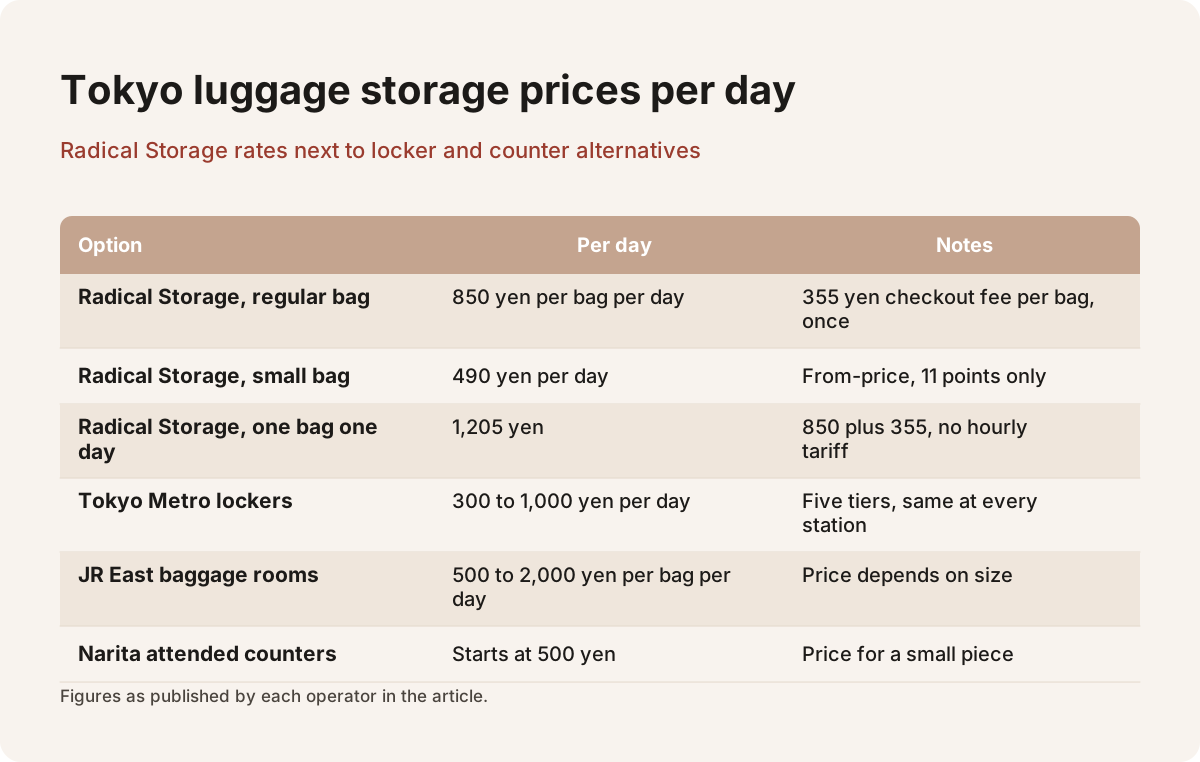
Luggage storage in Tokyo costs 850 yen per bag per day at 244 of 249 Radical Storage points, plus a 355 yen fee charged once per bag at checkout. One bag for one day is 1,205 yen in total. Coin lockers run 300 to 1,100 yen per day but cap the size and the storage period.
How Much Does It Cost To Store Luggage In Tokyo?
Luggage storage in Tokyo costs 850 yen per bag per day at 244 of 249 Radical Storage points, plus a 355 yen fee charged once per bag at checkout. One bag for one day is 850 plus 355, or 1,205 yen. Radical Storage advertises from 490 yen per day, but that is a small-bag rate found at 11 points only.
That single paragraph settles most of what a search result will tell you incorrectly. The 490 yen figure that appears in Radical Storage's own Tokyo marketing is real, but it is the rate for a small bag, the kind that fits under a café table, and only 11 of the 249 Tokyo points on file publish it. A traveller with a normal checked suitcase pays the regular rate of 850 yen per bag per day at 244 of those points. Every price on this page is a Radical Storage published figure or an official operator figure, nothing estimated.
The fee structure matters more than the headline. The 355 yen charge is added once per bag at checkout and does not scale with the number of days, so a five-day hold pays 355 once, not five times. There is no hourly tariff anywhere in the network: a two-hour stop between checkout and a night train is billed as a full day, exactly as a coin locker would bill it.
For comparison, the alternatives a visitor actually weighs are priced by the operators themselves. Tokyo Metro lockers run 300 to 1,000 yen per day. JR East station baggage rooms charge 500 to 2,000 yen per bag per day depending on size. Narita's attended counters start at 500 yen for a small piece. Those prices are set out in full below, with the size limits and duration rules that decide which option actually works.
The research behind this page, and the wider Luggage Storage in Tokyo directory, compares the paid network against every official alternative rather than against itself. A reader weighing a 600 yen locker against a 1,205 yen storage day needs both numbers stated honestly, and both are below.
Why Does One Bag For One Day Cost 1,205 Yen?
The 850 yen daily rate is charged per bag per day, and a 355 yen fee per bag is added once at checkout. For one bag held one day that is 850 plus 355, which is 1,205 yen. The checkout fee does not scale with days, so a longer hold adds 850 per day, not 1,205. There is no hourly tariff.
This is the arithmetic that almost no English page performs. Quoting the day rate alone understates a one-day booking by roughly a third, because the 355 yen per-bag checkout fee is part of Radical Storage's own published pricing rather than a surprise. Presented as arithmetic on those published figures, one bag for one day is 1,205 yen, and against the advertised 490 yen from-price the real one-day cost for a suitcase is about two and a half times higher.
| Charge | Amount | When it applies |
|---|---|---|
| Day rate, regular bag | 850 yen per bag per day | At 244 of the 249 Tokyo points on file |
| Day rate, small bag | 490 yen per day | The advertised from-price, at 11 points only |
| Checkout fee | 355 yen per bag | Charged once at checkout, not per day |
| One bag, one day | 850 + 355 = 1,205 yen | Arithmetic on Radical Storage's own figures |
One more card-reader trap is worth naming here because it drives price comparisons wrong. A staffed Radical Storage partner point displays its small-bag rate on the card, while an automated locker point displays the regular rate. A 750 yen card is not a cheaper option than an 850 yen card; it is a smaller bag at the same underlying tier structure. Comparing two cards by their displayed prices, or ranking two neighbourhoods by them, produces a false result. The like-for-like figure for a regular suitcase is 850.
Within the network, the difference between areas is coverage and convenience rather than price, since the rate is the same citywide. Shinjuku carries 8 points with a 4.75 rating from 384 reviews, and the nearest one sits 187 m from the station, which is why it draws the heaviest traffic among the station areas on this site.
Ginza shows the same pattern in a smaller footprint: 1 point, a 4.84 rating from 118 reviews, nearest point 1,131 m out. Asakusa, by contrast, is the deepest cluster in the directory with 13 points, a 4.85 rating from 268 reviews and a nearest point just 193 m from the gate, useful precisely because Asakusa's old streets and temple approaches are the least suitcase-friendly terrain in the city.
For Shinjuku specifically, the station's scale cuts both ways: 8 points spread across several exits, and a drop-off that needs planning because the locker banks nearest the busiest exits fill first. That behaviour, and why it happens, is covered in the guide to why Tokyo coin lockers are full.
What Do Coin Lockers Charge, And How Does That Compare?
Tokyo Metro charges 300, 500, 600, 900 and 1,000 yen for its five locker tiers, and those are the same prices at every Metro station. JR East lockers vary by station, from 300 to 400 yen for the smallest tier up to 700 to 1,100 yen for large. A one-day locker is usually cheaper than a 1,205 yen storage day.
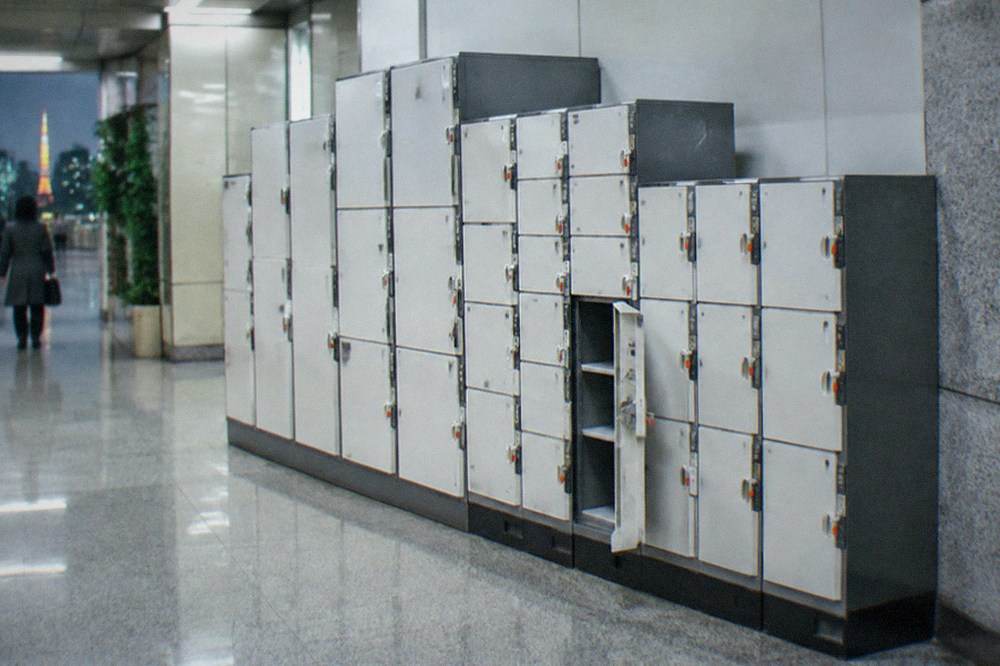
Coin lockers are the default reflex for a Tokyo visitor, and on pure price for one day they often win. Tokyo Metro's ladder is published in one place for the whole network, and Metro Commerce's own page states it across all 141 station-line rows: the mix of door sizes differs by station, the prices do not. JR East's prices do vary, and the operator's live data shows the spread: Tokyo and Shinjuku charge 700 yen for an M locker while Omiya and Hodogaya charge 600.
| Operator | Tier | Published price | Notes |
|---|---|---|---|
| Tokyo Metro | All five tiers | 300 / 500 / 600 / 900 / 1,000 yen | Same prices at every Metro station |
| JR East (Multi Ecube) | SS | 300 to 400 yen | Varies by station |
| JR East (Multi Ecube) | S | 400 to 500 yen | Varies by station |
| JR East (Multi Ecube) | M | 500 to 900 yen | Tokyo and Shinjuku at 700 |
| JR East (Multi Ecube) | L | 700 to 1,100 yen | Peak season adds 100 to 200 yen |
| JR East (Multi Ecube) | LW | 800 to 1,000 yen | The wide tier, 56 cm deep |
| JR East reservation | Any tier | +500 yen per box | Flat addition per reserved box |
| Toei smartphone reservation | Large / medium / small | +300 / +200 / +100 yen | 7 stations, bookable 2 hours ahead |
The size limits are where the cheaper option fails, and the internal dimensions are the numbers that decide. A Toei large locker measures 856 x 342 x 663 mm inside. A JR East L locker is 86 x 34 x 65 cm. The binding constraint is depth, not width: a hard-shell case about 30 cm deep with wheels fits the depth and fails the height on standard tiers. The tier most English coverage never mentions is the LW, 86 x 56 x 65 cm, the only common tier that takes a wide checked suitcase lying flat, and reservation-capable units are 55 cm deep rather than 65. The full tier-by-tier measurement set, with what actually fits, is laid out in Tokyo coin locker sizes.
Metro Commerce publishes the prices on its own locker page at metocan.co.jp, which is the source for the network-wide ladder above.
| Operator | Tier | Internal dimensions | What decides the fit |
|---|---|---|---|
| Toei Subway | Large | 856 x 342 x 663 mm | Depth is the binding constraint |
| Toei Subway | Medium | 502 x 342 x 663 mm | Fits a cabin case, not a spinner |
| Toei Subway | Standard | 325 x 342 x 663 mm | Backpack or small duffel |
| JR East (Multi Ecube) | L | 86 x 34 x 65 cm | Standard checked case, upright only |
| JR East (Multi Ecube) | LW | 86 x 56 x 65 cm | Wide checked case lies flat |
| JR East (Multi Ecube) | M | 50 x 34 x 65 cm | Cabin case plus souvenirs |
In Asakusa the locker supply is thin relative to demand, which is the exact situation where a staffed point earns its fee. Tokyo Metro publishes 57 doors at Asakusa and Toei another 72 across four banks, all outside the ticket gates. Against that, the Radical Storage cluster here runs 13 points with a 4.85 rating from 268 reviews, nearest point 193 m away, and a staffed drop-off does not depend on a free door being left.
What Do Station Baggage Rooms And Staffed Counters Cost?
Attended baggage rooms at Tokyo Station and Ueno charge 500 yen for a bag up to 100 cm, 1,000 yen up to 200 cm and 2,000 yen above that, with a 30-day maximum. Shinagawa charges 800 yen for a medium bag on weekdays. These desks take oversized cases that lockers refuse.
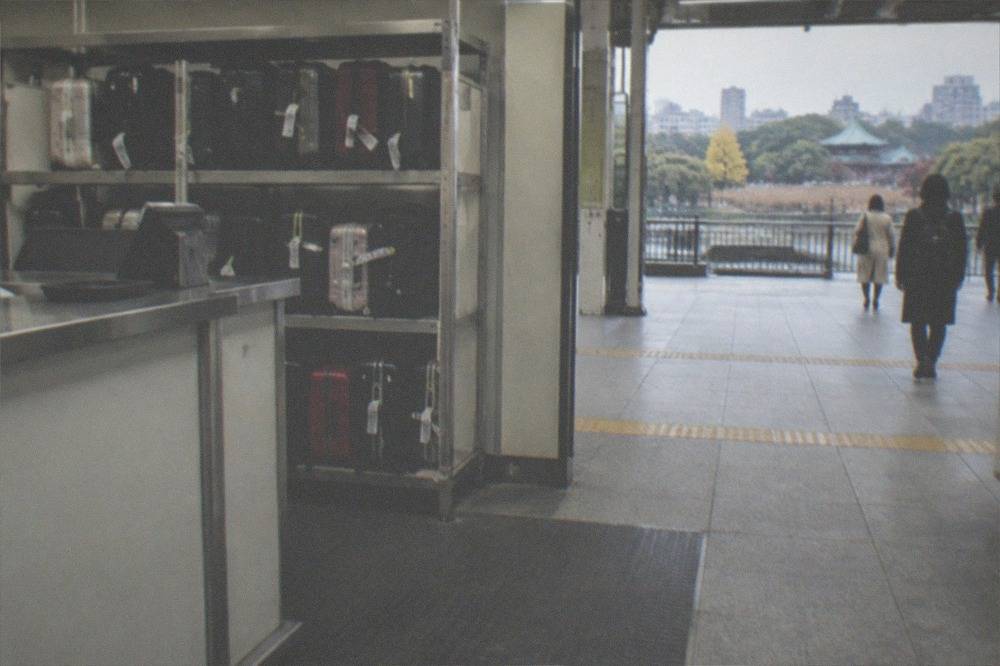
Staffed baggage rooms are Tokyo's most underused official option, and they are concentrated in a way most coverage misses: Tokyo Station has seven of them, and the other giant stations have none of their own. JR East's logistics arm publishes the tariff on its own baggage service page, and it is the same three tiers at Tokyo and Ueno: 500 yen for a total three-side measurement up to 100 cm, 1,000 yen up to 200 cm, 2,000 yen beyond.
| Facility | Where | Price per bag per day | Max days | Hours |
|---|---|---|---|---|
| Tokyo Station, Yaesu South | Outside the gates | 500 / 1,000 / 2,000 yen by size | 30 | 09:30 to 20:00 |
| Tokyo Station, JR East Logistics B1 | Inside the North gate | 500 / 1,000 / 2,000 yen | 30 | 09:30 to 20:00 |
| Tokyo Station, Marunouchi Central | Inside | 500 / 1,000 / 2,000 yen | 30 | 10:00 to 20:00 |
| Ueno Station | 3F, inside the Park Gate | 500 / 1,000 / 2,000 yen | 30 | 10:00 to 20:00 |
| Shinagawa Station | Inside the Central Gate | 800 / 1,600 yen weekday, 1,000 / 2,000 on Saturdays, Sundays and forced-peak dates | Not published | 10:00 to 19:00, closed 1 January |
| Shinjuku, Busta 3F (Sagawa) | Inside the tourist centre | 800 / 1,000 / 1,500 yen | Not published | 06:30 to 21:00 |
| Tokyo Skytree, Solamachi 1F (Sagawa) | Tower 1F | 800 / 1,000 / 1,300 yen by size | Not published | 10:00 to 21:00 |
At Ueno the baggage room sits inside the Park Gate, which is the right side of the station for anyone headed to the museums, and Ueno is also the strongest Radical Storage cluster on the east side of the directory: 8 points, a 4.87 rating from 285 reviews, nearest point 171 m from the gates. For a museum day, the free lockers inside the Tokyo Metropolitan Art Museum and the information-counter bag-taking at the National Art Center make a second paid drop unnecessary once the suitcase is parked.
Shinjuku is the instructive absence. No JR baggage room operates there, a fact JR East's own pages support by listing luggage storage at the Travel Service Center in Tokyo Station only, and Busta Shinjuku's terminal list shows coin lockers with a 72-hour maximum and no staffed room. The Odakyu counter at the West Exit takes bags for up to 3 days but publishes no price, stating that it is confirmed at drop-off. So a Shinjuku hold beyond three days, or a case too wide for the locker tiers, comes down to a staffed partner point.
What Does Luggage Storage Cost At Narita And Haneda?
At Narita, attended counters charge from 500 yen for a small bag to 2,000 yen for a large one per piece per day, depending on the operator. At Haneda, the airport's own desks charge 800, 1,000 and 2,000 yen per day, and Terminal 3 desks are open 24 hours and priced per 24 hours.
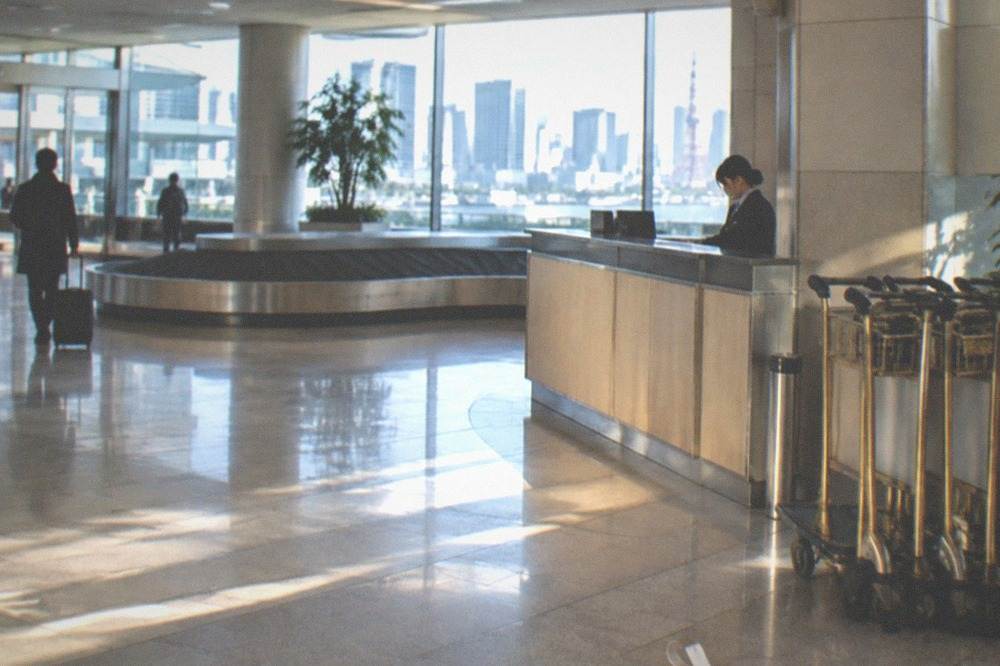
The two airports price differently, and neither publishes a single figure. Narita's airport page names eleven attended counters, all in Terminal 1 and Terminal 2, and publishes no prices at all, deferring to each operator. The operators do publish, and the spread is wide: the Promotion Foundation desk in Terminal 2 is the cheapest attended storage at Narita at 500 yen for a small piece, while JAL ABC's seven counters charge 800 to 2,000 yen and bill by calendar day rather than by the hour. Sagawa's three Narita counters opened in July and September 2026, so this picture is actively changing.
| Airport and operator | Small | Medium | Large | Notes |
|---|---|---|---|---|
| Narita, Promotion Foundation (T2) | 500 yen | 700 yen | 1,100 yen | Cheapest attended desk at the airport |
| Narita, Sagawa Express | 500 yen | 700 yen | 1,150 yen | Three counters, opened 2026 |
| Narita, JAL ABC | 800 yen | 1,000 yen | 2,000 yen | Billed by calendar day, paid on collection |
| Haneda T1 and T2, airport desks | 800 yen | 1,000 yen | 2,000 yen | Priced per day, 08:00 to 19:30 |
| Haneda T3, airport desks | 800 yen | 1,000 yen | 2,000 yen | Open 24 hours, priced per 24 hours |
| Haneda T2, Yamato | 800 yen | 1,000 yen | 2,000 yen | No limit on the storage period |
Haneda's own sitewide rule allows storage for up to two weeks, with a maximum combined three-side length of 300 cm and 30 kg. The detail English pages miss is the clock: Terminal 1 and Terminal 2 are priced per day, while Terminal 3, the international terminal, is priced per 24 hours with the same three numbers. Yamato's Terminal 2 counter publishes no limit on the storage period at all, which contradicts the airport's own two-week rule, and both are the operators' statements.
The Promotion Foundation's tariff is published on its own site at npf-airport.jp, which is the source for the Narita figures above.
Radical Storage has no point inside any terminal at either airport. The nearest point to Narita is about 6.0 km away in Tomisato, Chiba, and the nearest to Haneda is about 3.4 km away in Kawasaki, Kanagawa, across a prefecture boundary. Both airport areas are listed on this site for completeness, with honest distances and, for Haneda, no rating yet, but for a same-terminal drop the airports' own counters are the practical option.
Which Hidden Costs Catch People Out?
The costs that surprise people are the 355 yen checkout fee, the day-counting rules that bill a part day as a full day, and locker expiry: a Tokyo Metro locker may be held four days including the start day, a JR East Multi Ecube locker three, and paying more does not extend it.
The checkout fee has been covered in full above, so the remaining traps are the ones that arrive after payment. A Tokyo Metro locker runs from first train to last train, and the day rolls at 02:00, not midnight: the first and last days each count as a whole day however briefly the locker was held. A bag left past the last train gains a day at 2 a.m. There is no part-day rate at any of these services.
Expiry is the bigger trap. When a Metro locker's period ends, the operator opens it, moves the contents to a designated place, and keeps charging the same daily rate for a separate storage of up to 30 days, counted from the original start date. Collection needs the receipt, photo ID and the same IC card used for payment, the separate storage fee is cash only, and the travel costs of going back for the bag sit with the traveller. After 30 days the contents are deemed abandoned. JR East's terms add that paying more does not extend the period, and that food is disposed of immediately with no grace period at all.
The 490 yen from-price is the other quiet cost. It is not a discount available everywhere; it is a small-bag rate at 11 points, and a suitcase never qualifies for it. Anyone budgeting a Tokyo trip on that figure will be out by about two and a half times on day one.
When Is A Coin Locker Cheaper, And When Is A Staffed Point Better?
A coin locker wins on price for a single day and a case that fits, since 600 or 900 yen beats 1,205 yen. A staffed Radical Storage point wins on size, on hours at the points open late, and on days: no locker rule forces collection after three or four days the way operator terms do.
The honest decision splits on three questions. First, size: if the case fits the locker tier, the locker's 600 or 900 yen is the cheaper day. If it does not, and a hard-shell spinner over 65 cm tall will not fit the standard tiers, the staffed point is not competing with the locker at all, it is competing with a baggage room that may not exist in that station. Second, duration: a locker is a three-to-four-day product under operator terms, while a staffed point has no such published expiry, which matters for anyone leaving a bag across a side trip. Third, the guarantee question: the locker operators cap their contractual liability at 30,000 yen, and the terms forbid storing anything worth that much in the first place, so neither option is a place for valuables. Radical Storage's Guarantee is likewise not insurance, its own terms say payouts are discretionary, and they are capped at EUR 3,000 per claim.
What the locker cannot do is absorb the demand. Shibuya carries 146 locker doors on the Tokyo Metro side alone, Ueno 127, Tokyo 100, and they still fill, which is the pattern behind the guide to why Tokyo coin lockers are full. A staffed point removes the empty-door lottery, takes a case of any common size, and returns it on any day within the booking. On price alone, the locker wins often enough that this page says so plainly; on the days when it does not, the gap is the cost of the plan actually working.
For a hold longer than a few days, the options widen beyond storage entirely, and the rules that govern each are collected in how long you can leave luggage in Tokyo, alongside the forwarding alternative for anyone who would rather the bag travel to the next hotel on its own.
Common Questions About Luggage Storage Prices In Tokyo
How much does it cost to store luggage in Tokyo per day?
A regular bag costs 850 yen per bag per day at 244 of the 249 Radical Storage points in Tokyo, with a 355 yen fee per bag added once at checkout. One bag for one day is 1,205 yen in total. Coin lockers cost 300 to 1,100 yen per day depending on tier and operator.
Is the 490 yen per day price real?
It is real but narrow. Radical Storage advertises from 490 yen per day, and that is a small-bag rate published at 11 of the 249 Tokyo points. A normal suitcase pays the regular rate of 850 yen per day at 244 points.
Do you pay the 355 yen fee every day?
No. The 355 yen fee is charged once per bag at checkout and does not scale with the number of days. A longer hold adds 850 yen per day, so the checkout fee matters most on short bookings.
Are coin lockers cheaper than Radical Storage in Tokyo?
For one day and a case that fits the locker tier, yes: a 600 or 900 yen locker beats the 1,205 yen one-day total. Lockers also carry strict size limits and a maximum period of three to four days depending on the operator, while staffed points take larger bags and have no such published expiry.
How much does luggage storage cost at Narita and Haneda airports?
At Narita, attended counters run from 500 yen for a small piece to 2,000 yen for a large one per piece per day, varying by operator. At Haneda, the airport's own desks charge 800, 1,000 and 2,000 yen, priced per day in Terminals 1 and 2 and per 24 hours in Terminal 3.