Sending Luggage From Tokyo To Kyoto: Fares, Carriers And Cut-Offs
Forwarding a suitcase ahead by takuhaibin turns a Tokyo to Kyoto transfer into a travel day with an empty back. The fares are published, the size bands are strict, and the one thing no operator will commit to on paper is exactly when the bag lands.
Short answer
Yamato TA-Q-BIN carries a suitcase from Tokyo to Kyoto for ¥2,170 at the 120 size band up to ¥5,410 at the 200 band, cash fares with tax included. Kyoto and Osaka share one Kansai tariff zone, so the fare is identical to either city. Carrying the parcel to a branch or konbini yourself takes ¥100 off. No carrier publishes a transit time.
Yamato's published cash fare table puts a suitcase on the Tokyo to Kyoto lane somewhere between ¥2,170 and ¥5,410, and that one spread settles most of the planning. The rest is logistics: which carrier accepts the size of case you actually own, where in Tokyo the parcel gets handed over, and what to do about the awkward fact that no operator publishes a delivery time for any forwarding lane. Takuhaibin, the Japanese term for luggage forwarding, is the name every hotel front desk and konbini counter will use, and each carrier publishes its own tariff, so nothing below has to be estimated. The mechanics of the service are covered in the takkyubin explained guide for first-time senders.
How Much Does It Cost To Send Luggage From Tokyo To Kyoto?
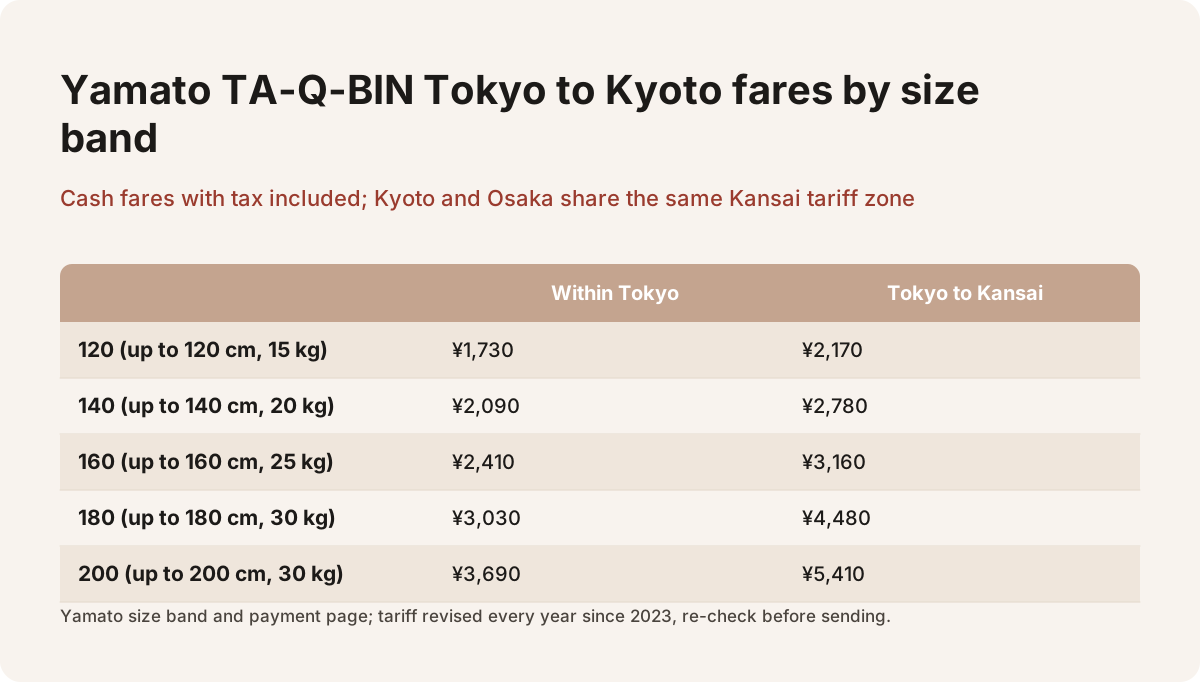
A suitcase forwarded by Yamato TA-Q-BIN from Tokyo to Kyoto costs ¥2,170 at the 120 size band, ¥2,780 at 140, ¥3,160 at 160, ¥4,480 at 180 and ¥5,410 at the 200 band, cash fares with tax included. Kyoto and Osaka sit in the same Kansai tariff zone, so the fare is identical to either city. A separate cashless table runs a few yen lower.
The size band is the greater of two numbers: the total of the bag's three sides in centimetres, or its actual weight in kilograms. A suitcase is charged at its measured size, within hard caps of 200 cm three-side total, 30 kg, and no single side over 170 cm. A 160 cm case packed to 18 kg rides the 160 band. The same case packed to 26 kg jumps to the 180 band, because the weight, not the tape measure, set the number. Anyone who has stuffed a suitcase to the airline limit should weigh it before assuming the size band applies.
The cash fares, tax included, for a Kanto origin:
| Size band | Three-side total | Max weight | Within Tokyo | Tokyo to Kyoto or Osaka |
|---|---|---|---|---|
| 120 | up to 120 cm | 15 kg | ¥1,730 | ¥2,170 |
| 140 | up to 140 cm | 20 kg | ¥2,090 | ¥2,780 |
| 160 | up to 160 cm | 25 kg | ¥2,410 | ¥3,160 |
| 180 | up to 180 cm | 30 kg | ¥3,030 | ¥4,480 |
| 200 | up to 200 cm | 30 kg | ¥3,690 | ¥5,410 |
Kyoto and Osaka are one tariff zone in Yamato's table, so the fare is identical whether the destination is a Kyoto guesthouse or a Namba apartment. That matters for multi-stop plans: a bag routed to Osaka costs exactly what a bag routed to Kyoto costs, and a party splitting between the two cities can compare options on a like-for-like basis. The full set of options for that decision is laid out in the luggage forwarding versus storage comparison for Tokyo.
Four published discounts shave the fare. Carrying the parcel to a branch, convenience store or agency yourself takes ¥100 off. A Kuroneko Member waybill handed in at a branch takes ¥150 off instead, and the two do not stack. A digital waybill takes ¥60 off, and two or more parcels travelling to a single address take ¥100 off each. Sending a bag to an airport rather than a home or hotel address adds ¥660, tax included, which is worth knowing for a return leg.
Two cautions before trusting any number. Yamato's tariff has been revised every year since 2023, so re-check Yamato's own size band and payment page before handing anything over. And a separate cashless fare table runs a few yen lower, ¥3,157 against ¥3,160 on the 160 band to Kansai, which is not worth planning a payment method around.
Yamato, Sagawa Or Japan Post: Which Carrier Fits Your Suitcase?
Yamato takes parcels up to 200 cm and 30 kg, Japan Post Yu-Pack up to 170 cm and 25 kg, and Sagawa's large-size service up to 260 cm and 50 kg. A normal checked suitcase prices similarly across the three: Yamato charges ¥3,160 on the 160 band to Kansai against Yu-Pack's ¥2,450 to ¥2,610, while Sagawa has no 120 band at all. Sagawa alone accepts an oversized or heavy case.
Yamato's ceiling covers the great majority of checked suitcases. A 29-inch spinner usually lands around 160 cm three-side total, comfortably inside both the size and weight caps. Where the ceiling bites is a ski or snowboard bag, a bike case, or any case packed past 30 kg, and those are exactly the items Sagawa exists for.
| Carrier | Maximum size | Maximum weight | Kansai fare examples | Drop-off network |
|---|---|---|---|---|
| Yamato TA-Q-BIN | 200 cm three-side total | 30 kg | ¥2,170 at band 120; ¥3,160 at band 160 | branches, hotels, Seven-Eleven and FamilyMart |
| Sagawa large-size service | 260 cm | 50 kg | ¥2,570 at band 160; ¥4,480 at band 200 | Sagawa counters and hotel desks |
| Japan Post Yu-Pack | 170 cm | 25 kg | ¥2,450 to ¥2,610 at band 160; ¥3,750 at band 170 | post offices |
Yu-Pack caps at 170 cm and 25 kg. It undercuts Yamato on the middle bands, ¥2,450 to ¥2,610 for a 160 to Kansai, but a full-size suitcase can simply be too big for it, and the 170 band at ¥3,750 is the end of its scale. Sagawa's published large-size fares to Kansai run ¥2,570 at the 160 band and ¥4,480 at the 200 band, per Sagawa's own fare table. A small parcel starts dearer with Sagawa than with Yamato because the 120 band does not exist in its scale, so the trade only makes sense when the bag genuinely does not fit Yamato's caps.
For a normal suitcase, the honest summary is that all three land within a few hundred yen of each other on the Tokyo to Kyoto lane, and the choice is more likely to be decided by which counter is nearest the hotel than by the fare. For a genuinely oversized or heavy case, Sagawa alone of the three will carry it, and that fact alone can decide the whole plan.
The konbini question deserves its own caution, because it is widely misreported. Every Yamato page names only Seven-Eleven and FamilyMart as convenience-store drop-off points. Lawson is a Japan Post counter, not a Yamato one, a distinction that surprises people who have seen the two brands used interchangeably in English travel writing. Yamato's own caveat is store-specific rather than a single cap: some konbini will not accept a parcel over the 180 size band. Agency shops stop at the 200 band and 30 kg. Cool TA-Q-BIN, Time Service and return-leg parcels cannot go through a convenience store at all, which matters if the forwarding plan involves anything refrigerated.
Where In Tokyo Do You Hand A Forwarded Suitcase Over, And By When?
Hotels hand the parcel to the driver at the front desk, konbini and branches accept it over the counter, and airport counters have published cut-off times: Sagawa stops accepting at 14:00 at Narita and 13:00 at Haneda, Yamato at 10:30 at Narita's main terminals and 09:50 at Terminal 3. For a hotel or konbini hand-over the cut-off is set by each location, not by the carrier.
The practical sequence is simple. The hotel front desk is the easiest hand-over point in Tokyo and almost every hotel forwards luggage as a routine service; the receptionist weighs nothing and charges nothing, the driver collects during the normal rounds. A konbini works when there is no hotel or the checkout is early. A Yamato branch or Sagawa counter works for anything awkward, and the staff will measure the case and print the label on the spot.
The published cut-off times all belong to the airport counters, where the driver schedule is fixed:
| Hand-over point | Acceptance cut-off | Operator | Notes |
|---|---|---|---|
| Narita, hotel delivery counters | 14:00 | Sagawa | collection from 16:00, ten Tokyo wards plus Urayasu |
| Haneda, hotel delivery counters | 13:00 | Sagawa | same served area |
| Narita Terminal 1 and 2 | 10:30 | Yamato | same-day airport service, window 18:00 to 21:00 |
| Narita Terminal 3 | 09:50 | Yamato | same-day airport service |
| City counters to either airport | 11:00 | Sagawa | outbound legs, both airports |
One asymmetry worth knowing even on the Kyoto lane: Yamato does not run a same-day service from the city to Narita in either direction of the wording, while Sagawa does, so a departure plan that ends at an airport rather than a Kyoto address has one fewer operator to choose from. For a plain Tokyo to Kyoto hotel-to-hotel send, none of the airport cut-offs apply, and the binding deadline is simply the hotel's own front-desk collection time, which every desk posts or will state on request.
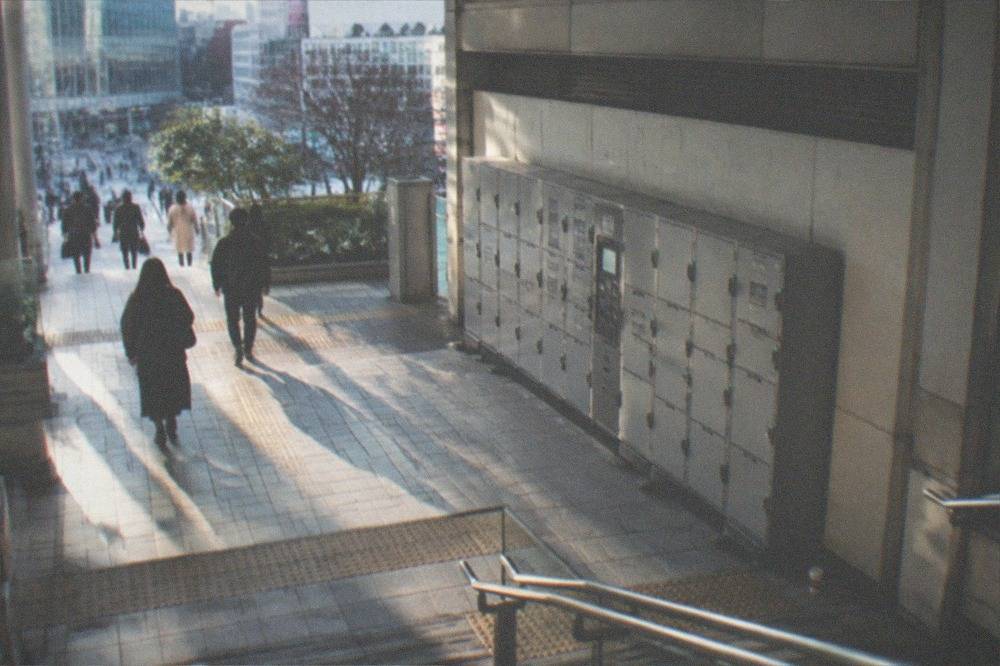
Tokyo Station is the natural staging point for a forwarding day in another sense: it is where the Shinkansen leaves from, and it is one of the few stations in the city with attended baggage rooms of its own, run by JR East Logistics at several concourse locations with a 30-day maximum and same-day-tier pricing from ¥500. A traveller who has handed the big case to Yamato in the morning and wants a few hours at the station before boarding has real options there, and the Tokyo Station storage guide covers them in detail.
Beyond the station's own baggage rooms, the Radical Storage network adds staffed points around the Marunouchi side, with the Tokyo Station cluster rated 4.89 across 213 reviews. Those figures belong to Radical Storage, not to this site, and every point listed is a Radical Storage partner location that this site neither owns nor operates. The day-rate arithmetic is the same everywhere: 850 yen per bag per day for a regular bag plus a 355 yen per-bag fee charged once at checkout, so one bag for one day is 850 plus 355, or 1,205 yen on Radical Storage's own published figures.
What Does Hotel-To-Hotel Shinkansen Forwarding Cost?
LUGGAGE EXPRESS, a JTB and JR Central service, carries a bag on the Shinkansen itself, hotel to hotel, at ¥13,200 per item on the Tokyo to Kyoto or Osaka lane, or ¥16,500 for the express option, card payment only, capped at 200 cm and 30 kg. Its airport legs cost ¥4,400 to Haneda and ¥5,500 to Narita.
That is several times the takuhaibin fare, and the difference buys a different product. The bag travels on the same trains as the passenger, handled end to end, rather than through the courier network. Whether the premium is worth it depends on how the arrival day is planned and on what the receiving hotel can accept, and the arrival timing should be confirmed with the operator directly rather than assumed from the fare.
| LUGGAGE EXPRESS route | Regular | Express or late checkout |
|---|---|---|
| Tokyo to or from Kyoto or Osaka | ¥13,200 | ¥16,500 |
| Osaka to or from Kyoto | ¥4,400 | ¥4,400 |
| Tokyo hotel to or from Haneda | ¥4,400 | ¥4,400 |
| Tokyo hotel to or from Narita | ¥5,500 | ¥5,500 |
Two operational notes from the operator's own pages. Payment is card only, which rules out a cash hand-over, and the cap is the same 200 cm and 30 kg ceiling as ordinary takuhaibin, so an oversized case still needs Sagawa even at this price. The regional prices were revised at the start of August 2026, per the service's own Japanese page, and the airport legs were announced a few days later, so the table above is the current revision rather than the launch pricing that still circulates in older coverage.
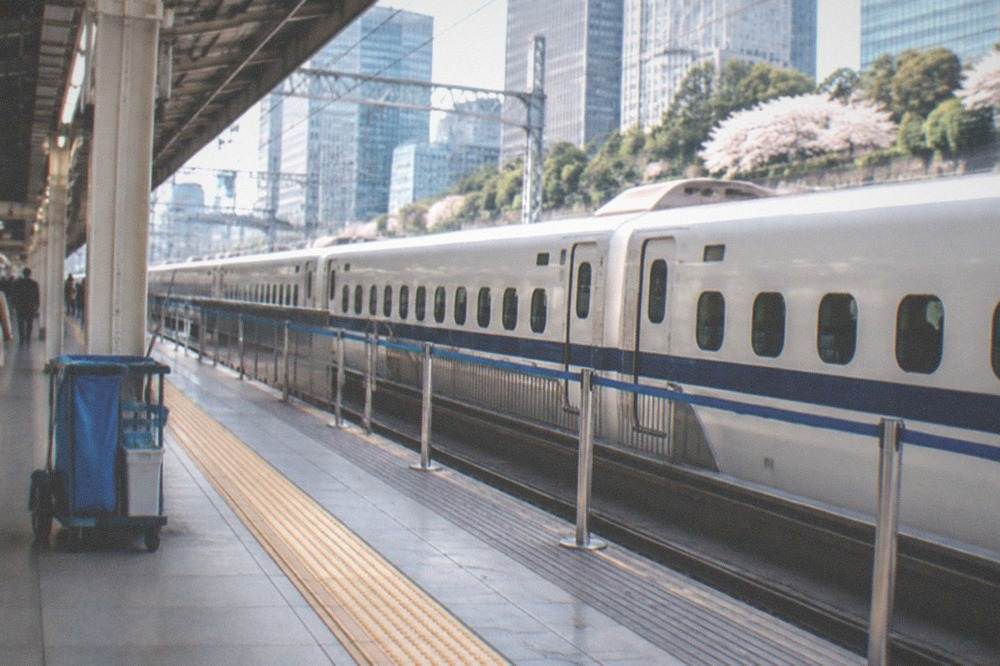
For most travellers the takuhaibin route through a hotel front desk is the cheaper and simpler answer, and the Shinkansen-borne service is the fallback for a tight arrival day. Either way, the bag itself never needs to be dragged through Tokyo Station at rush hour, which is the whole point of forwarding on this lane.
Is Forwarding Cheaper Than Carrying The Suitcase On The Shinkansen?
Carrying the bag is free up to a 160 cm three-side total, and above that a reserved seat with the oversized-baggage space costs the same as an ordinary reserved seat, but boarding without the mandatory free reservation risks a ¥1,000 carry-on fee on the Tokaido line. Forwarding at ¥3,160 for a 160-band case is therefore a convenience purchase, not a saving.
The arithmetic is straightforward for a mid-size case. A Shinkansen reserved seat from Tokyo to Kyoto costs the same whether the seat has the oversized-baggage space or not, so the only extra outlay for a big bag is the price of the reservation itself, which is to say nothing beyond the seat. Against that, forwarding a 160-band suitcase costs ¥3,160 cash. The money buys an empty back through Tokyo Station, through the transfer at either end, and through a Kyoto arrival that may involve stairs and a walk to the guesthouse.
The rule that decides which side of 160 cm a case falls on is the three-side total, and it applies only on the Tokaido, Sanyo, Kyushu and Nishi-Kyushu lines, which includes the Tokyo to Kyoto lane. The penalty for boarding without the reservation is ¥1,000, tax included, once per journey. The absolute ceiling on board is 250 cm with no item over 2 m long, and the free allowance is two items, each within 250 cm and 30 kg. Strollers, musical instruments, sports equipment and wheelchairs are exempt regardless of size.
The full rule set, including the 2025 change that made six deck areas per 16-car set free storage without a reservation, is in the Shinkansen oversized baggage guide, and the free deck areas have one trap: a bag over 160 cm may not go in them. A reader who has read that the trains now have free luggage space and concluded that no reservation is needed any more has been misinformed, and the reservation still exists precisely for those bags.
One more Tokyo-side consideration makes forwarding attractive even where carrying is cheaper. The Tokyo Station concourse between the hotel and the platform is long, the escalators are not always where the signage implies, and a late checkout day goes better without a suitcase at all. That is the scenario laid out in the last day in Tokyo before a night flight guide, and the same logic applies to a morning Shinkansen departure: hand the bag over the day before, travel light, and let the courier do the lifting.
Where Does The Day Bag Wait While The Suitcase Travels Ahead?
Forwarding solves the big case, not the small one, and the day bag still needs somewhere to sit during the hours between handing the suitcase over and boarding. Radical Storage staffed points around Harajuku, Ikebukuro and Tokyo Station take a regular bag at 850 yen per day plus a 355 yen per-bag checkout fee, 1,205 yen for one bag for one day on the network's own published figures.
The pattern is a common one. The suitcase goes to Yamato at the hotel desk in the morning, the flight or train leaves in the evening, and the hours between belong to the city. A backpack or a carry-on left at a staffed point buys that time. Every storage point recommended by Luggage Storage in Tokyo is a Radical Storage partner location, and the network, not this site, holds the bag and operates the guarantee. That guarantee is not insurance and must not be called insurance: Radical Storage's own terms say so in clause 9.2.2, payouts are capped at EUR 3,000 per claim in clause 9.4, and the terms allow Radical Storage to withdraw the guarantee at any time.
Harajuku suits a plan that spends the last Tokyo day on Omotesando and the shrine approach, with four Radical Storage points in the area, the closest 172 m from the station, rated 4.93 across 38 reviews. Ikebukuro suits a north-side departure or a Sunshine City afternoon, with ten points, two of them coin lockers and eight staffed, rated 4.73 across 89 reviews. Tokyo Station suits the boarding itself, with three points rated 4.89 across 213 reviews, the closest 558 m from the gates. The ratings belong to Radical Storage, and the review counts are the honest size of each pool, printed beside the rating rather than implied.
A few honesty notes that travel with any storage recommendation on this site. Radical Storage advertises from 490 yen per day, but that is a small-bag rate found at 11 of the 249 Tokyo points, and the regular-bag rate a traveller with a normal suitcase pays at 244 of those points is 850 yen. Staffed partner points display the small-bag rate on their cards while automated lockers display the regular rate, so a 750 yen card is a smaller bag, not a cheaper point, and no two cards should be compared on their displayed prices. There is no hourly tariff: a few hours is billed as a full day, so a morning drop and an evening pick-up is one day, not two.
The coin locker is the other option for the day bag, and it is often the cheaper one for a single day. A medium JR East locker at Tokyo Station runs ¥700 to ¥900 by tier, a Tokyo Metro locker runs the same prices at every Metro station, and the Metro network alone runs 4,830 doors. The catches are real: the standard and medium tiers are 34 cm deep, which fails most roller cases, and the maximum period is 4 days including the start day at Metro and 3 days at JR East's Multi Ecube units, after which the operator opens the locker and moves the contents. For a backpack, a locker is usually the better buy; for a carry-on with wheels, a staffed point is the safer one.
Common Questions About Sending Luggage From Tokyo To Kyoto
How much does it cost to send luggage from Tokyo to Kyoto?
Yamato TA-Q-BIN charges ¥2,170 at the 120 size band, ¥2,780 at 140, ¥3,160 at 160, ¥4,480 at 180 and ¥5,410 at the 200 band, cash fares with tax included, with Kyoto and Osaka in the same tariff zone. Sagawa charges ¥2,570 at the 160 band and ¥4,480 at the 200 band for its large-size service, and Japan Post Yu-Pack charges ¥2,450 to ¥2,610 at the 160 band. Sagawa alone takes cases up to 260 cm and 50 kg.
Which carrier is cheapest for a large suitcase from Tokyo to Kyoto?
For a 160-band case, Yu-Pack at ¥2,450 to ¥2,610 is the cheapest published fare, with Yamato at ¥3,160 and Sagawa at ¥2,570 close behind. The spread is a few hundred yen. The real decision is whether the case fits each carrier's caps: Yu-Pack stops at 170 cm and 25 kg, Yamato at 200 cm and 30 kg, and only Sagawa goes to 260 cm and 50 kg.
Where can I hand over a forwarded suitcase in Tokyo?
Almost any hotel front desk will hand the parcel to the courier driver, Seven-Eleven and FamilyMart counters accept Yamato parcels over the counter, and Yamato branches and Sagawa counters take awkward cases in person. Lawson is a Japan Post counter, not a Yamato one. Some konbini decline parcels over the 180 size band, so a large case is safer at a branch.
Can I send luggage from Tokyo to Kyoto on my last day?
Yes, in the sense that the hand-over can happen on the departure day, but the arrival side is not promised on a clock. No carrier publishes a transit time for any forwarding lane, so a bag handed over on the morning of departure should be expected to trail the traveller rather than lead them. For a bag that must travel with the passenger, LUGGAGE EXPRESS carries it on the Shinkansen itself, hotel to hotel, at ¥13,200 per item on the Tokyo to Kyoto lane.
Is sending luggage cheaper than taking it on the Shinkansen?
No. Carrying a bag under 160 cm three-side total is free with an ordinary reserved seat, and above that the seat with the oversized-baggage space still costs the same as an ordinary reserved seat, with the reservation itself free and mandatory on the Tokaido line. Forwarding a 160-band case at ¥3,160 buys convenience, not a saving. Boarding without the required reservation risks a ¥1,000 carry-on fee.
Do Kyoto hotels accept a forwarded suitcase sent ahead?
Most do, and forwarding to a hotel rather than a home address is the standard use of the service, but two things need confirming with the hotel directly: that the front desk will hold a parcel for a named arriving guest, and under what name the reservation is held, since the parcel label must match it. The carrier will confirm its own acceptance rules for hotel addresses. No operator publishes a delivery time for the lane, so the bag's arrival day should be confirmed rather than assumed.