What Happens If Your Luggage Is Too Big For The Bullet Train?
The 160 cm and 250 cm Shinkansen baggage rules explained: the 1,000 yen carry-on fee, which lines have no rule at all, and the real costs of forwarding or storing a case the train will not take.
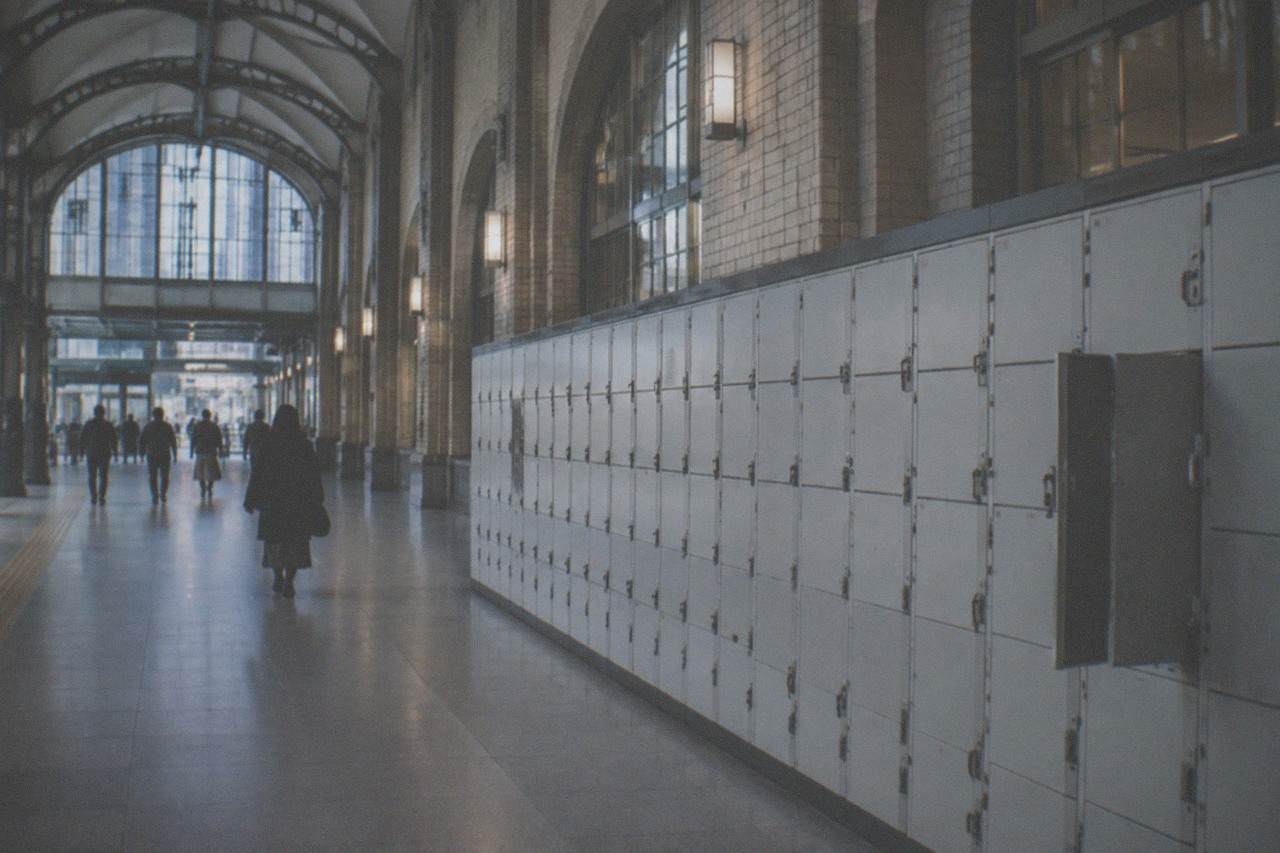
What Happens If Your Luggage Is Too Big For The Bullet Train?
Nothing gets confiscated at the gate. A bag whose three sides total more than 160 cm needs a free oversized baggage seat reservation on the Tokaido, Sanyo, Kyushu and Nishi-Kyushu lines; without one, the crew can charge 1,000 yen, once per journey, if they allow you to continue. A case over 250 cm cannot travel on those lines at all.
The bullet train, the Shinkansen, runs two different baggage regimes, and the difference catches almost every visitor. The lines that run south and west from Tokyo Station, the Tokaido to Kyoto and Osaka and the Sanyo, Kyushu and Nishi-Kyushu lines beyond them, enforce a written oversized baggage rule with a hard threshold and a named fee. The lines that run north from Tokyo, the Tohoku, Hokkaido, Joetsu, Hokuriku, Yamagata and Akita lines, have no such rule at all. Same country, same train type, opposite answers.
The threshold that triggers the southern rule is a three-side total over 160 cm: length plus width plus depth, wheels and handles included. A typical 26-inch spinner lands somewhere between 150 and 170 cm on that measure, which is why so many travellers discover the rule standing on the platform rather than at home with a tape measure. The full thresholds, and the lines each applies to, are set out in the site's guide to the Shinkansen oversized baggage rules in depth.
Two outcomes are genuinely common. The first is that you board with a case between 161 and 250 cm, no oversized seat booked, and the crew either moves you or charges the fee. The second, less dramatic but more frequent, is that the case fits under the rule, you resent dragging it through Tokyo Station's rush, and you wish you had forwarded or stored it before arriving. Both outcomes have cheap, well-documented fixes, and this page covers each: the fee itself, the free deck corners that half-solve it, the northern lines that ignore it, forwarding by courier, and dropping the bag at a staffed point in the city.
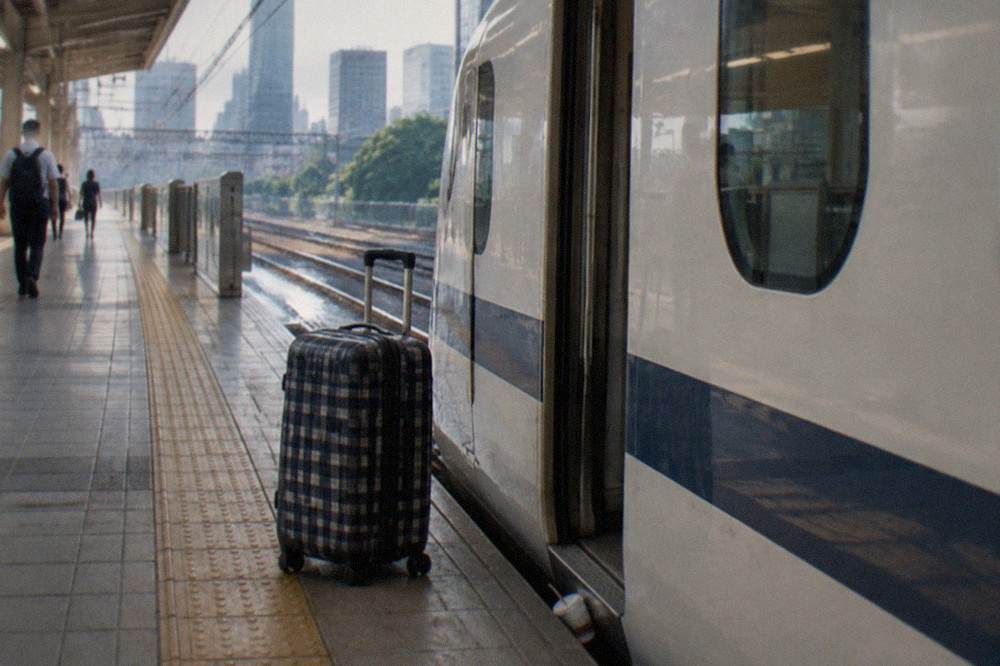
If the plan is to leave the big case in the city and ride light, the densest clusters of staffed storage sit around the big interchange stations rather than the sightseeing streets, and three of them cover most travellers' routes.
How Big Is Too Big: The 160 Cm And 250 Cm Thresholds
The trigger is a three-side total over 160 cm: width plus depth plus height, wheels and handles included. The absolute ceiling is 250 cm, and no single side may run past 2 m. Below 160 cm you are in the free allowance of two items, each within 250 cm and 30 kg, and no reservation exists for you to make on the Tokaido, Sanyo, Kyushu and Nishi-Kyushu lines.
The thresholds are published by JR Central's oversized baggage page, and they are enforced with almost no discretion. Measure the case at its widest points, wheels down, handle up, and add the three largest numbers. A 55 cm cabin spinner totals roughly 115 cm and never triggers anything. A 26-inch checked case totals around 165 cm and does. A 32-inch case totals past 180 cm and lands squarely in the reserved-seat regime.
One boundary detail is worth pinning down, because the operators' own pages disagree. JR Central's Japanese introduction says under 250 cm, its English page says 161 to 250 cm, and the tariff text says 250 cm or less. The tariff settles it: a case that measures exactly 250 cm is allowed. The fee-free oversized seat reservation, the seat with the extra-large luggage space behind the last row, costs the same as any ordinary reserved seat, so the rule costs money only when you skip it.
| Rule | Figure | What it means for a traveller |
|---|---|---|
| Oversized threshold | 3 sides total over 160 cm | Needs a reserved oversized baggage seat on Tokaido, Sanyo, Kyushu, Nishi-Kyushu lines |
| Absolute ceiling | 250 cm total, no side over 2 m | Cases above this cannot travel on those lines, reserved seat or not |
| Free allowance | 2 items, each 250 cm and 30 kg or less | Ordinary luggage, no reservation, no fee |
| Fee without reservation | 1,000 yen, tax included | Charged once per journey, if the crew permits continuation |
| Exempt items | Strollers, musical instruments, sports gear, wheelchairs | No reservation needed at any size |
The measurement that matters is the case's own, not the airline's: a bag billed as 29-inch by a retailer often measures 170 cm on the rail operators' arithmetic. Measure before travel day, because the fixes for a truly oversized case, forwarding or storage, both need hours of lead time, not minutes.
That lead time is the practical reason to think about storage before the travel day itself, not the tariff.
What Happens On Board Without A Reserved Oversized Baggage Seat
The crew applies a carry-on fee of 1,000 yen, tax included, charged once per journey, and only if the company especially permits you to continue with the bag. The rule sits in the tariff text itself, in all three companies' fare rules, not only on a marketing page. The fee does not guarantee a seat next to your case.
The mechanism is written into JR East's own fare rules, article 308-2, in near-identical wording to JR Central's and JR West's: a passenger who boards without buying the designated ticket before departure may, where the company especially permits, be charged a 1,000 yen carry-on fee and allowed to continue riding. The words do not promise you the oversized space. If the seats with luggage areas are full, the crew may move your case to a deck area, or the fee conversation becomes a rearrangement conversation.
Three practical things follow. First, the fee is per journey, not per train: a transfer at Nagoya or Shin-Osaka onto a second reserved train does not trigger a second charge, but boarding without a reservation twice in one trip does. Second, the reservation is free, so there is no scenario in which skipping it saves money; the only thing it saves is a tap on the booking screen. Third, the oversized seats sit behind the final row of the car, which means you board, walk to the rear, lift the case into a shallow well, and stop thinking about it, which is more than a fee ever buys.
What the fee never covers is a case over the 250 cm ceiling or over 2 m on one side. No payment, on board or in advance, puts such a bag on a Tokaido Shinkansen. That case has to travel by courier, by a different rail line, or not at all, and the sections below deal with each.
Do The Free Deck Luggage Corners Help?
Partly, and only for bags already within the free allowance. Since 1 July 2025, a 16-car Tokaido Shinkansen set carries six deck luggage corners, in cars 3, 5, 7, 9, 13 and 15, open to anyone without a reservation. The operators say plainly that a case over 160 cm may not go there; oversized baggage still needs the reserved seat.
The change arrived in a press release dated 4 April 2025 and took effect that July, and it solved a real problem: ordinary bags had nowhere to sit except the overhead shelf, which tops out near a cabin bag. Six open corners per 16-car set gave backpacks, medium duffels and small spinners a floor-level home with no booking.
The trap is the sentence most retellings drop. The same release states that the free deck corners may not hold oversized baggage, the bags over 160 cm that the rule exists for. A traveller who reads only the headline, that the Shinkansen now has free luggage space, and boards with a 170 cm case and no reservation, has bought the 1,000 yen conversation, not a free ride for the case. One small addition does help at the very top of the range: the Supreme Class cabins, in cars 7 and 10 on the relevant sets, accept baggage between 160 and 250 cm.
For a bag under 160 cm, though, the corners are a genuine gift. Arrive early, take the deck space, keep the aisle clear. For a bag over it, nothing on the deck level changes the reservation rule, and the honest options stay the two below: forward the case, or leave it in Tokyo.
Which Shinkansen Lines From Tokyo Have No Oversized Rule At All?
The Shinkansen lines out of Tokyo to the north have no oversized baggage rule: no reservation, no fee, no 160 cm trigger. On the Tohoku, Hokkaido, Joetsu, Hokuriku, Yamagata and Akita lines a 250 cm, 30 kg case is simply your two-item allowance. The catch is that storage areas exist only on some trains, cannot be reserved, and fill first.
This asymmetry is the single most useful fact on the page for anyone heading to Sendai, Kanazawa, Niigata, Aomori or Hakodate, and it is published plainly in JR East's own carry-on guide: the carry-on fee is free, no reservation is required, and suitcases within 250 cm, 30 kg and two pieces simply ride. A 32-inch case that would need a reserved seat on the Tokaido line to Kyoto boards a Joetsu line train to Gala snow country with no paperwork at all.
The caveat must travel with the fact. No reservation also means no guaranteed space. Storage areas exist only on some trains, they are first come, and they cannot be booked in advance. On a crowded Friday evening Hayabusa, a 200 cm case may end up blocking the deck or riding in the car-end space with a queue of suitcases beside it. The rule is permissive, not protective.
For itinerary planning, this changes station choice more than baggage choice. A traveller split between a Kyoto leg and a Kanazawa leg can treat the Kyoto leg as the hard constraint: size the case to the Tokaido rule, or forward it only for that leg. The site's guide to taking luggage on the Shinkansen works through the line-by-line differences, including the deck-corner layout on each set type.
Forward The Bag Instead: Real Takuhaibin Fares
Takuhaibin, luggage forwarding, moves the case door to door for a fraction of the oversized fuss. Yamato TA-Q-BIN takes up to 200 cm and 30 kg, at 2,170 yen from Tokyo to Kyoto or Osaka for a 120 band case, rising to 5,410 yen at the 200 band. Sagawa alone accepts up to 260 cm and 50 kg.
Forwarding is the answer most Japanese travellers reach for, and the mechanics are simple: hand the case to a courier at a hotel front desk, a convenience store or a branch counter, and it travels to the next hotel, an airport, or a home address. The site's plain-English guide to takkyubin forwarding covers the process step by step, and the deeper guide to sending a bag from Tokyo to Kyoto covers the lane most oversized cases actually ride.
The hard numbers come from the operators' own tariff pages, and Yamato's published size bands are the anchor. A band is the greater of the three-side total in centimetres or the actual weight in kilograms, and a suitcase is charged at its measured size. Tokyo to Kyoto and Osaka sit in the same tariff zone, so the price is identical for both cities.
| Carrier | Maximum size | Maximum weight | Tokyo to Kyoto or Osaka, published |
|---|---|---|---|
| Yamato TA-Q-BIN | 200 cm total, one side max 170 cm | 30 kg | 120 band 2,170 yen, 140 band 2,780 yen, 160 band 3,160 yen, 180 band 4,480 yen, 200 band 5,410 yen |
| Sagawa Express | 260 cm total | 50 kg | 160 band at 30 kg 2,570 yen, 200 band 4,480 yen, no 120 band exists |
| Japan Post Yu-Pack | 170 cm total | 25 kg | 160 band 2,450 to 2,610 yen, 170 band 3,750 yen |
| LUGGAGE EXPRESS, Shinkansen-borne | 200 cm total | 30 kg | 13,200 yen per item regular, 16,500 yen express, card payment only |
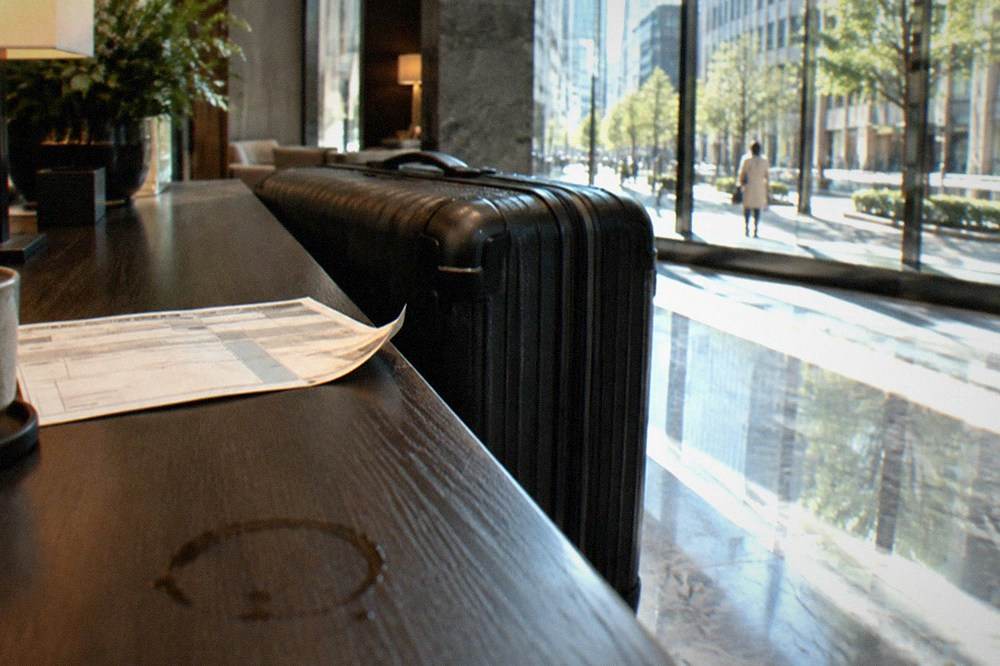
Two numbers in that table deserve a second look. Sagawa's 260 cm and 50 kg ceiling makes it the only one of the three that will take a genuinely oversized or heavy case, the class of bag the bullet train refuses outright. And LUGGAGE EXPRESS, the hotel-to-hotel service that physically rides the Shinkansen, costs 13,200 yen per item from Tokyo to Kyoto or Osaka because you are paying for a same-day arrival, not for the cardboard.
Transit times are a different matter, and an honest page states the limit plainly: no delivery time for any forwarding lane could be sourced from the operators for personal customers, so none appears here. What is published is the fare, the cut-off time at the counter, and the caps, and those three are what a decision actually needs.
Store The Bag In Tokyo And Board Light
Radical Storage offers staffed bag drop points across Tokyo at 850 yen per bag per day for a regular suitcase, plus a 355 yen fee charged once at checkout, so one bag for one day is 850 plus 355, which is 1,205 yen. Every point is a partner shop; the closest to Akihabara Station sits 31 m from the exits.
Storage is the option that costs least and requires no logistics at all: leave the oversized case at a staffed point in the city, ride the bullet train with a day pack, collect the case on the way back through. Every point listed on Luggage Storage in Tokyo is a real Radical Storage partner location, and this site neither owns nor operates any of them; a reader is handing their suitcase to the network whose name is on the booking, and deserves to know whose guarantee stands behind it. Radical Storage's guarantee is not insurance, its own terms say so and reserve the right to withdraw it, and payouts are capped at EUR 3,000 per claim.
The price structure is uniform across the 249 Tokyo points on file: 850 yen per bag per day for a regular bag at 244 of them, with the same 355 yen per-bag fee at checkout everywhere. There is no hourly tariff, and a few hours is billed as a full day, so a morning drop before an afternoon Shinkansen costs the same as an overnight one.
Shibuya Station makes the case for the interchange clusters. Its area page lists 7 Radical Storage points, rated 4.75 across 163 reviews, with the closest 306 m from the station and 5 of the 7 offering locker-style units.
Akihabara is the densest station cluster on the east side, and the most convenient for anyone riding the Yamanote line to Tokyo Station before a Tokaido departure: 9 points, rated 4.88 across 171 reviews, all staffed, the nearest 31 m from the station exits.
Ueno sits directly on the route north, which matters for the Joetsu and Tohoku travellers who never face the 160 cm rule anyway: 8 points, rated 4.87 across 285 reviews, the closest 171 m from the station, all staffed.
The honest comparison is with the alternatives a Tokyo traveller actually reaches for, and both are real. Coin lockers at JR East stations run a Multi Ecube tier ladder from a 15 cm-deep SS box to an 86 x 56 x 65 cm LW unit, the only common tier that swallows a wide checked suitcase lying flat; the L tier runs 700 to 1,100 yen and the LW tier 800 to 1,000 yen, and a locker's 34 cm depth, not its width, is what rejects a hard-shell case. Tokyo Metro stations charge one price ladder at every station, 300 to 1,000 yen. The operators genuinely disagree on duration: Tokyo Metro lockers run 4 days including the day you start, JR East Smart Logistics lockers 3 days, and paying more does not extend the period. Tokyo Station's own JR East Logistics baggage rooms, seven of them, take an S case up to 100 cm for 500 yen a day, M up to 200 cm for 1,000 yen, L over 200 cm for 2,000 yen, for up to 30 days, hours 09:30 to 20:00.
| Option | Published cost | Notes for an oversized case |
|---|---|---|
| Radical Storage point | 850 yen per bag per day, plus a 355 yen fee once at checkout | Staffed drop, no size tiering on a regular bag, 249 points across Tokyo |
| JR East coin locker, LW tier | 800 to 1,000 yen per day | 86 x 56 x 65 cm, fits a wide case flat; 3-day maximum |
| Tokyo Station baggage room | 500 / 1,000 / 2,000 yen per day by size | Up to 30 days, closes 20:00, seven counters at Tokyo Station only |
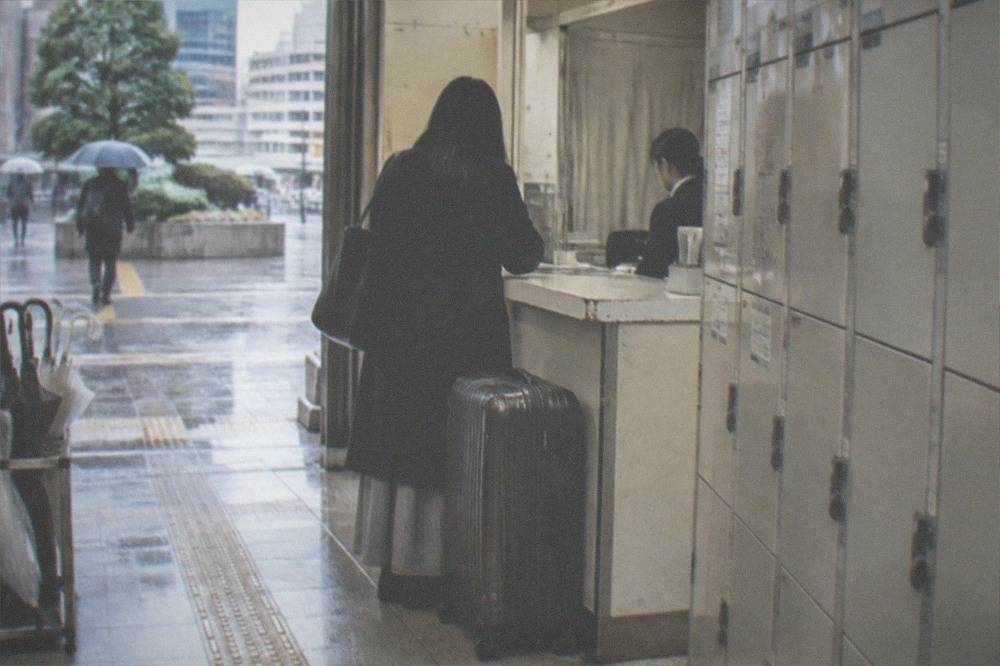
One boundary case deserves its own line: a bag too big for the bullet train is usually also too big for a standard locker, and 146 of the 249 Radical Storage points are not open 24 hours, so hours are checked per point, never assumed. The rule of thumb that survives every table on this page: measure the case at home, and if it totals over 160 cm, decide between the free seat reservation and the courier before travel day, because on the platform both cost more.
The three clusters below cover the exits most Shinkansen riders actually leave from.
Common Questions About Oversized Luggage On The Shinkansen
what happens if your luggage is too big for the bullet train?
On the Tokaido, Sanyo, Kyushu and Nishi-Kyushu lines, a case over 160 cm in three-side total needs a free oversized baggage seat reservation. Without one, the crew can charge 1,000 yen, once per journey, if they allow you to continue. A case over 250 cm, or over 2 m on one side, cannot travel on those lines at all; it goes by courier or stays in a storage point in the city.
Can I take a suitcase over 160 cm on a Shinkansen from Tokyo to Sendai?
Yes, with no reservation and no fee. The JR East lines north of Tokyo, the Tohoku, Hokkaido, Joetsu, Hokuriku, Yamagata and Akita lines, have no oversized baggage rule, and a case within 250 cm and 30 kg is simply your two-item allowance. The caveat is that storage areas exist only on some trains, cannot be reserved, and fill first.
How much is the fee for oversized baggage without a reservation?
1,000 yen, tax included, charged once per journey. The figure appears in the tariff text of JR Central, JR West and JR East, not only on marketing pages. The fee is charged only if the company especially permits you to continue riding with the bag, and it does not guarantee you a seat next to the luggage area.
Is a suitcase exactly 250 cm allowed on the bullet train?
Yes. The operators' own pages disagree, JR Central's Japanese introduction says under 250 cm while its English page says 161 to 250 cm, but the tariff text settles it at 250 cm or less. A case measuring exactly 250 cm is within the allowance, provided no single side runs past 2 m and it is within the two-item, 30 kg limit.
Where can I leave a suitcase that is too big for the Shinkansen?
Radical Storage points across Tokyo take a regular bag at 850 yen per bag per day plus a 355 yen fee charged once at checkout, so one bag for one day totals 1,205 yen. Coin lockers suit smaller cases: the JR East LW tier, 86 x 56 x 65 cm, fits a wide checked suitcase for 800 to 1,000 yen a day, with a 3-day maximum. Tokyo Station's attended baggage rooms take cases up to over 200 cm for 500 to 2,000 yen a day, for up to 30 days.