How Long Can You Leave Luggage In Tokyo? Every Duration Limit Explained
Tokyo has no single rule for how long a bag can stay parked. The rail operators, the airports and the storage networks each publish their own maximum, and the numbers range from three days to several weeks.
Short answer
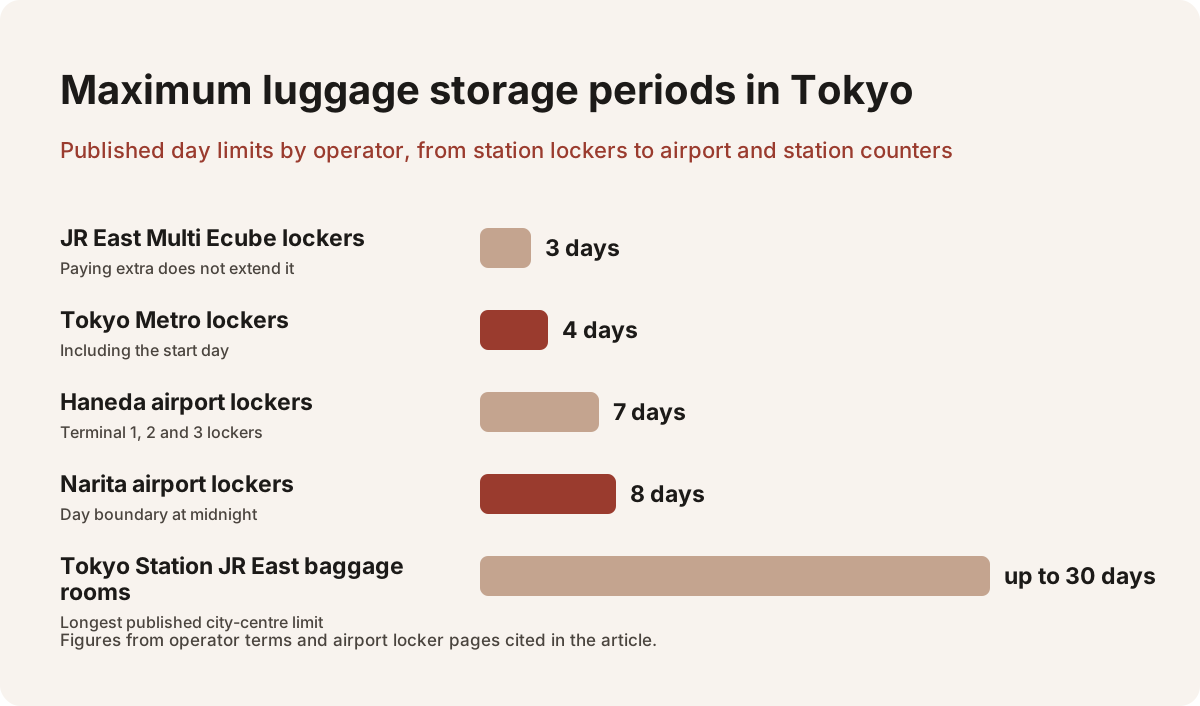
Coin lockers allow 3 days on JR East Multi Ecube units and 4 days on Tokyo Metro lockers. Tokyo Station attended baggage rooms hold bags for up to 30 days, Haneda airport counters for up to 2 weeks, and Radical Storage points charge 850 yen per bag per day plus a 355 yen per-bag checkout fee, with the stay length set when booking.
Tokyo answers the "how long" question differently depending on who is holding the bag. A coin locker inside a subway concourse runs on one clock, an attended counter at Tokyo Station runs on another, and an airport desk applies a third. The differences are not trivia. A traveller who assumes every locker in the city follows the same rule can end up with a bag moved to a separate storage room, a cash-only retrieval fee, and a cross-city trip to collect it. This guide lays out every published duration limit in Tokyo, what happens when one expires, and how to plan a stay of a week or longer.
The single most useful distinction to hold onto: rail-operated lockers cap at days, attended counters cap at days to weeks, and luggage forwarding, known in Japan as takuhaibin, removes the duration question entirely by moving the bag to the next destination instead of holding it. A longer look at each option follows, with the operators' own published rules.
How Long Can You Leave Luggage In A Tokyo Coin Locker?
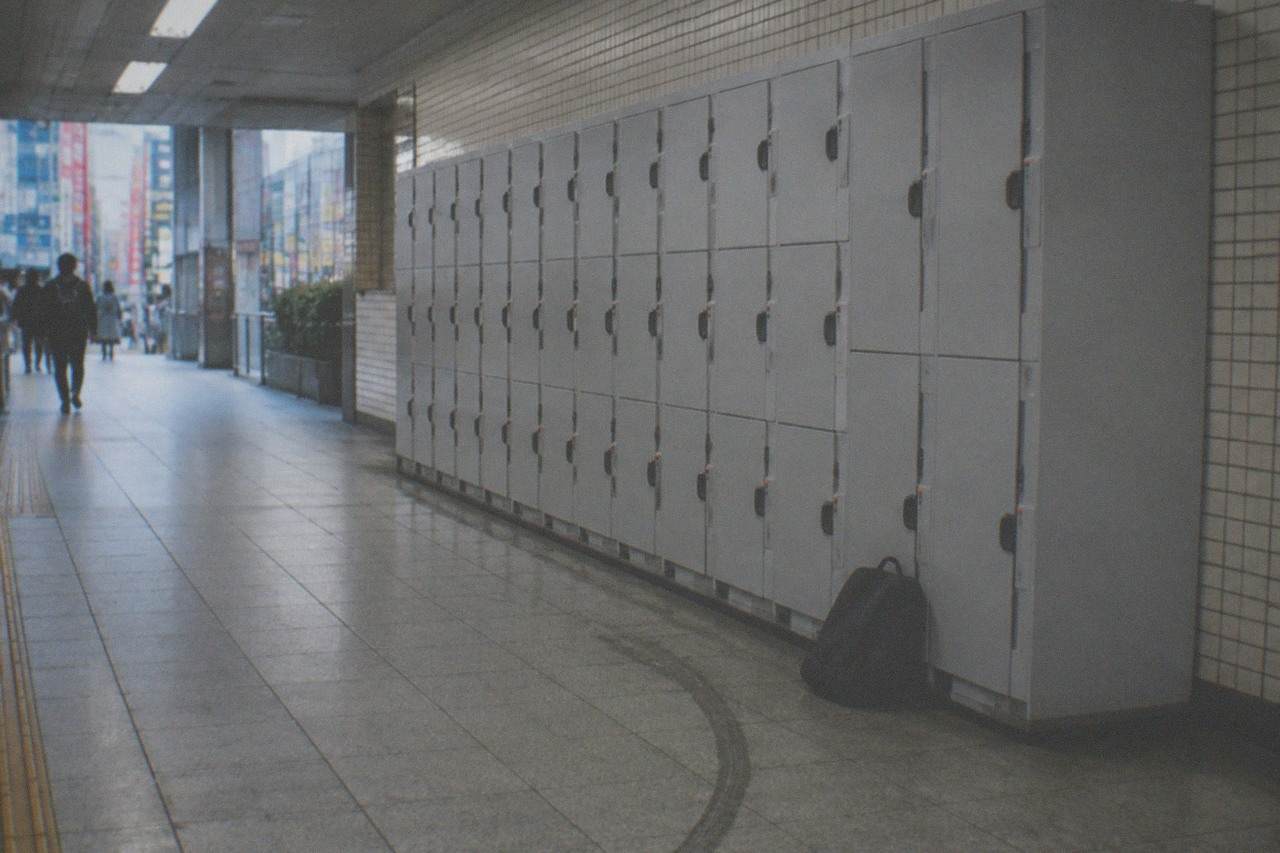
Coin lockers in Tokyo allow either 3 or 4 days depending on the operator: JR East Smart Logistics caps its Multi Ecube lockers at 3 days, while Tokyo Metro lockers run to 4 days including the day storage starts. Paying more does not extend either period, and a day is added at 2 a.m., not midnight.
The 4-day rule belongs to Tokyo Metro's locker operator, Metro Commerce, whose terms state that the rental period is 4 days including the start date. The 3-day rule belongs to JR East Smart Logistics, whose Multi Ecube terms say the same thing in one fewer day and add a sentence worth remembering: paying more money does not buy a fourth day. Two operators, two networks, two different ceilings, and the lockers themselves look nearly identical standing next to each other in a large station.
The day-counting mechanics catch out even careful travellers. The Metro Commerce terms spell out that a locker day runs from first train to last train, that a day is added at 2 a.m., and that both the first day and the last day count as full days no matter how briefly the locker was used. Drop a bag at 23:00 and collect it at 09:00 the next morning, and that is two days on the meter, not one. The practical reading: a locker dropped late at night burns its allowance faster than the same drop made in the morning.
| Network | Maximum period | What counts as a day | Source |
|---|---|---|---|
| Tokyo Metro lockers | 4 days, including start day | A day added at 02:00; first and last day always count fully | Metro Commerce locker terms |
| JR East Multi Ecube | 3 days; paying extra does not extend it | Operator terms dated in late 2024 | JR East Smart Logistics terms |
| Narita airport lockers | 8 days | Day boundary at midnight | Narita airport locker page |
| Haneda Terminal 1 and 2 lockers | 7 days | Each 24 hours counts as one day | Haneda airport locker page |
| Haneda Terminal 3 lockers | 7 days | Priced per 24 hours rather than per calendar day | Haneda airport locker page |
The airport numbers are worth a second glance because they beat the station networks by a wide margin. A Haneda locker legally holds a bag for 7 days, and a Narita locker for 8, against 3 or 4 days in the city. Someone mid-trip who needs a bag parked for close to a week can reasonably look at the airport before anywhere else. The published prices for those lockers, ¥400 to ¥1,500 per day at Haneda depending on size and terminal, come from the airport's own facility pages, and Terminal 3 lockers run dearer than Terminal 1 and 2.
One further limit sits inside the locker itself rather than in the calendar. A Multi Ecube locker rental ends the moment the door is opened: retrieve the bag and it cannot be put back, and a multi-day reservation is forfeited with no refund. The only grace is a reopen button on the machine that gives 15 minutes to close the door again. Anyone who expects to add a souvenir to the suitcase halfway through the storage period should read Tokyo coin locker sizes before choosing a tier, because the size decision and the access decision are both locked in at the start.
What Happens When A Locker Period Expires In Tokyo?
When a locker period expires, the operator unlocks the door, inspects the contents and moves the bag to a designated storage area, where the same daily rate keeps running for up to 30 days. Retrieval then requires the receipt, photo ID and the same IC card used to pay, and the separate storage fee is cash only.
The operators describe the aftermath in nearly identical terms. Metro Commerce's terms, sections 7(1) to 7(4), walk through it step by step: the locker is opened, the contents are inspected and moved, and the bag is then held for 30 days counted from the start of the original rental. The fee for that separate holding is the same daily rate as the locker itself, so the meter never actually stops. The traveller's own travel costs to go and collect the bag belong to the traveller, a point the terms make explicitly.
Retrieval from separate storage is stricter than retrieval from a live locker. The receipt, photo identification and the same IC card used for payment are all required, and the separate storage fee is accepted in cash only. Losing the paper ticket is the classic failure mode here, and the operators' own FAQ pages carry a conflict on this point: one JR East page says the IC card is required at retrieval, while another says the printed ticket unlocks the door by QR code or its six-digit number regardless of how the locker was paid for. The safe course is to keep the paper ticket and treat it as the key.
After the 30 days of separate storage, ownership is deemed abandoned and the operator disposes of the contents, and may bill for the cost of disposal. JR East adds one harsher rule of its own: food is disposed of immediately when a locker period expires, with no 30-day grace at all. A bag containing snacks, confectionery or anything perishable should never sit in a locker past its period, and arguably should not sit in one at all.
None of the operators cite the Lost Property Act in these clauses. The abandonment is a contract term, and it runs on the operator's own calendar. A fuller walk-through of the risks sits in Is luggage storage in Tokyo safe?, including the ¥30,000 liability cap that every major locker operator publishes and the prohibited-item list that quietly voids it.
For anyone weighing lockers against a staffed counter before committing, the two formats suit different trips: lockers suit a single day with a fixed route, and staffed points suit longer holds and bigger bags.
A Radical Storage point behaves differently on the duration question, because there is no door and no expiry machinery. The bag is handed to staff at a shop, hotel or cafe that partners with the network, and the stay is set at booking. The rate is 850 yen per bag per day for a regular bag, the rate paid at 244 of the 249 Tokyo points on file, with a 355 yen per-bag fee added once at checkout rather than per day. Radical Storage advertises a from-490-yen day rate, but that is a small-bag rate found at 11 points only, not the figure a traveller with a normal suitcase pays.
How Long Can Attended Storage Counters Hold A Bag?
Tokyo Station's JR East Logistics baggage rooms hold bags for up to 30 days, the longest published limit at any city-centre location. Haneda's airport counters store bags for up to 2 weeks, Narita's counters price by the day with no published ceiling, and some desks, like the Gransta cloak, are same-day only.
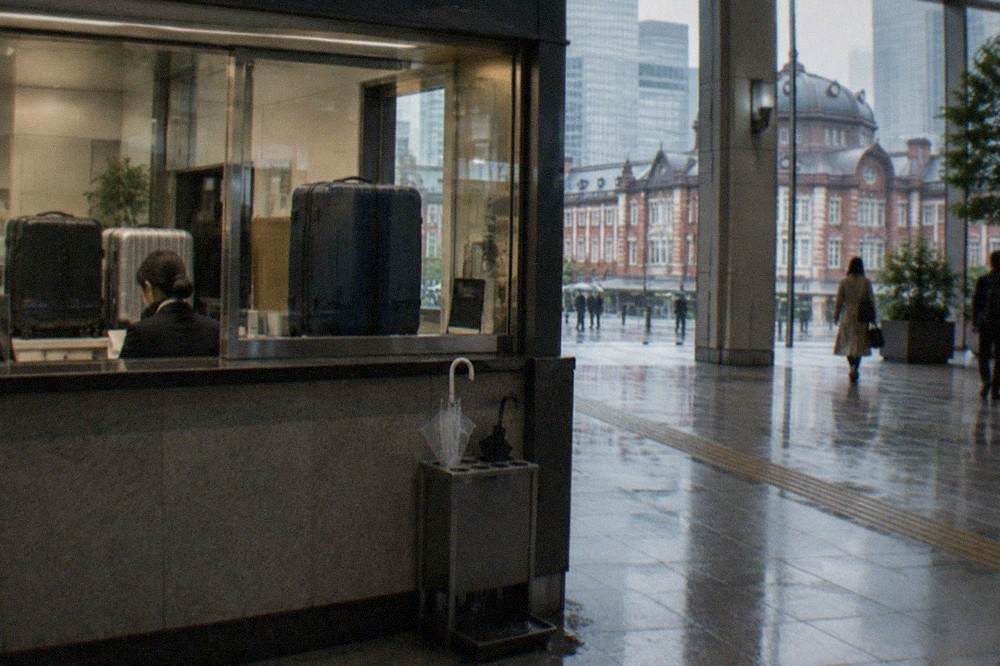
Tokyo Station is the outlier in the attended world. It has seven baggage rooms, and the JR East Logistics desks among them, at the Yaesu South exit, in Gransta B1, at the Shinkansen South transfer gate and at Marunouchi Central, all store a bag for up to 30 days at ¥500, ¥1,000 or ¥2,000 per day by size. No other giant station in Tokyo has a JR baggage room of its own: JR East's own Travel Service Center page scopes its luggage storage to Tokyo Station only, which disposes of Shinjuku, Shibuya, Ikebukuro and Ueno in one line.
Haneda's airport-published rule is stated sitewide on its baggage page: bags can be stored for up to 2 weeks, with fees by total size, a 300 cm three-side maximum and a 30 kg weight maximum. The price ladder runs ¥800, ¥1,000 and ¥2,000 per day, with one wrinkle in the clock. Terminal 1 and 2 desks charge per day, while Terminal 3 desks charge per 24 hours, so the same numbers roll on different rhythms. Yamato's counter at Haneda Terminal 2 goes further and publishes no limit on its storage period at all, a claim that sits in unresolved tension with the airport's own 2-week sitewide rule, and both are recorded here rather than reconciled.
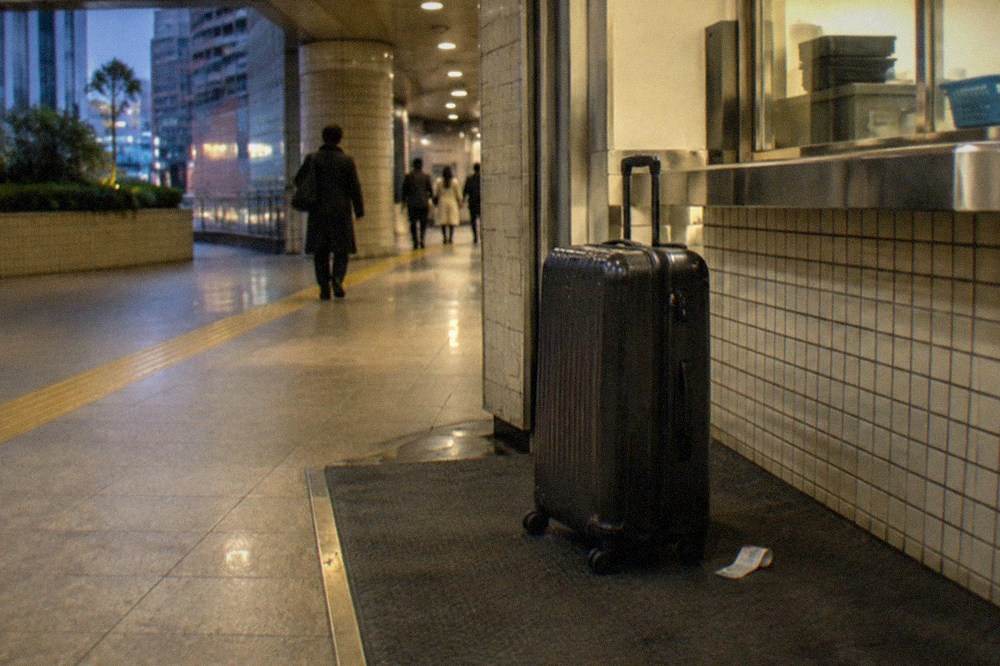
Narita is a different shape again. Its eleven attended counters, all in Terminal 1 and Terminal 2, publish per-day prices by size, from ¥500 for a small bag at the cheapest desk to ¥2,000 for a large one at the dearest, and none of them publishes a maximum stay. JAL ABC, which runs seven of those counters, charges by calendar day rather than by the hour, warns that acceptance may be suspended when the store room is full, and requires payment on collection, in yen cash or by card.
| Counter | Location | Maximum stay | Price per bag per day |
|---|---|---|---|
| JR East Logistics, Tokyo Station (4 desks) | Inside and outside the gates | 30 days | ¥500 / ¥1,000 / ¥2,000 by size |
| JR East Logistics, Ueno Station | 3F concourse, inside the Park Gate | 30 days | ¥500 / ¥1,000 / ¥2,000 |
| JR East Logistics, Shinagawa Station | Inside the Central Gate | Not published | ¥800 to ¥2,000, weekday and weekend rates differ |
| Haneda attended desks | All three terminals | 2 weeks | ¥800 / ¥1,000 / ¥2,000 |
| Yamato, Haneda Terminal 2 | 3F international counter | Published as no limit | ¥800 / ¥1,000 / ¥2,000 |
| Sagawa, Tokyo Skytree Solamachi | Tower 1F | Not published | ¥800 / ¥1,000 / ¥1,300 |
| Narita attended counters | Terminals 1 and 2 only | Not published | ¥500 to ¥2,000 by size and operator |
The Shinagawa desk deserves its caution flag. Its maximum stay is unresolved in the operators' own material, and its weekday prices rise to weekend levels during set forced-peak windows in late April to early May, mid-August, and late December to early January, so a price quoted on a Tuesday can be the wrong price for those dates. The desk also closes on 1 January, an unusual detail among Tokyo counters.
For a stay measured in weeks rather than days, the arithmetic starts to favour the baggage rooms clearly. Thirty days at a Tokyo Station desk with a mid-size bag is a published, staffed, size-tiered service. Thirty days in lockers is not possible at any price, because the longest locker ceiling in the city is 8 days at Narita. The choice is less about cost per day and more about which limit matches the calendar.
Shinjuku's own picture is thinner than its size suggests. JR itself runs no baggage room there, and the closest staffed equivalents are a Sagawa counter in the Busta terminal building at ¥800 to ¥1,500 per day with no published maximum, and an Odakyu Travel Center desk whose price is deliberately not published and whose maximum is 3 days. Anyone parking a bag at Shinjuku for more than a long weekend is choosing between those two desks or a locker network, and the overnight and long-term storage guide covers that station in detail.
Can You Store Luggage In Tokyo For A Week Or Longer?
Yes. A week is inside the limits of Tokyo Station's 30-day baggage rooms, Haneda's 2-week airport desks, Narita's per-day counters and Radical Storage's per-day pricing, but not inside any city coin locker, which caps at 3 or 4 days. The cheapest one-week hold is usually a size-matched airport locker only if the trip touches the airport anyway.
For a 7-day hold the honest comparison is between three formats. A Tokyo Station baggage room takes a mid-size bag, up to 200 cm total, at ¥1,000 per day, so seven days costs ¥7,000 with a staffed handover and a 30-day ceiling well above the stay. A large JR East locker at Tokyo Station runs ¥900 to ¥1,100 per day and cannot hold the bag past day 3, which rules it out on the calendar alone. A Radical Storage point runs 850 yen per bag per day with the 355 yen per-bag fee added once, so seven days is 7 times 850 plus 355, which is 6,305 yen, arithmetic on the network's own published figures rather than a quoted checkout price. The rest of the planning pages sit on Luggage Storage in Tokyo.
| Option | 3-day cost, one regular bag | 7-day cost | Duration ceiling |
|---|---|---|---|
| Tokyo Station baggage room, mid size | ¥3,000 | ¥7,000 | 30 days |
| JR East Multi Ecube locker, L tier at Tokyo Station | ¥2,700 to ¥3,300 | Not permitted | 3 days |
| Tokyo Metro locker, largest tier | ¥1,800 | Not permitted | 4 days |
| Radical Storage point | 2,905 yen (3 x 850 + 355) | 6,305 yen (7 x 850 + 355) | Set at booking |
| Haneda T3 locker, mid tier | ¥2,100 (3 x ¥700) | ¥4,900 (7 x ¥700) | 7 days |
| Haneda attended desk, mid size | ¥3,000 | ¥7,000 | 2 weeks |
The table shows why the "1 week" search cluster exists. Below about 4 days, a locker is usually the cheapest staffed-free option in the city, and the Metro network's largest tier at ¥600 to ¥900 per station is the value pick for a bag that fits. Beyond 4 days, every locker in the city except the airports drops out, and the comparison narrows to attended counters, airport lockers and per-day storage points.
Radical Storage's own duration behaviour is set at booking rather than by a posted ceiling. The stay is paid per day at the point's rate, and the network's guarantee applies throughout, described carefully because the guarantee is not insurance: Radical Storage's own terms state it is not insurance, that the company may withdraw it, and that payouts are capped at EUR 3,000 per claim. The booking can be cancelled without charge, which matters for a week-long hold whose dates might move. There is no part-day rate, and a few hours is billed as a full day, so a 7-day booking means seven full days on the meter.
Among the strongest areas for a long hold, Asakusa stands out on the numbers: 13 Radical Storage points, a 4.85 rating across 268 reviews, and a nearest point 193 m from the station, which is the kind of density that makes a week-long drop convenient to re-reach. Akihabara is similar at 9 points, a 4.88 rating across 171 reviews and a nearest point 31 m from the station, about as close to the gates as a bag drop gets in this city.
Roppongi is smaller but holds its own, with 3 points, a 4.88 rating across 47 reviews and a nearest point 199 m away. Ueno pairs 8 points with a 4.87 rating across 285 reviews and a nearest point 171 m from the station, and the Ueno area has the added advantage of the JR East Logistics baggage room inside the Park Gate if a staffed counter is preferred for a long hold.
When Does Forwarding Beat Storing For A Long Trip?
Forwarding a bag with takuhaibin beats storing it whenever the next destination is fixed, because the bag travels to that address instead of occupying a locker or counter. A Tokyo to Kyoto or Osaka shipment in the 160 size band costs ¥3,160, against ten or more days of storage fees, and the size caps are 200 cm and 30 kg at Yamato, or 260 cm and 50 kg at Sagawa.
The arithmetic only works one way for long holds. Six days of storage at a Radical Storage point, 6 times 850 plus 355, is 5,455 yen, and that buys a bag sitting still. Yamato's published Kanto-to-Kansai fare for the 160 band, a typical checked suitcase, is ¥3,160 cash, and that buys the bag arriving in Kyoto or Osaka, where the two cities share one tariff zone. For any stay past roughly four days with a known destination, forwarding is usually the cheaper and strictly more useful option.
The carriers differ where it matters for a big case. Yamato TA-Q-BIN caps at a 200 cm three-side total and 30 kg. Sagawa's large-size service goes to 260 cm and 50 kg, the only one of the three national carriers that will take a genuinely oversized or heavy case. Japan Post's Yu-Pack stops at 170 cm and 25 kg. The full fare tables and the size bands sit in luggage forwarding vs storage in Tokyo, and the mechanics of the service itself, including hotel-to-hotel and airport legs, are covered in takuhaibin explained.
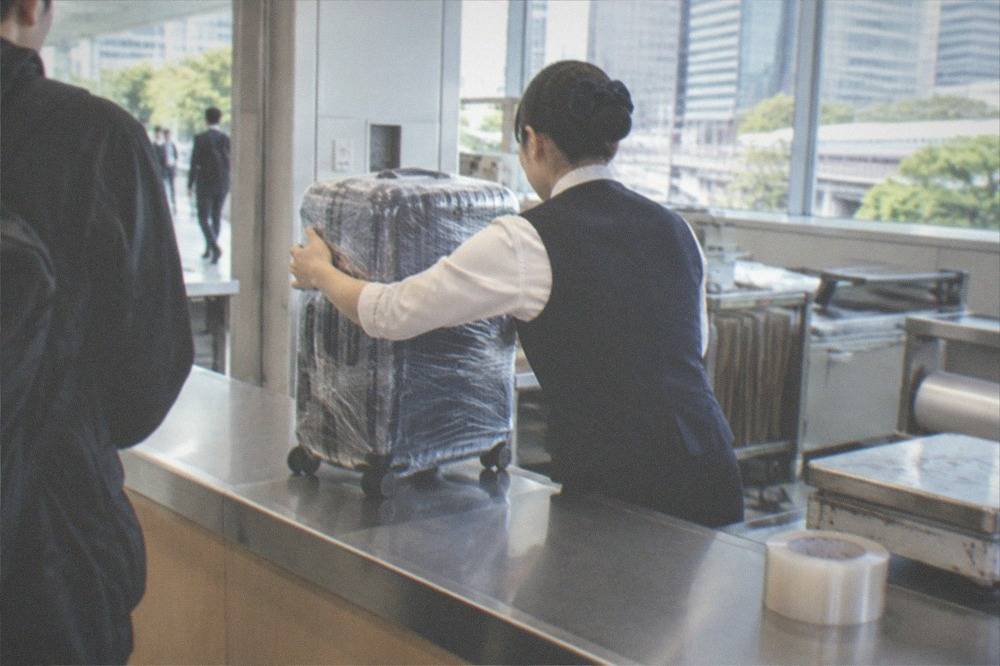
One gap must be stated plainly: transit times for forwarding could not be sourced for any lane, and no day count for a delivery is published for personal customers. Never plan a forwarding leg around an assumed arrival day; the operator's estimate at drop-off is the only timing that exists. Discounts stack in useful ways, though. Carrying the parcel to a branch or convenience store saves ¥100, a digital waybill saves ¥60, and a second parcel to the same address saves ¥100 each, and only Seven-Eleven and FamilyMart accept Yamato parcels, because Lawson routes to Japan Post.
Does The Shinkansen Rule Change How Long A Bag Can Be Parked?
The Shinkansen oversized-baggage rule does not limit storage duration, but it forces a decision at booking for any bag over 160 cm on the Tokaido line: a reserved seat with the luggage space is mandatory and free, and boarding without it costs a ¥1,000 carry-on fee per journey. The JR East Shinkansen lines out of Tokyo have no such rule at all.
The rule applies on the Tokaido, Sanyo, Kyushu and Nishi-Kyushu lines, the routes to Kyoto, Osaka and beyond, and the threshold is a three-side total over 160 cm. The reservation costs nothing beyond the ordinary reserved-seat fare, the on-board maximum is 250 cm total with no item over 2 m, and the free allowance is two items per passenger, each within 250 cm and 30 kg. Strollers, musical instruments, sports equipment and wheelchairs are exempt regardless of size. From 1 July 2025 the six deck luggage corners per 16-car set became reservation-free storage, but those areas may not hold an oversized bag, so the reserved seat is still the only legal place for a case over 160 cm.
The JR East side is the opposite. Tohoku, Hokkaido, Joetsu, Hokuriku, Yamagata and Akita Shinkansen trains carry suitcases within 250 cm, 30 kg and two pieces with no reservation and no fee, per JR East's own luggage guide. The caveat that travels with that freedom: no reservation also means no guaranteed space, because storage areas exist only on some trains and work first come. A reader taking a large case to Sendai or Kanazawa has no slot waiting, which is a reason some still park the big bag and travel light, a trade-off expanded in luggage on the Shinkansen.
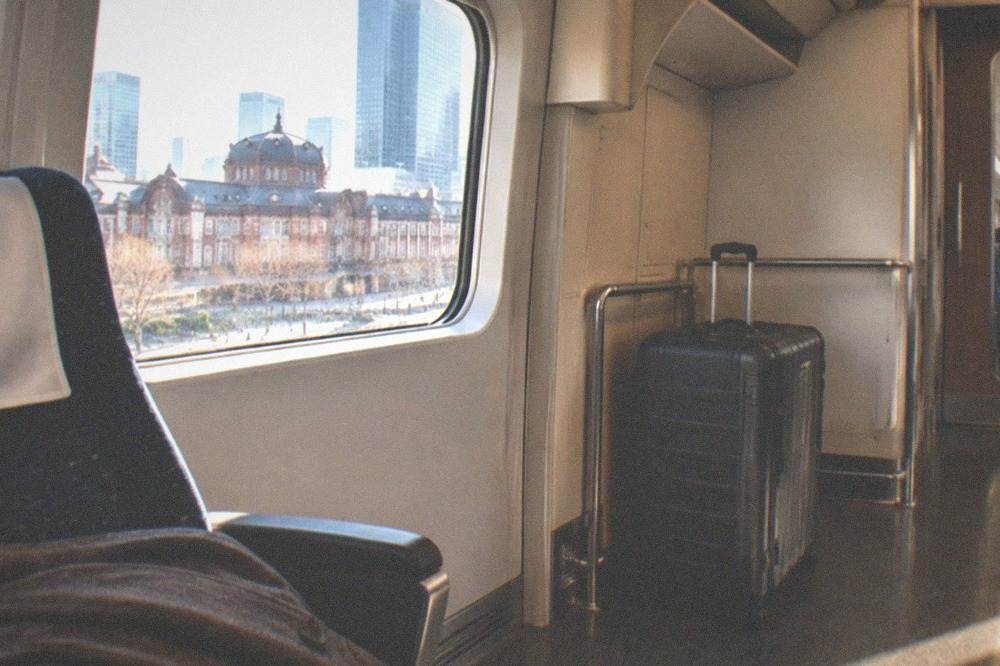
For the specific Tokyo to Kyoto lane, sending luggage Tokyo to Kyoto compares the forwarding fare against the oversized-seat path, and the numbers there are the same Yamato table quoted above, with Kyoto and Osaka in one zone.
How Should A Multi-Day Stay Be Planned Across Options?
Plan a multi-day stay by matching the calendar to the ceiling: 3 days or under suits any locker, 4 days suits Metro lockers and counters, 7 to 14 days narrows the field to airport lockers, airport desks, Tokyo Station rooms and storage points, and beyond 2 weeks only the Tokyo Station and Ueno baggage rooms, at 30 days, or forwarding remain.
The decision runs on two axes, duration and size, and the second one is easy to forget. A locker that fits the calendar may not fit the bag. The Toei and JR East depth measurements, 342 mm and 340 mm respectively, are the binding constraint on a hard-shell case, and the JR East LW tier at 86 x 56 x 65 cm is the only common tier that swallows a wide checked suitcase flat. Reservation-capable Multi Ecube units are 55 cm deep rather than 65, a detail that surprises people who measured the walk-up version. A mid-trip souvenir run that adds bulk also fails inside a locker, because one open ends the rental.
| Stay length | Locker viable? | Best-fit options | Watch-outs |
|---|---|---|---|
| A few hours | Yes | Any locker or storage point, both billed as a full day | No part-day rate exists anywhere |
| 1 to 3 days | Yes | Metro or JR lockers; Radical Storage points | Day rolls at 02:00; first and last day count fully |
| 4 days | Metro only | Metro lockers, counters, storage points | JR lockers move the bag to separate storage on day 4 |
| 5 to 7 days | No city locker | Airport lockers, airport desks, baggage rooms, storage points | Shinagawa forced-peak dates; T3 prices per 24h |
| 8 to 14 days | Airport lockers at 7 to 8 days | Haneda desks, Tokyo Station rooms, storage points | Haneda sitewide 2-week rule; Yamato claims no limit at T2 |
| Over 2 weeks | No | Tokyo Station and Ueno rooms at 30 days, or forwarding | BAGGAGE STORAGE+ and Yaesu desks close by 20:00 |
The hours column hides its own trap. Every option in this guide bills a part-day as a full day: the Metro locker terms say so, JAL ABC at Narita charges by calendar day, and Radical Storage has no hourly tariff. Someone storing a bag for three hours pays a full day at every counter, locker and point in the city, and the few-hours question has its own breakdown at where to store luggage in Tokyo for a few hours.
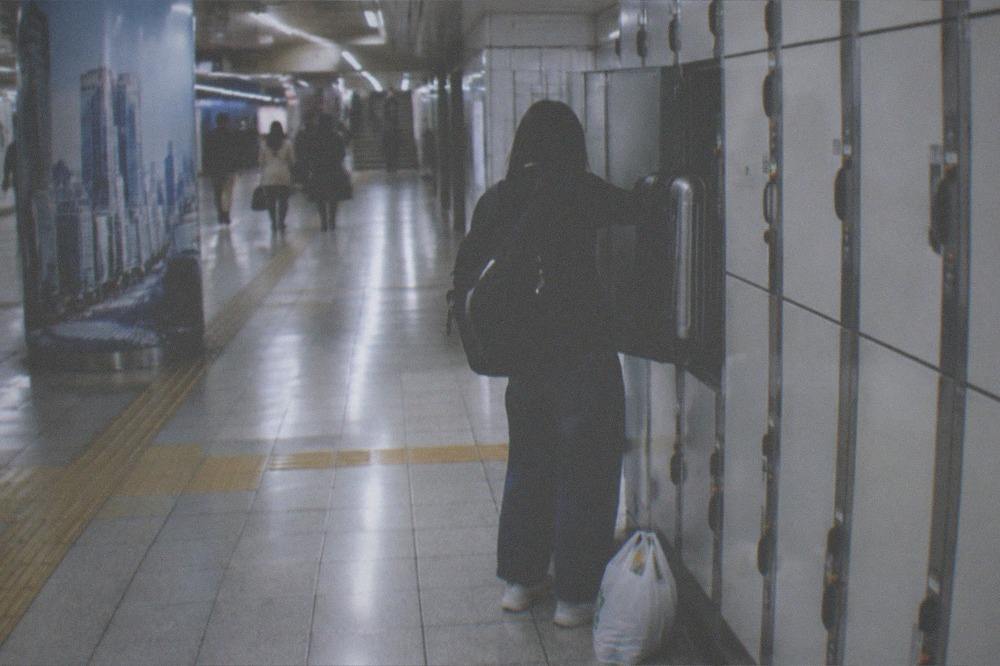
Hours are the other axis, and they interact with duration. JR East Logistics desks at Tokyo Station close between 19:00 and 21:00 depending on the desk, so a 30-day hold still needs a daytime collection. Metro lockers run from first train to last train, and a bag left past the last train gains a day at 2 a.m. Radical Storage point hours vary by location, and the partner's own 24-hour claims on its area pages are template text: 146 of the 249 Tokyo points are not open 24 hours, so a long hold planned around a late collection should be checked against the point's posted hours before booking. The 24-hour luggage storage guide identifies the genuinely round-the-clock options, including Haneda Terminal 3's attended desks, which are open 24 hours, and Narita's airport lockers.
Shinjuku earns a final mention for the density argument. Eight Radical Storage points sit there with a 4.87 rating across 285 reviews at Ueno's neighbour to the north, and Shinjuku itself holds 8 points at a 4.75 rating across 384 reviews, the largest review pool of any station area on file, with 2 of those points listing 24-hour access. For a multi-day hold where plans may shift, a large pool with an honest spread of hours is worth more than a single perfect point.
Common Questions About Leaving Luggage In Tokyo
How long can you leave luggage in a coin locker in Tokyo?
Three days on JR East Multi Ecube lockers and four days including the start date on Tokyo Metro lockers. Paying more does not extend either period, a day is added at 2 a.m., and the first and last days count as full days however briefly the locker was used.
Can I store luggage in Tokyo for a week?
Yes, but not in a city coin locker. A week fits Tokyo Station's 30-day baggage rooms, Haneda's 2-week desks, Narita's per-day counters, airport lockers at 7 to 8 days, and Radical Storage points at 850 yen per bag per day plus a 355 yen per-bag fee charged once.
What happens if I leave a bag in a locker past the limit?
The operator opens the locker, inspects the contents and moves the bag to a designated place, where the same daily rate keeps running for up to 30 days. Retrieval needs the receipt, photo ID and the same IC card, and the separate storage fee is cash only. JR East disposes of food immediately with no grace period.
Can I store luggage at Tokyo Station for a month?
Yes. The JR East Logistics baggage rooms at Tokyo Station hold bags for up to 30 days at ¥500, ¥1,000 or ¥2,000 per day by size, and the desks close between 19:00 and 21:00 depending on location, so collection must be planned in opening hours.
Is there a limit on how long Haneda or Narita can store a bag?
Haneda's own sitewide rule allows up to 2 weeks at its attended desks, and its lockers run to 7 days. Narita's lockers run to 8 days, and Narita's attended counters publish per-day prices with no stated maximum stay.
Does Radical Storage charge for each day a bag is stored?
Yes, 850 yen per bag per day for a regular bag, plus a 355 yen per-bag fee added once at checkout rather than per day. One bag for one day is 850 plus 355, which is 1,205 yen, arithmetic on the network's published figures. There is no part-day rate.