Can I Keep My Luggage At The Airport And Go Out?
Yes, and often cheaply: the real prices, opening hours and duration limits for leaving a bag at Narita or Haneda while you go into Tokyo, compared with station storage.
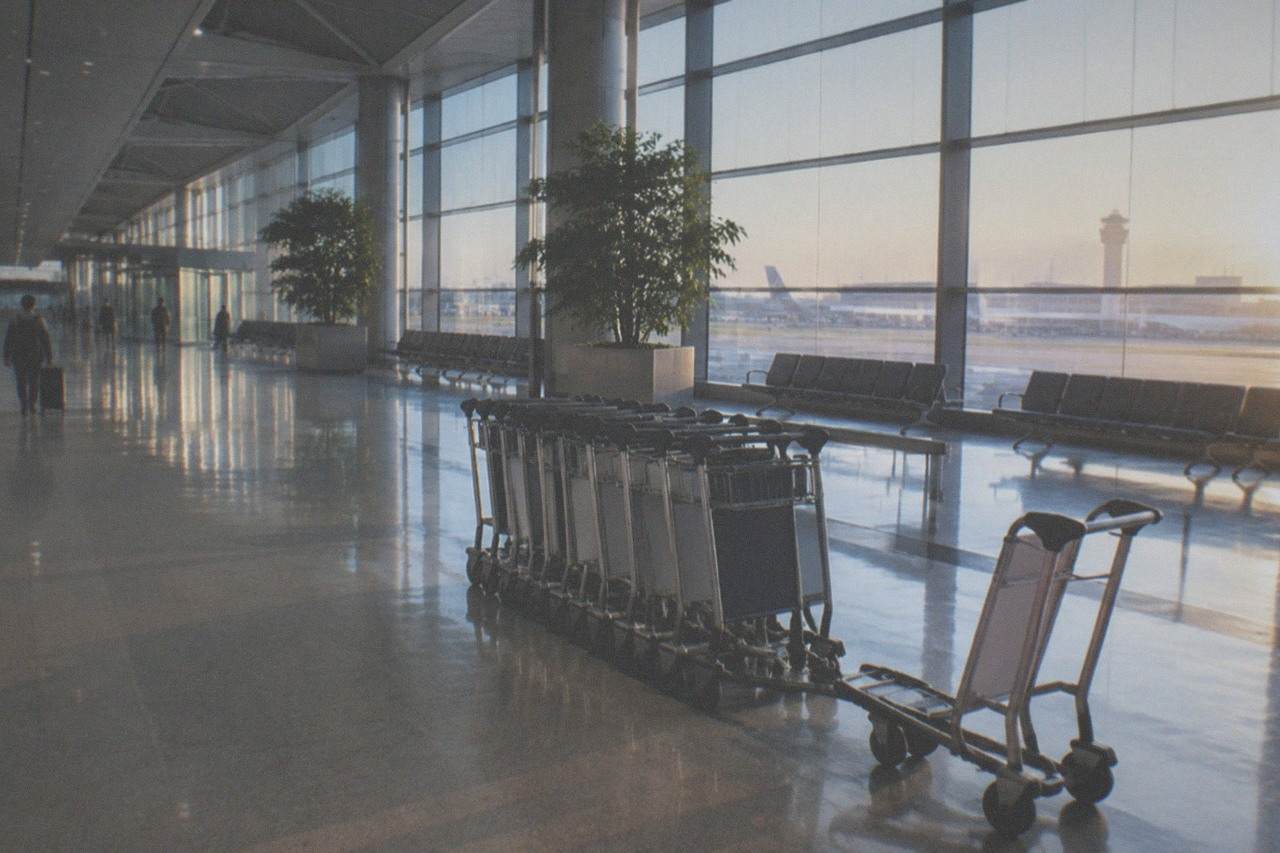
Can I Keep My Luggage At The Airport And Go Out?
Yes. Both Narita and Haneda run attended baggage storage counters and coin lockers that accept a suitcase for hours or days while you leave the terminal, and Narita's cheapest counter starts at 500 yen per piece per day. Haneda's own counters start at 800 yen. The catches are terminal-specific hours, size tiers, and duration rules that differ even between terminals of the same airport.
This is one of the most common storage questions travellers ask about Tokyo, and the honest answer is that the airport is sometimes the right place to park a bag and sometimes a costly mistake. It depends on which airport you are at, which terminal you land at, and how long the gap is before your next flight.
The airport option works best for a long layover on the same ticket, where returning to the same terminal is free and the alternative means dragging a suitcase onto a train. It works worst for a first-day arrival, when you plan to go into the city and come back to the airport only to sleep or fly out, and the round trip costs more in time and money than dropping the bag somewhere central.
Tokyo's airports also matter to this site's own product in an unusual way: the Radical Storage network, whose points this site lists, has no storage point inside any terminal at either airport. The nearest Radical Storage point to Narita is about 6.0 km away in Tomisato, Chiba, and the nearest to Haneda is about 3.4 km away in Kawasaki, Kanagawa, across a prefecture boundary. Inside the terminals themselves, the choices are the airports' own counters and lockers, and those are what the rest of this article prices out.
What It Costs To Store A Bag At Narita
Narita has 11 attended baggage storage counters, all in Terminal 1 and Terminal 2, with per-piece daily prices from 500 yen small up to 2,000 yen large depending on the operator, and there is not one attended counter in Terminal 3. Coin lockers run 400 to 800 yen per day with an 8-day maximum, and one hourly tariff exists at only two locations.
The counter prices are genuinely different between operators, which most English coverage does not say. The Narita Airport Promotion Foundation desk in Terminal 2, 3F north, open 06:30 to 22:00, charges 500 yen for a piece up to 115 cm on the three-side total, 700 yen up to 160 cm, and 1,100 yen above that, per piece per day, tax included. Sagawa Express, with three counters, charges 500 yen up to 100 cm, 700 yen up to 160 cm, and 1,150 yen up to 200 cm. JAL ABC, with seven counters, charges 800 yen for an A4-envelope-sized item, 1,000 yen for a suitcase, and 2,000 yen for something the size of skis or a snowboard.
| Operator at Narita | Small | Medium | Large | Size rule | Counters |
|---|---|---|---|---|---|
| Narita Airport Promotion Foundation | 500 yen | 700 yen | 1,100 yen | 115 / 160 / 161+ cm three-side total | 1 |
| Sagawa Express | 500 yen | 700 yen | 1,150 yen | 100 / 160 / 200 cm | 3 |
| JAL ABC | 800 yen | 1,000 yen | 2,000 yen | Envelope / suitcase / ski-sized | 7 |
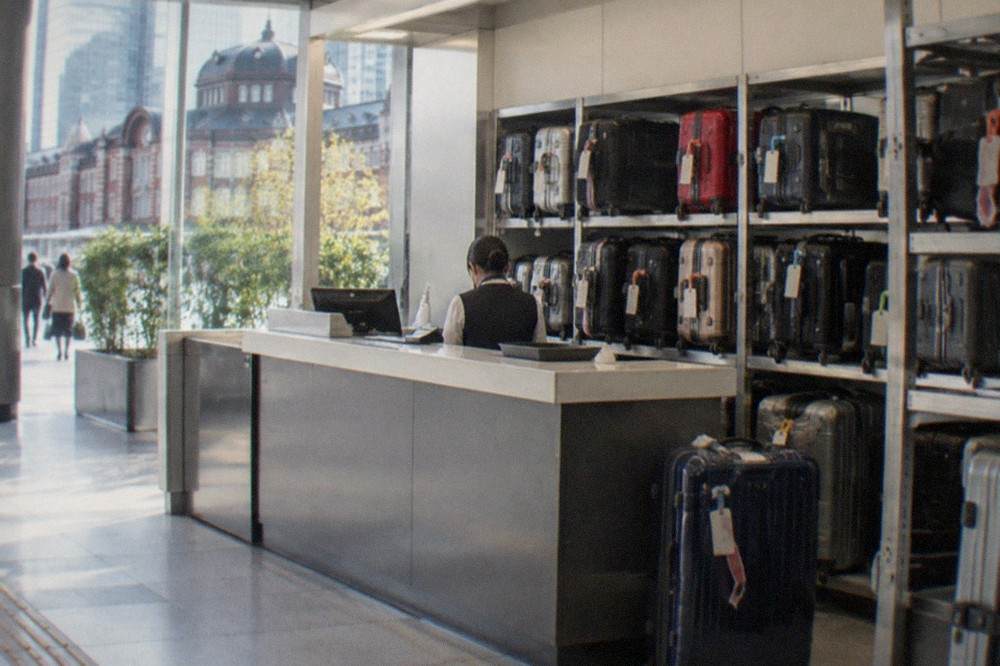
JAL ABC works walk-up only, with no reservation: you give a name, a phone number and a pick-up date, you receive a customer copy, and you pay on collection, in yen cash or credit card. Storage time there is counted by calendar day, not by the hour, so a few hours is billed as a full day. The operator also warns that acceptance may be suspended when the store room is full, and prohibits cash and valuables, perishables, and animals.
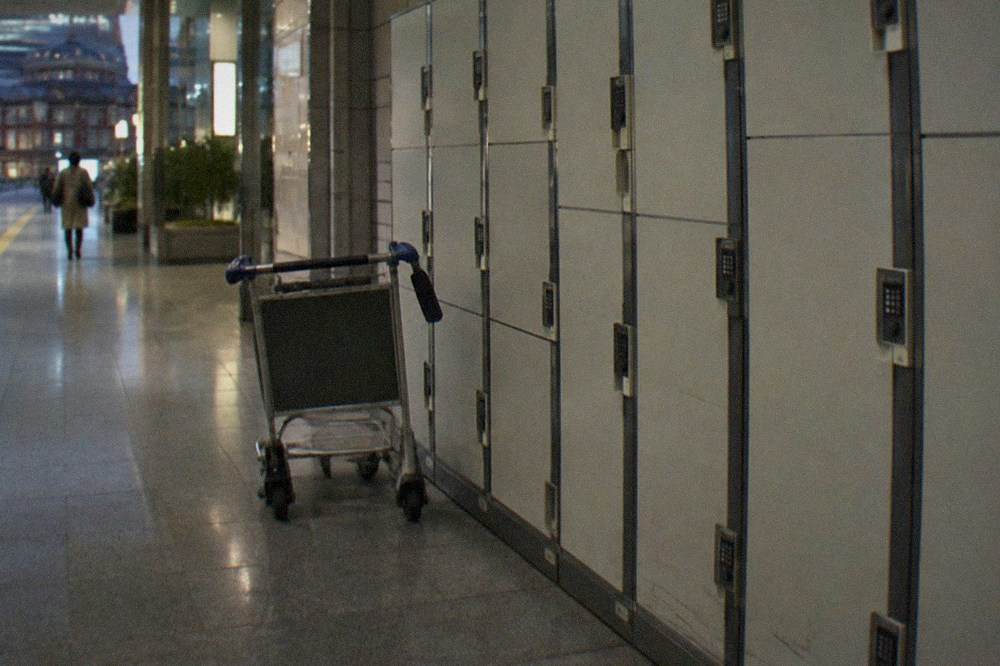
Narita's coin lockers cost 400, 600 or 800 yen per day with a day boundary at midnight and a maximum of 8 days, which is the longest published locker limit of either Tokyo airport. A separate hourly tariff, 300 to 600 yen for the first 6 hours, exists only in Terminal 2 B1F and Terminal 3 2F, and an extra-large tier at 1,200 yen for 12 hours exists only in Terminal 3 2F, capped at 5 days.
Terminal 3 deserves a plain warning. It is the low-cost carrier terminal, it has no attended storage counter of any kind, and its only baggage desk is a Yamato delivery counter on 1F. If you land at Terminal 3 and want your hands free, you either use its lockers or you move terminals. The airport's own storage pages list every counter and its location, and they are worth checking before you land: the Narita baggage storage directory names all eleven desks.
The airport publishes no prices of its own on that page; the figures above come from each operator's own site. One thing the Japanese page says that the English one drops: every baggage storage counter at Narita is certified under the national hands-free travel scheme.
What It Costs To Store A Bag At Haneda
Haneda's own counters charge 800 yen for a piece under 120 cm, 1,000 yen up to 200 cm, and 2,000 yen to the 300 cm maximum, with storage allowed for up to two weeks, and the two Terminal 3 desks are open 24 hours, while Terminal 1 and 2 desks close at 19:30.
Haneda is the airport where the terminal you land at changes the arithmetic. The Terminal 1 and Terminal 2 desks, both in the B1F terminal lobbies and open 08:00 to 19:30, price storage per day. The Terminal 3 desks, one in the 2F Arrival Lobby and one in the 3F Departure Lobby, price the identical numbers per 24 hours instead of per calendar day, and both are open 24 hours. A traveller landing at Terminal 3 on a red-eye and leaving at dawn the next morning pays one 24-hour unit at Terminal 3, but at Terminal 1 or Terminal 2 the same stay can roll into two calendar days.
| Haneda facility | Where | Hours | Price |
|---|---|---|---|
| Attended desk, Terminal 1 | B1F Terminal Lobby, South | 08:00 to 19:30 | 800 / 1,000 / 2,000 yen per day |
| Attended desk, Terminal 2 | B1F Terminal Lobby, North | 08:00 to 19:30 | 800 / 1,000 / 2,000 yen per day |
| Attended desk, Terminal 3 | 2F Arrival Lobby | 24 hours | 800 / 1,000 / 2,000 yen per 24 hours |
| Attended desk, Terminal 3 | 3F Departure Lobby | 24 hours | 800 / 1,000 / 2,000 yen per 24 hours |
| Sagawa, Terminal 1 | 1F Arrival, North | 07:00 to 20:00 | 800 / 1,000 / 2,000 yen by size |
| Yamato, Terminal 2 | 3F international counter | to 22:45 | 800 / 1,000 / 2,000 yen per day |
The sitewide rules at Haneda are published plainly: baggage can be stored for up to two weeks, the maximum three-side total is 300 cm, and the maximum weight is 30 kg. The size tiers run under 120 cm, 120 to under 200 cm, and 200 to 300 cm. Those figures are on the airport's own baggage checkroom page.
Two quirks sit inside that table. Yamato's Terminal 2 international counter states no limit on the storage period at all, which contradicts the airport's own two-week rule, and the airport does not name the company that runs the main Terminal 1 to 3 desks. Haneda's Terminal 3 lockers are also dearer than Terminal 1 and 2 lockers, at 500, 700 and 900 yen per 24 hours with an extra-large tier at 2,000, against 400 to 1,500 per day in the domestic terminals, and the Terminal 3 rows list no card payment.
The JAL Baggage Service Counter in Terminal 1, open 07:30 to 20:00, charges 1,500 yen per item, but that is a delivery price, not a storage price: bags up to 15 kg accepted by 13:00 are delivered the same day to hotels, and only within the Urayasu, Odaiba and Maihama areas. If your plan is "store the bag at the airport and sleep in a hotel in the city", a delivery service may beat a storage counter outright, but read the areas served before counting on it.
Airport Counters Compared With Airport Coin Lockers
A large coin locker at Narita costs 800 yen per day and holds a bag up to 8 days, while a large attended counter piece costs 1,100 to 2,000 yen; at Haneda lockers max out at 7 days and then move to 30-day storage, and the biggest lockers are smaller than most checked suitcases.
The real decision between a locker and a counter is usually size, not price. A checked suitcase that flew in the hold will generally not fit a standard locker tier, and the deep tiers that swallow one sell out first at exactly the stations and terminals a visitor uses. The Japanese rail operators publish internal dimensions for their locker tiers, and the numbers explain a lot of disappointment: the large Toei tier is 856 by 342 by 663 mm, which means a hard-shell case around 34 cm deep is already at the limit of what slides in.
Attended counters have no published dimension ceiling at all; they charge by the three-side total of your bag, and a 200 cm three-side-total suitcase is simply a medium or large piece rather than an impossibility. That is the honest trade: lockers are usually cheaper for a small or medium bag, counters are the only realistic option for a full-size checked case, and no airport locker tier in Tokyo is built for an oversized or 30 kg bag.
| Attended counter | Coin locker | |
|---|---|---|
| Narita price | 500 to 2,000 yen per piece per day | 400 to 800 yen per day |
| Narita duration | Set by each operator | 8 days |
| Haneda price | 800 to 2,000 yen per day | 400 to 1,500 yen per day, T3 per 24 hours |
| Haneda duration | Up to 2 weeks | 7 days, then moved to storage for 30 days |
| Size ceiling | Published three-side total, up to 200 or 300 cm | Tier dimensions, oversized bags do not fit |
| Payment | Yen cash or card, usually on collection | Cash or IC card depending on the bank |
One rule worth knowing before you feed coins into anything: JR East Smart Logistics lockers, including the Multi Ecube bank at Narita Terminal 2 B1F, cap use at 3 days, and paying more does not extend it, because the operator empties the locker on the fourth day regardless. Tokyo Metro's locker terms run to 4 days including the start day. Neither rule applies to the airport's own lockers, which is exactly why the duration column above is split by operator rather than stated as one Tokyo-wide rule.
How Long Can You Leave The Bag While You Go Out?
At Narita you can leave a bag for up to 8 days in a coin locker, and the attended counters bill by the day with a pick-up date you declare, while Haneda allows up to two weeks at its desks and 7 days in a locker before the bag is moved to separate storage for 30 days.
The two-week ceiling at Haneda makes the airport a genuine long-term option, not just a layover one, and the 30-day separate storage that follows a locker expiry means a forgotten locker bag is not immediately lost. But the small print at the rail operators shows how different the regimes are. When a Tokyo Metro locker period expires, the operator opens the locker, inspects the contents, moves them to a designated place, and holds them for 30 days counted from the original rental start, with the same daily rate still running and the separate storage fee payable in cash only. Collecting it needs the receipt, photo ID, and the same IC card you paid with. Your travel costs to go and get it are your own.
At an attended counter the same question is answered at drop-off rather than by a tariff: JAL ABC asks for a declared pick-up date and charges an extension fee if you overstay it. Declare honestly. If your outbound flight is four days away, say so, because a declared date is how the operator plans shelf space.
One practical point for anyone planning to go out and come back repeatedly: a Multi Ecube locker rental ends the moment you open the door, and you cannot put the bag back, with only a 15-minute reopen grace via a yellow button on the unit. An attended counter, by contrast, does not care how many times you visit, because you collect once at the end.
When The Airport Is The Wrong Place To Store A Bag
Storing at the airport is a mistake when your day is in the city, because the round trip to Narita costs about an hour each way on top of storage, and central Tokyo storage costs 850 yen per bag per day plus a 355 yen per-bag checkout fee, which is 1,205 yen total for one bag one day, against a 500 to 800 yen airport counter.
The money comparison is closer than it looks, but the time comparison is not. A bag stored at Narita while you visit Tokyo means two airport train rides you would not otherwise take, and the same is true in reverse for a Haneda layover where your hotel or meeting is in Shinjuku. The airport wins when you would be near the airport anyway: the layover, the last night before a morning flight, the arrival day when your hotel cannot take the bag yet.
For the city-side option, this site lists Radical Storage's staffed partner points by area. Radical Storage has no point inside any airport terminal, so the choice is not between the airport counter and the airport Radical Storage point; it is between the airport counter and a central drop-off. A regular bag at any Radical Storage point in Tokyo costs 850 yen per day, plus a 355 yen fee per bag charged once at checkout, so one bag for one day is 850 plus 355, which is 1,205 yen, presented here as arithmetic on Radical Storage's own published figures.
The Narita-area picture on this site covers one staffed point around the airport, the nearest about 6,020 m from the terminals, carrying a 5 rating from 1 review, staffed rather than automated. Those points suit someone staying near the airport or driving, not someone whose day is in Shibuya.
For a day spent sightseeing, the central areas beat both the airport and the peripheral points. Asakusa is the deepest cluster this site carries: 13 staffed storage points, the nearest 193 m from the station, rated 4.85 from 268 reviews. Asakusa also carries the strongest recent change in Tokyo storage: the Taito City tourist information centre's baggage service terminated on 31 March 2026, with the city naming travellers' suitcases as one cause of street congestion, so live English travel content still pointing readers there is out of date. The honest replacements in the neighbourhood are a Tobu counter at Asakusa Station, a Sagawa counter that charges 800 yen per day with no size tiers, and the Radical Storage points on this site's Tokyo luggage storage map.
Harajuku, for a west-side day, carries 4 points, the nearest 172 m from the station, rated 4.93 from 38 reviews. The pattern repeats across the roster: staffed points clustered minutes from the stations visitors actually use, at the same 850 yen plus 355 yen arithmetic everywhere, with ratings that belong to Radical Storage's own review pool rather than to this site.
The Layover Plan, And The Forwarding Alternative
For a layover long enough to see the city, store the bag at the terminal you will depart from, not the one you landed at, because collecting a bag where your outbound gate is means one terminal transfer instead of two, and forwarding services can move a bag from airport to hotel for 1,800 to 2,180 yen.
The terminal-matching point sounds obvious and is routinely missed. Narita Terminal 3 arrivals who store in Terminal 1, because it is on the way to the train, buy themselves a terminal transfer under time pressure on the way back. Match the storage location to the departure gate, then go out.
Forwarding is the other lever. Sagawa will move a bag from Narita to a Tokyo hotel for 2,120 yen for a piece up to 60 cm, up to 4,690 yen for a 200 cm suitcase, if handed over by 14:00, delivered from 16:00, to ten Tokyo wards plus Urayasu. From Haneda the same service runs 910 to 2,440 yen with a 13:00 cut-off. Yamato runs a Haneda same-day service to the 23 wards from 11:00, from 2,450 yen, and an explicit rule that no same-day delivery runs city to Narita, while Sagawa does run that direction from its city counters by 11:00. JAL ABC charges 1,800 per piece one way, under 20 kg, cash only, from airport to hotel if applied between 07:30 and 13:00, collected between 16:00 and 20:00, and only to named partner hotels.
Transit times for forwarding could not be sourced for any lane from the operators' own material, so no delivery time is claimed here; the published fares and cut-off times above are what can be stated. The Narita to Tokyo with luggage guide and the Haneda to Tokyo with luggage guide cover the train side of the same decision, and the takuhaibin (luggage forwarding) explanation on this site covers the hotel-to-hotel variant, including the Shinkansen-borne services.
The rule of thumb that falls out of all the numbers: a same-day layover at Haneda, store at the terminal, take the train, come back. An arrival day with a hotel booked anywhere in the 23 wards, forward the bag or store it centrally instead. A Narita departure the next morning, the airport is the right shelf, and the Promotion Foundation desk's 500 yen small tier is the cheapest attended storage either Tokyo airport offers.
For everything else, the comparison that matters most travellers is between the airport counters and the city network, and this site's Luggage Storage in Tokyo area pages exist to make that comparison honest: the affiliate partner's real rate stated plainly, beside the airports' and rail operators' own published prices, with the fees shown every time a price is named.
Common Questions About Storing Luggage At The Airport And Going Out
Can I keep my luggage at the airport and go out?
Yes. Narita has 11 attended counters across Terminal 1 and 2 from 500 yen per piece per day, Haneda has desks in all three terminals from 800 yen, and both airports have coin lockers. Match the terminal to your departure gate, check the hours, and note that Haneda Terminal 3 desks are open 24 hours while Terminal 1 and 2 close at 19:30.
Which Tokyo airport is cheaper for luggage storage?
Narita. The Narita Airport Promotion Foundation desk charges 500 yen for a small piece against 800 yen for the same size at Haneda, and Narita's coin lockers run 400 to 800 yen a day against 400 to 1,500 at Haneda. Haneda counters do allow storage up to two weeks, where Narita lockers cap at 8 days.
Can I leave my luggage at Narita Terminal 3?
Only in a coin locker or via delivery. Terminal 3 has no attended baggage storage counter; its sole baggage desk is a Yamato delivery counter on 1F. The hourly locker tariff of 300 to 600 yen for six hours exists in Terminal 3 2F, with an extra-large tier capped at five days.
How many days can I leave a bag at the airport?
Up to 8 days in a Narita coin locker, up to two weeks at a Haneda attended desk, and 7 days in a Haneda locker before the bag is moved to separate storage for 30 days. Attended counters at Narita ask for a declared pick-up date and charge an extension fee if you overstay it.
Is there a Radical Storage point inside Narita or Haneda?
No. The nearest Radical Storage point to Narita is about 6.0 km away in Tomisato, Chiba, and the nearest to Haneda about 3.4 km away in Kawasaki, Kanagawa. Inside the terminals the storage options are the airports' own counters and lockers.
Should I store the bag at the airport or forward it to my hotel?
Forward it if your hotel is inside the served area and you can make the cut-off: Sagawa runs Narita to hotel from 2,120 yen for pieces up to 60 cm with a 14:00 handover, and Haneda to hotel from 910 yen with a 13:00 cut-off. Store at the airport for a layover, a red-eye arrival with no hotel, or a next-morning departure.