How To Ask A Hotel To Store Luggage In Japanese?
The exact Japanese phrases to use at a Tokyo hotel front desk when you want to leave a bag before check-in, after checkout, or for a few hours, plus what staff will say back and what to do when the answer is no.
How To Ask A Hotel To Store Luggage In Japanese?
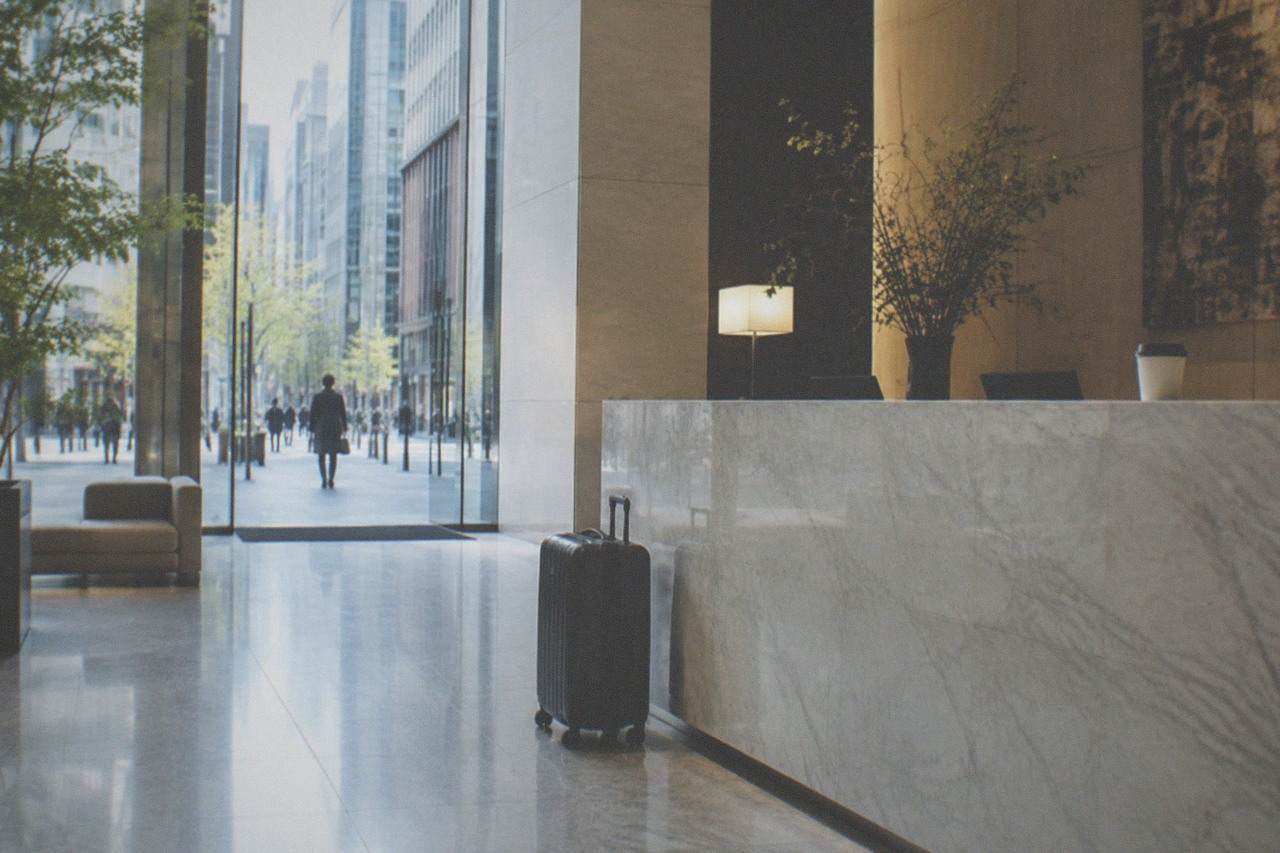
The single most useful sentence is 荷物を預かっていただけますか (nimotsu o azukatte itadakemasu ka), a polite request meaning "could you look after my luggage?" It works at check-in, after checkout, and for a few hours between trains. Say it while nudging the bag toward the counter and almost any Tokyo front desk will understand, even if the pronunciation is imperfect. Staff who speak no English still handle this request many times a day.
Tokyo hotels store bags at a rate that surprises first-time visitors. A property in the city will often take a suitcase the morning a guest flies out at eleven at night, hold it through the whole day, and hand it back with a small numbered tag and a bow. The catch is that the exchange usually happens in Japanese, and the phrase has to be recognizable, not perfect. Front desk staff process this request constantly, so the bar is lower than most travellers fear, but a garbled or overly formal construction can still produce a confused pause at the worst moment, typically with a taxi meter running outside.
The verb that carries the whole request is 預かる (azukaru), which is what the hotel does: to take custody of something. The guest's side of the same transaction is 預ける (azukeru), to entrust. Confusing the two is the classic mistake, because 預けたいのですが (azuketai no desu ga, "I'd like to leave this") is also correct and natural. Both verbs appear in the phrase tables below, and knowing which party does which one is the difference between asking a hotel to hold a bag and announcing that you intend to hold theirs.
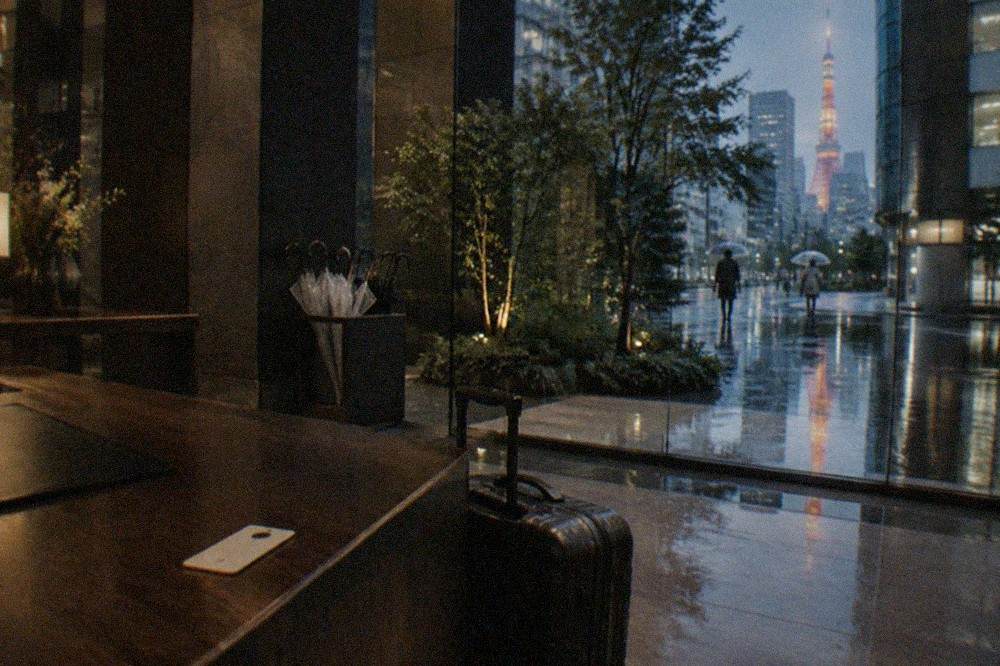
One practical note before the phrases. The request is made to a person, at a counter, with the bag visible. Walking up empty-handed and asking in the abstract tends to produce a slower answer. Hand the bag over, or rest a hand on it, and the sentence does most of the work for you.
For travellers who land in the morning and cannot check in until the afternoon, this phrase is the hinge of the whole day. It also matters on the way out: a late flight, a hotel checkout at 10:00, and a bag that cannot come along to the museum all resolve the same way. The sections below give the phrases for each moment, the replies to expect, and what to do when the answer is no, including the Radical Storage points around Tokyo's stations and airports, station baggage rooms, and the airport counters that take a suitcase for a fixed published fee.
The Exact Words To Use At The Front Desk
Start with 荷物を預けたいのですが (nimotsu o azuketai no desu ga), "I'd like to leave my luggage," said while presenting the bag. If a specific timing matters, add the words for before check-in, after checkout, or until this evening. The table below covers all of them. The construction ~のですが softens any request into something a front desk hears as polite rather than demanding, so keep it on the end of the sentence.
The base phrase works at almost any hour of a hotel day. What changes is the time clause attached to it. A guest arriving at 09:00 with a 15:00 check-in says チェックインまで (chekku-in made, "until check-in"). A guest checking out at 10:00 with a 21:00 flight says チェックアウト後 (chekku-auto go, "after checkout"). Japanese hotels hear both requests all day, every day, and the storage room behind the counter exists largely for them.
| Japanese | Romaji | What it means | When to use it |
|---|---|---|---|
| 荷物を預けたいのですが | nimotsu o azuketai no desu ga | I would like to leave my luggage | The opening line, with the bag visible |
| 荷物を預かっていただけますか | nimotsu o azukatte itadakemasu ka | Could you hold my luggage? | A softer, very polite version of the same request |
| チェックインまで預かっていただけますか | chekku-in made azukatte itadakemasu ka | Could you hold this until check-in? | Arriving before the room is ready |
| チェックアウト後に荷物を預かっていただけますか | chekku-auto go ni nimotsu o azukatte itadakemasu ka | Could you hold my luggage after checkout? | The late-flight case, the most common of all |
| 荷物を預かりできますか | nimotsu o azukari dekimasu ka | Is it possible to leave luggage here? | Asking whether the service exists at all |
Two small pronunciation points make the phrases land more reliably. Japanese syllables get even weight, so nimotsu is ni-mo-tsu with no stressed syllable, not ni-MOTS-u. And the u at the end of ですが is close to whispered in ordinary speech, so no desu ga often sounds like no des' ga. Nobody expects a visitor to nail this; the goal is recognition, and even a clumsy azuketai no desu ga gets there.
If saying the full sentence feels like too much on day one, the two-word fallback is 荷物、お願いします (nimotsu, onegai shimasu), "luggage, please," delivered with the bag pushed gently forward. It is blunt by Japanese standards, and it works, because the front desk has seen the mime before. Written Japanese helps too: the phrases above can be shown on a phone screen, and staff read them instantly even when spoken English fails both sides.
What To Say When You Come Back For Your Bag
Say 荷物を受け取りに来ました (nimotsu o uketori ni kimashita), "I've come to pick up my luggage," and hand over the claim ticket. The ticket is called a 預かり証 (azukari-shō), and losing it turns a thirty-second retrieval into a slow identity check, so keep it somewhere that is not a pocket you will sit on. Asking when you must collect by, 受け取りは何時までですか (uketori wa nanji made desu ka), is worth doing at drop-off, because hotel storage rooms close when the front desk closes.
Retrieval is the easier half of the exchange. The staff member will usually ask for the room number or the name the bag was logged under, match it to the ticket, and disappear into a back room for a few seconds. When the bag reappears, there is one more phrase worth having: 中を確認してもいいですか (naka o kakunin shite mo ii desu ka), "may I check inside?" It is rarely needed, but it is the correct and polite way to open a bag that was sealed or locked at drop-off.
The closing hours point deserves emphasis because it catches people with evening flights. A hotel storage room is not a locker: it is a room behind the desk, and the desk has hours. A property with a front desk until 23:00 will hold a bag until 23:00, and a business hotel with the desk closing at 22:00 will not, whatever the flight time is. Asking the question at drop-off, in the same breath as the request itself, avoids discovering this at 23:15.
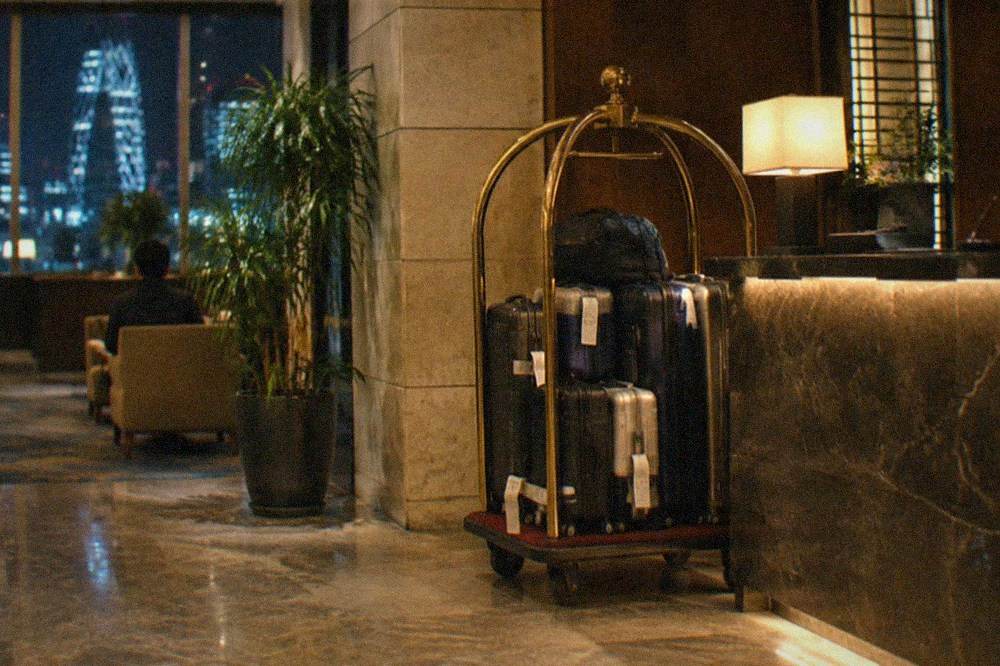
The ticket system matters most for bags left after checkout, because the staff on duty at 21:00 are often not the staff who took the bag at 10:00. The azukari-shō, or a numbered tag matched to a logbook line, is what makes the handover work across a shift change. Tokyo hotels handle this smoothly; the only regular failure mode is a guest who has lost the ticket and cannot remember the room number. A photo of the ticket on the day it is issued takes two seconds and removes the failure mode entirely.
What The Hotel Will Say Back To You
The most common reply is はい、大丈夫です (hai, daijōbu desu), "yes, that's fine," followed by お名前とお部屋番号をお願いします (onamae to oheya bangō o onegai shimasu), "your name and room number, please." Staff may also ask 何時頃お戻りですか (nanji-goro omodori desu ka), "around what time will you return?" None of these require an answer in full sentences; the room number alone is often enough. If the reply is 申し訳ございません (mōshiwake gozaimasen), an apology, the answer is no, and the section below is the backup plan.
The follow-up questions are short and predictable. Beyond name and room number, a staff member may point at the bag and ask こちらですか (kochira desu ka), "this one?", or indicate where to set it down with こちらに置いてください (kochira ni oite kudasai), "please put it here." When the storage room has a size limit or is simply full, the phrase to listen for is 少し大きいので… (sukoshi ōkii node…), "it's a bit large, so…", delivered apologetically. A hard suitcase can trip this where a soft duffel would not, because hotel storage rooms are sized for the daily checkout wave, not for cargo.
English capability at Tokyo front desks is broad but uneven, and it is strongest exactly where this request lives. The phrases in this article are also, not coincidentally, the phrases hotel staff most often recognize when spoken by a visitor. A useful pattern is to lead with the Japanese sentence and fall back on gesture if the reply comes back in fast Japanese: smiling and pointing at the bag, then at the clock, communicates "until this evening" adequately. The counter is one of the few places in the city where both sides are actively trying to complete the same transaction in whatever language works.
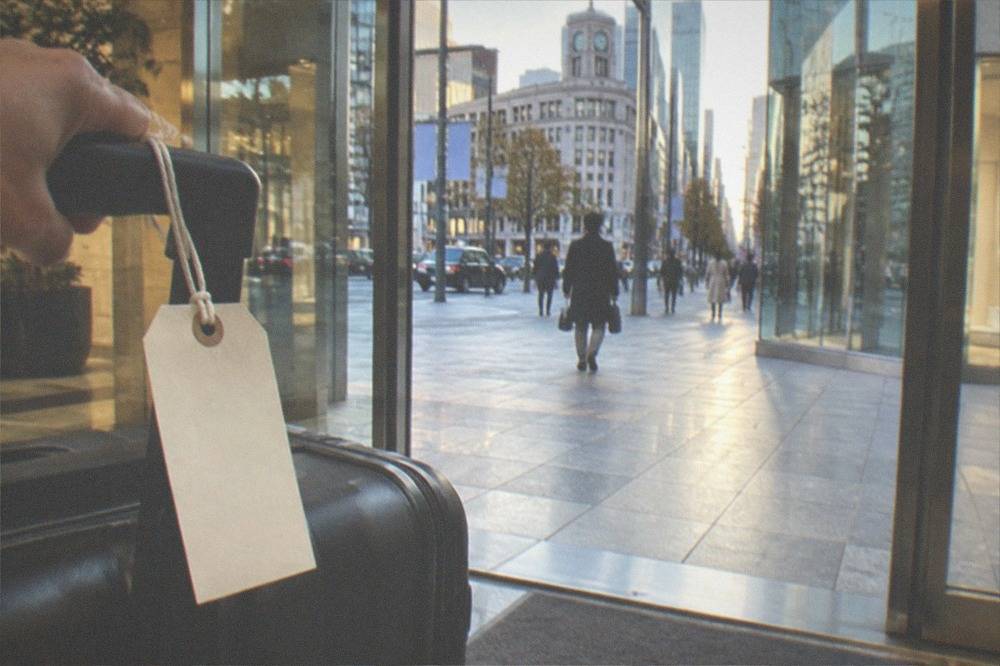
The answer that requires no language at all is the numbered tag. Staff will attach a 預かり札 (azukari fuda) to the bag's handle, tear off a stub, and hand it over, and that gesture means the request has succeeded. Taking the stub is the whole contract. Everything else in the exchange is courtesy around a system the hotel runs dozens of times a day.
When A Hotel Says No, Or Caps The Size, Or Charges
A hotel can decline to store a bag: storage is a courtesy rather than an obligation, and a full storage room or an oversized suitcase are the usual reasons. Some properties charge a small fee, and a few ryokan and hostels have no storage room at all. The honest position is to ask before handing the bag over and to hold a second plan: station baggage rooms, Radical Storage points and airport counters all take a refused bag.
The size problem is the one that catches travellers with hard-shell suitcases. Hotel luggage rooms are racks and shelves behind the front desk, and a large spinner can be refused where a carry-on-sized bag sails through. Refusals happen, but they are decided on the spot, and no hotel publishes a size figure, so the only reliable method is to ask with the bag standing next to you and let the staff decide on the spot.
The fee question is genuinely variable and should be settled at drop-off, not at pickup. Many Tokyo hotels hold a post-checkout bag at no charge as a matter of course, and this is so common that travellers assume it is universal. It is not. A hotel that has outsourced its storage, or a property storing bags overnight in a staffed room, may charge per bag per day, and the amount is set by the property, not by any citywide rule. Asking いくらですか (ikura desu ka, "how much?") at the moment of the request costs nothing and prevents a surprise on the way to the airport.
The overnight question is separate from the fee question, and it is where hotels and storage businesses genuinely differ. A hotel holding a bag overnight after checkout is doing a favour; a Radical Storage point is selling exactly that. Radical Storage's Tokyo rate is 850 yen per bag per day, with a 355 yen per-bag fee added once at checkout, so one bag for one day is 850 plus 355, which is 1,205 yen, always arithmetic on Radical Storage's own published figures rather than a promise about a total. Radical Storage also advertises a from-490-yen rate, but that is a small-bag rate found at only 11 of its Tokyo points, not what a traveller with a normal suitcase pays. The Radical Storage Guarantee is not insurance, its terms say so plainly, and payouts are capped at EUR 3,000 per claim. Every area figure quoted in this article comes from the Radical Storage data published on Luggage Storage in Tokyo.
For readers weighing this against leaving the bag with a hotel at all, the question of whether a hotel you are not staying at will hold your bag is covered separately. The short version is that a hotel you are staying at is the first and cheapest option, a Radical Storage point is the flexible one that takes any bag size a partner shop can physically hold, and forwarding the bag to the next hotel, takuhaibin (luggage forwarding), removes it from the trip entirely.
Where Else In Tokyo You Can Leave The Bag That Day
Yes. If your hotel refuses, Tokyo Station has seven JR East Logistics baggage rooms charging 500 to 2,000 yen per bag per day and holding bags up to 30 days, Sagawa runs a Shinjuku Busta counter from 06:30 to 21:00 at 800 to 1,500 yen, and Haneda Terminal 3's attended desk operates 24 hours at 800 to 2,000 yen.
The station option is underused by visitors and is often closer than the hotel itself. JR East Logistics runs its attended rooms at Tokyo Station from 09:30 to 20:00 at most locations, with sizes priced at 500 yen for a bag up to 100 cm on the three-side total, 1,000 yen up to 200 cm and 2,000 yen above that, for up to 30 days, per its own published tariff page. Ueno has one inside the Park Gate on the 3F concourse at the same prices, daily 10:00 to 20:00. Shinagawa's room prices its M tier at 800 yen on weekdays and 1,000 yen on weekends, with the weekend rate forced onto certain holiday dates in late April to early May, mid-August and the New Year week. The Yaesu South room, outside the gates at Tokyo Station, is the easiest of the seven to reach with a suitcase in tow.
Radical Storage's Shinagawa points are the station-alternative for that side of the city: three points in the area, rated 4.45 from 12 reviews on Radical Storage's own figures, a small pool that says more about how new the cluster is than about quality. The nearest sits 1205 m from the station, per this site's own area data, so the JR East room wins on proximity at Shinagawa, and the Radical Storage points win on late evening and on bag size, since a partner shop takes whatever fits through its door rather than what fits a 34 cm-deep locker tier.
At the airports the choice is different again, because the airport counters publish real tariffs. Haneda Terminal 3's attended desk is open 24 hours at 800 yen for a bag under 120 cm, 1,000 yen to just under 200 cm, and 2,000 yen up to the 300 cm three-side maximum, per the airport's own facility page, and unlike the Terminal 1 and 2 desks, which price per calendar day, Terminal 3 prices per 24 hours, so a 30-hour stay costs two units there but one day plus a bit at T1. Narita's eleven attended counters are all in Terminals 1 and 2, with none in Terminal 3, and JAL ABC's seven walk-up desks charge 800 to 2,000 yen per piece per day, calculated by calendar day, with payment on collection and a customer copy that must not be lost, per JAL ABC's own counter page.
Radical Storage, for its part, has no point inside any terminal at either airport. The nearest Haneda point is about 3.4 km away in Kawasaki, in Kanagawa prefecture, and the four Haneda-area points on Radical Storage's list carry no reviews yet, so there is no rating to lean on and none should be invented. For a flyer with hours to kill in the city and a return to Haneda in the evening, the honest arithmetic is the airport desk against the Radical Storage day rate of 850 yen plus the 355 yen once-per-bag checkout fee, with the airport desk winning on the airport side and the city points winning on the city side.
Coin lockers complete the picture for a few hours, with the caveat that their prices and duration rules belong to each operator. Tokyo Metro publishes one price ladder at all its stations, 300 to 1,000 yen by door size, while JR East's lockers vary by station from 300 to 1,100 yen, and the two operators disagree on maximum duration, Metro allowing 4 days including the start day and JR East Smart Logistics 3, with payment not extending the period. The depth of a standard locker, 34 cm at both operators, is what rejects a checked suitcase, not the width. The coin locker size guide has the full dimension tables for both systems.
The last alternative is not to store the bag at all but to send it: takuhaibin moves a suitcase hotel to hotel or hotel to airport, with Yamato charging 2,410 yen for a Tokyo-to-Tokyo 160-band parcel and 3,160 yen Tokyo to Kyoto on its cash tariff. Transit times are not published for personal customers, so no delivery time may be promised here, and the honest advice is to hand the bag over the day before you need it and ask the front desk to write the pickup window into the request. The forwarding versus storage comparison covers when each one wins.
Common Questions About Asking Hotels To Store Luggage In Japanese
How to ask a hotel to store luggage in Japanese?
Say 荷物を預かっていただけますか (nimotsu o azukatte itadakemasu ka), a polite request meaning "could you hold my luggage?", or the simpler 荷物を預けたいのですが (nimotsu o azuketai no desu ga), "I'd like to leave my luggage." Say either one with the bag visible at the counter. Add チェックアウト後 (chekku-auto go) for after checkout or チェックインまで (chekku-in made) for before check-in.
Do Tokyo hotels store luggage for free?
Many do, as a courtesy to guests, but it is not a rule and no citywide policy guarantees it. Some properties charge a per-bag per-day fee, and the amount is set by each hotel. Ask いくらですか (ikura desu ka, "how much?") at the moment you hand the bag over, not when you collect it, so the price is settled before the bag is in the storage room.
Can I leave my luggage at a Tokyo hotel after checkout?
Usually yes, for the same day. The phrase is チェックアウト後に荷物を預かっていただけますか (chekku-auto go ni nimotsu o azukatte itadakemasu ka). The limit is the front desk's closing time, not your flight time, so ask 受け取りは何時までですか (uketori wa nanji made desu ka), "until what time can I collect?", when you drop the bag. Overnight storage after checkout is less universally offered and should be asked about directly.
What is a 預かり証 (azukari-shō)?
It is the claim ticket, sometimes a stub torn from a numbered tag tied to the bag's handle. 預かり証 means "custody slip," and it is what matches your bag to you at pickup, especially when the staff on duty at collection were not the staff who took it in the morning. Losing it turns a quick handover into a slow identity check, so photograph it or keep it in a zip pocket.
What if the hotel says no?
Move to the nearest alternative. Tokyo Station has seven attended JR East Logistics baggage rooms at 500 to 2,000 yen per bag per day holding bags up to 30 days, Sagawa runs a Shinjuku Busta counter from 06:30 to 21:00 at 800 to 1,500 yen, and Radical Storage sells day storage at partner shops across the city at 850 yen per bag per day plus a 355 yen once-per-bag checkout fee. Airport counters publish their own tariffs at 800 to 2,000 yen per day.
Will hotel staff understand if my Japanese pronunciation is bad?
Almost always, for this specific request. Front desk staff hear 荷物 (nimotsu) with a bag pushed toward them many times a day, and context does most of the work. Even weight on every syllable helps: ni-mo-tsu, no stressed syllable. If speech fails entirely, show the written phrase on a phone screen, or say 荷物、お願いします (nimotsu, onegai shimasu), "luggage, please," which is blunt but instantly understood.