How Long Can You Leave Luggage In A Coin Locker At Tokyo Station?
The real time limits on Tokyo Station coin lockers: the three-day and four-day rules, the 2 a.m. day rollover, what happens to a bag left too long, and where to store for 30 days instead.
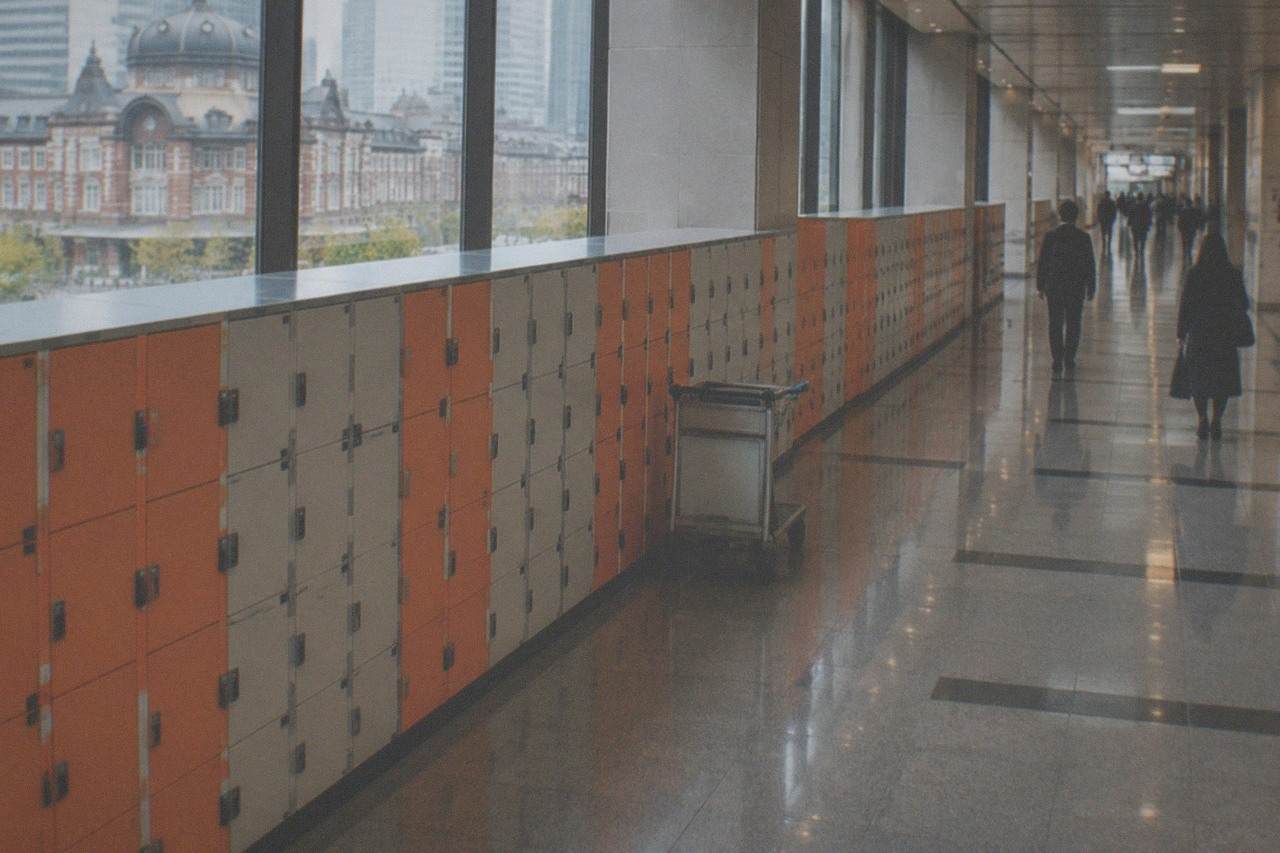
How Long Can You Leave Luggage In A Coin Locker At Tokyo Station?
You can leave a bag for three days on JR East's Multi Ecube lockers at Tokyo Station, and for four days including the day you start on Tokyo Metro's lockers. The two systems sit in the same station and their rules differ, so the honest answer depends on which bank you are standing in front of. Paying more money does not extend either period, and the day counter rolls at 2 a.m., not midnight.
That split is the part almost every English-language guide gets wrong, because Tokyo Station is served by two operators whose lockers look identical from the outside. Tokyo Metro publishes 100 locker doors at its Tokyo Station pages, run through its Metro Commerce subsidiary. JR East runs its own banks, including the "Multi Ecube" lockers that can be reserved in advance through the operator's own site. A traveller who drops a bag on Monday morning and flies back on Friday evening has already broken the rule on both systems, even though the locker took their money without a warning.
The maximum periods come from the operators' own terms, not from a blog. Metro Commerce's coin locker terms state that the period of use is four days including the day use begins. JR East Smart Logistics, which runs the Multi Ecube network, sets three days in its own terms and adds, in plain words, that paying more does not buy a fourth day: the bag must be pulled out. Those two documents, one from each operator, are the entire answer to the question, and everything else in this article is the practical detail wrapped around them.
There is a third number worth knowing before anything else, because it is the one that surprises people at the retrieval end. When the period expires, the operator does not throw the bag away. It unlocks the locker, inspects the contents, and moves them to a designated holding place, where the same daily rate keeps running and the contents are held for 30 days counted from the start date of the original rental. After those 30 days, ownership is deemed abandoned and the operator may dispose of the contents, and may bill for the cost of doing it. So the real question is never "will my bag survive a week in the locker". The locker cannot hold it that long. The question is whether you can get back to Tokyo Station inside the window.
When Does A Locker Day Roll Over, Midnight Or 2 A.m.?
A locker day rolls at 2 a.m., not midnight. The locker's working day runs from first train to last train, and once you pass the last train, a day is added at 2 a.m. The first day and the last day each count as one full day no matter how briefly you used the locker, so a two-hour drop on Monday afternoon and a Tuesday 9 a.m. pickup is two days of rental, not one.
Metro Commerce's terms spell this out precisely. The locker is usable from first train to last train; use beyond the last train adds a day at 2 a.m.; and the start day and end day are each counted as one day regardless of how long the rental actually lasted within them. That last clause is the trap. A traveller who stores a coat at 6 p.m. and retrieves it at 8 a.m. the next morning has paid for two days under the terms, because day one began at 6 p.m. and day two began the moment the 2 a.m. line was crossed. Nothing about the elapsed time, fourteen hours, changes the arithmetic.
This is also why the question "can I leave it overnight?" has a cleaner answer than most guides give. Overnight is fine, and it costs two calendar days of locker fees, not one. On Tokyo Metro's ladder that is 600 yen for a medium locker twice over rather than once, and on the JR East banks at Tokyo Station the same doubling applies at whatever that station's tier prices are. A short-stay option with no calendar-day logic at all exists at Narita Airport, where an hourly tariff runs at two locations, but no hourly tariff exists anywhere at Tokyo Station. A few hours is billed as a full day, everywhere in the building.
The 2 a.m. line has one useful edge for late travellers. If your train gets in at 1:30 a.m. and you retrieve the bag by 1:50 a.m., you have beaten the rollover and the day has not yet been added. It is a narrow window and depends on the last train actually arriving that late, but the terms genuinely draw the line at 2 a.m., so a bag pulled before it is still inside the previous day's count.
What Happens If You Leave A Bag Past The Time Limit At Tokyo Station?
The operator unlocks the locker, inspects the contents and moves them to a designated storage place, where the same daily rate keeps charging and the bag is held for 30 days from the original rental start date. Collection then requires the receipt, photo ID and the same IC card you paid with, and the separate storage fee is cash only. On JR East's terms, food is disposed of immediately with no grace period.
The expiry sequence is set out in Metro Commerce's terms, sections 7(1) through 7(4), and JR East Smart Logistics' terms are materially identical. The locker does not simply stay shut with your bag inside, quietly accumulating fees you can pay at the door. It is opened, the contents are inspected and logged, and they are moved. That means two things for a traveller who has overstayed. First, the bag is no longer behind the locker door you rented, so the key or IC card you are holding will not open anything. Second, the retrieval is now a staffed procedure with a document check, closer to a baggage-room claim than a locker pickup.
The fee mechanics during that separate storage are the detail worth writing down before you travel. The same daily rate keeps running, the same rate as the locker itself charged, so every day of your absence adds to the bill. Your own travel costs to go and collect the bag are yours to bear, stated outright in the terms. Payment for the separate storage is cash only, which catches out travellers who arrived with nothing but cards and a phone wallet. And to claim at all you need the receipt, photo identification, and the same IC card the locker was paid with, so a traveller who paid with Suica (Suica and PASMO being the transit IC cards) and then posted the card home has created a problem for themselves.
| Stage | What the operator does | What it costs you |
|---|---|---|
| Rental period, days 1 to 3 or 4 | Bag sits in your locker, door locked | The posted locker price per day |
| Day after expiry | Locker opened, contents inspected, moved to a designated place | Same daily rate keeps running |
| Separate storage, up to 30 days from rental start | Contents held, claimable with receipt, photo ID and the same IC card | Daily rate accumulates, payable in cash only |
| After 30 days | Ownership deemed abandoned, contents may be disposed of | Possible disposal bill |
JR East's version adds one hard line that Metro's does not: food is disposed of immediately, with no 30-day grace and no separate storage. Anyone tempted to leave a bag of Tokyo souvenirs that includes snacks, or a bento bought for a later train, should factor that in. The 30-day clock applies to the rest of the contents, not to perishables on the JR East side.
Can You Pay Extra To Keep A Coin Locker Past The Limit?
No. JR East Smart Logistics' own terms state that even if you insert more money, the bag must be retrieved by the fourth day, so payment cannot extend the period on a Multi Ecube locker. There is no extension mechanism, no staff override at the locker and no grace tier. The only way to store longer is to take the bag out and use a different service.
The phrase in the JR East terms is worth translating for a reader because it forecloses the most common traveller plan: pay for a few extra days from a hotel in Osaka and collect the suitcase on the way to the airport. The terms say the bag is pulled on the fourth day, added money or not. Metro Commerce's four-day rule works the same way, a period, not a meter. Neither operator sells a fifth day at any price through the locker itself.
The Multi Ecube system has one small mercy that is easy to miss. Retrieving your bag ends the rental, and on a reserved locker a multi-day booking is forfeited with no refund once the door opens, but a yellow "reopen" button gives you 15 minutes to put something back or take something out before the rental fully closes. That is the whole of the flexibility. A reader who needs to open the locker three times across a day of shopping should know that each full retrieval on a reserved unit is final, and that the unlimited-access product the operator offers exists only at Gala-Yuzawa, far outside Tokyo.
The genuine extension path is not a bigger locker payment but a different product. The JR East Logistics attended baggage rooms at Tokyo Station accept bags for up to 30 days, at 500 yen for a bag up to 100 cm, 1,000 yen up to 200 cm and 2,000 yen above that, per bag per day. That is a different article's territory in full, and the one-line pointer here is simply that a 30-day staffed option exists in the same building. For everything about periods across the whole city, the guide to how long luggage can stay in Tokyo lays out each operator's limit side by side.
How Much Do Tokyo Station Coin Lockers Cost Per Day?
Tokyo Metro's ladder is 300, 500, 600, 900 and 1,000 yen per day, and those prices are the same at every Metro station, so only the mix of door sizes varies at Tokyo Station. JR East's own banks there run from 300 yen for the smallest tier to 1,000 yen and 1,100 yen for the largest, and JR East adds a 100 to 200 yen surcharge on medium and large lockers in peak season.
The Metro figure deserves its own sentence because it contradicts most English travel writing. Tokyo Metro's operator, Metro Commerce, publishes a single ladder across all 141 of its station rows, and the prices do not vary by station. A medium locker at Tokyo Station costs the same 600 yen as a medium locker at the end of any Metro line. What varies is how many of each door size the station has, which is why large lockers at Tokyo Station vanish first on busy mornings.
| Operator at Tokyo Station | Price ladder per day | Notes from the operator |
|---|---|---|
| Tokyo Metro (Metro Commerce) | ¥300 / ¥500 / ¥600 / ¥900 / ¥1,000 | Same ladder at every Metro station; 100 doors at Tokyo Station |
| JR East banks (Tokyo Station guide) | SS ¥300, S ¥500, M ¥700 to ¥800, L ¥900 to ¥1,000 | Prices vary by station within JR East; peak adds ¥100 to ¥200 on M and L |
| JR East Multi Ecube advance reservation | posted tier price plus ¥500 per box | Reserved in advance through the operator's own site |
| JR East Logistics baggage room (staffed) | ¥500 / ¥1,000 / ¥2,000 by size | Up to 30 days, not a locker |
JR East's prices genuinely do vary by station, which is the second half of the pricing picture and the reason a single sitewide locker price can never honestly be written. The Tokyo Station figures come from JR East's own media property, which lists SS at 300 yen, S at 500 yen, M at 700 to 800 yen and L at 900 to 1,000 yen. The same operator's live reservation data shows Tokyo and Shinjuku priced above Omiya and Hodogaya within the same tier system, so the station itself changes the number, not just the door size. Peak-season surcharges of 100 to 200 yen on the two biggest tiers are documented by the same operator, and at Shinjuku the ordinary lockers run 100 yen dearer than the Multi Ecube units in the same station.
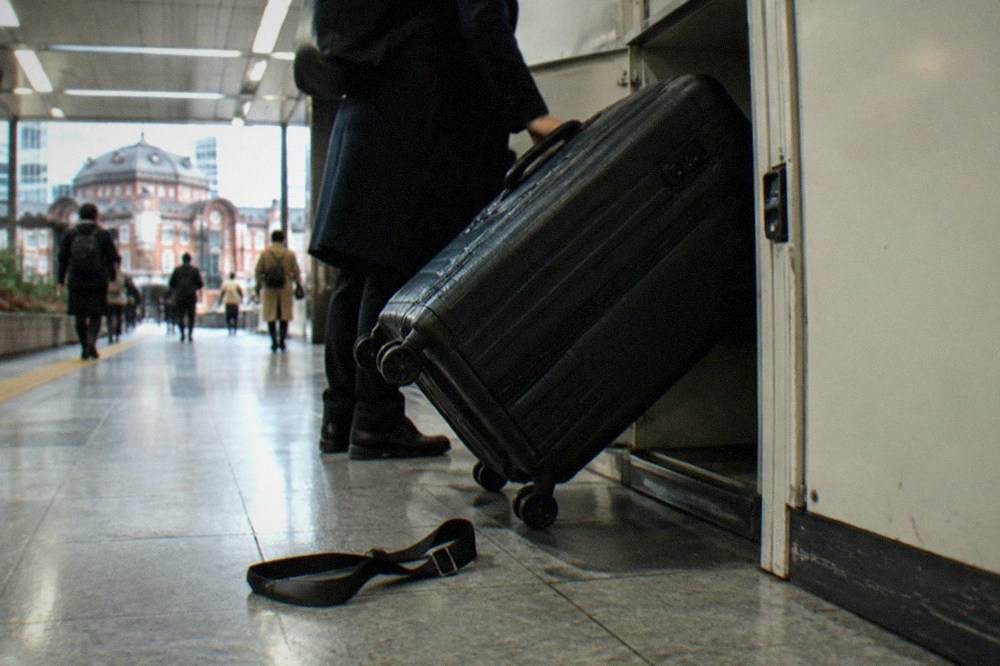
Two sources from the operators themselves cover all of this: Metro Commerce's locker page for the Metro ladder, and JR East's own Tokyo Station locker guide for the per-station figures. Depth is the other constraint before price even matters. A standard Toei locker is 342 mm deep inside, and the JR East standard tiers are 34 cm, so a hard-shell case that fits the width can still fail the depth. The guide to Tokyo coin locker sizes and what fits carries the full internal-dimension tables, including the LW tier, 86 by 56 by 65 cm, the only common JR East tier that takes a wide checked suitcase lying flat.
Where Can A Bag Stay For 30 Days At Tokyo Station Instead?
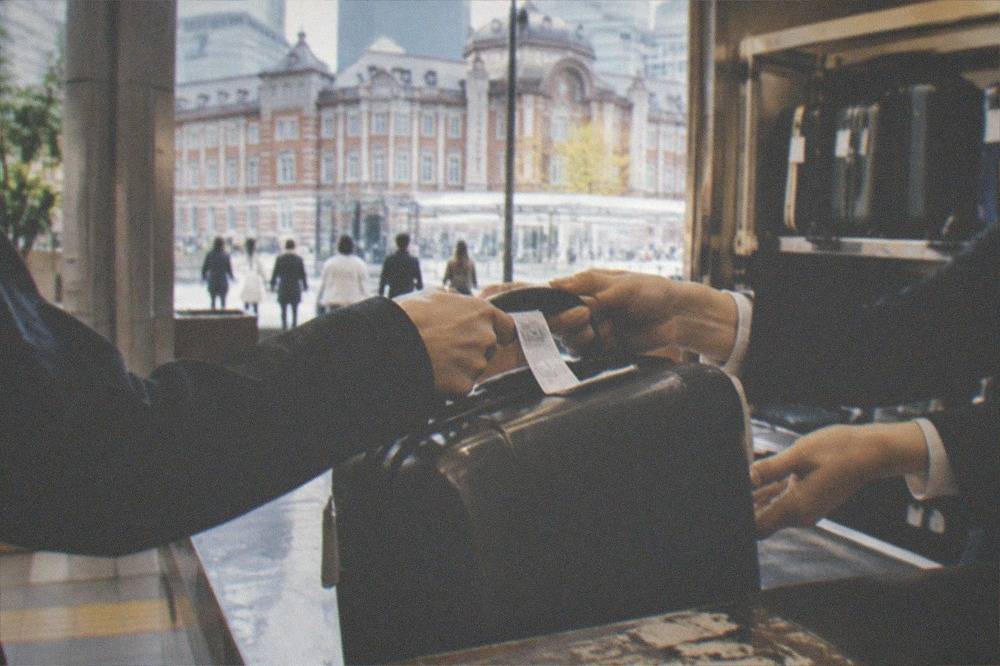
The JR East Logistics attended baggage rooms at Tokyo Station accept bags for up to 30 days, at 500 yen for a bag up to 100 cm, 1,000 yen up to 200 cm and 2,000 yen above that, per bag per day. There are several counters, including Yaesu South outside the gates from 9:30 to 20:00, and the 30-day limit is the longest published storage period in the building.
That is the answer for a reader whose real question is a long one: a cruise passenger leaving Tokyo for three weeks, or a snowboarder storing gear between trips. The locker system tops out at three or four days no matter how many coins it is fed, and the staffed rooms top out at 30 days. Not every counter in the station runs the same hours, so the day's last practical drop-off time depends on which counter you walk to. The Gransta cloak counter in the basement, for instance, is same-day only, with drop-off closing at 20:30 even though the counter stays open until 21:00, so a late-evening hand-off there is refused where the Yaesu South room would still take it at 19:45.
The staffed rooms change the custody picture as well as the clock. A locker is an unattended box whose contractual liability cap is 30,000 yen, a figure Metro Commerce, JR East Smart Logistics, Tokyu and Keio all publish identically, and none of them will pay out for a prohibited item, which includes anything worth 30,000 yen or more in the first place. A staffed room is a hand-over with a human and a receipt, though the published caps and the prohibited-item logic still apply to what you hand over, so the same laptop rule holds. The guide to whether luggage storage in Tokyo is safe walks through the liability figures in full.
A third route out of the three-day ceiling is the Radical Storage network, whose staffed partner points around Tokyo Station take bags without a calendar-day expiry on the locker model. Three points sit near Tokyo Station, and the area's Radical Storage rating is 4.89 across 213 reviews. The price at every one of the 249 Tokyo points on file is the same: 850 yen per bag per day for a regular bag, plus a 355 yen per-bag fee charged once at checkout, so one bag for one day is 850 plus 355, which is 1,205 yen. Radical Storage's guarantee is not insurance, its own terms say so and allow it to be withdrawn, and payouts are capped at EUR 3,000 per claim. Radical Storage's own page for the area lists what each point near the station takes and its hours.
What If Every Locker At Tokyo Station Is Already Full?
Large lockers at Tokyo Station fill first on busy mornings, and when they are gone the alternatives are the reserved Multi Ecube units, the staffed JR East Logistics rooms in the same building, or a short hop to another hub. Shinjuku carries 52 Tokyo Metro locker doors of its own, and the station area also holds eight Radical Storage points with a 4.75 rating across 384 reviews, the nearest 187 metres from the station.
The full-locker problem is time-limited in a way the duration rules are not, but the two collide. A traveller who arrives at 10 a.m., finds the large banks empty, and plans to come back at 4 p.m. has not solved anything, because the scarcity is exactly the sign that the station is carrying a heavy day and the 2 a.m. rollover does not care how long you spent hunting for a door. The Metro Locker Concierge service, linked from Metro Commerce's own header and named in Tokyo Metro's news release, shows live availability for Metro lockers, so the hunt can be done from a platform bench instead of on foot. JR East's own reservation site does the same for the Multi Ecube units, at the cost of the 500 yen per-box reservation charge.
Moving one stop is the honest fallback. Shinjuku's locker stock is Metro's, with the same price ladder as Tokyo Station and the same four-day period, and its Radical Storage cluster is one of the densest in the city, eight points, six of them staffed, two of them listed as open 24 hours. A regular bag there costs the same 850 yen per day plus the once-off 355 yen fee, identical arithmetic to everywhere else in the network, and the area rating of 4.75 across 384 reviews is drawn from a larger review pool than most Tokyo areas carry. This site, Luggage Storage in Tokyo, publishes each area's point count and rating so the comparison can be made before the suitcase leaves the train.
How Do You Get A Bag Back If You Lose The Locker Ticket?
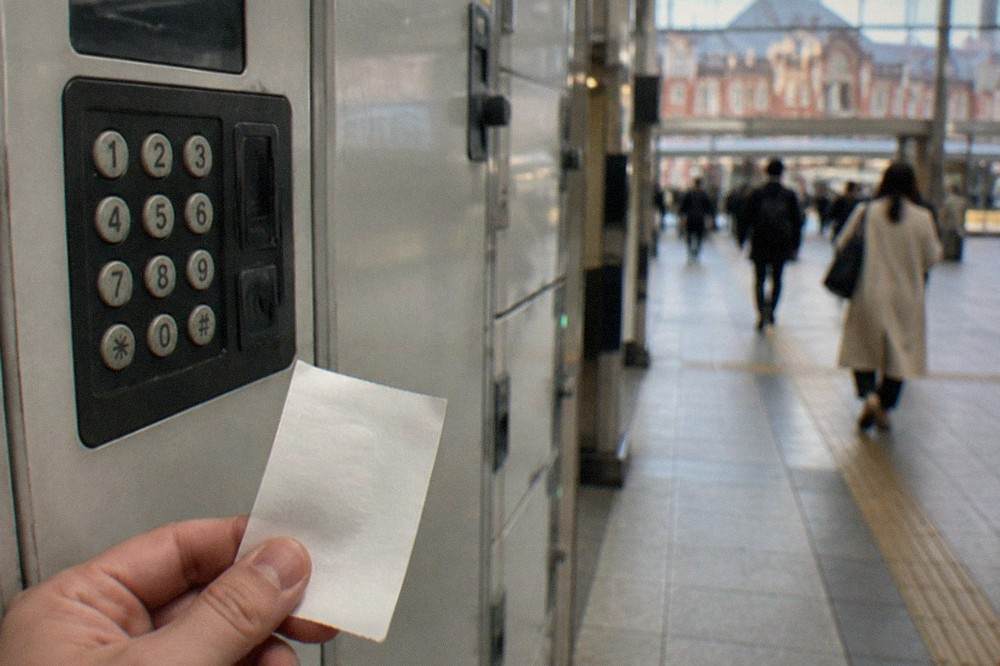
Keep the paper ticket. The Multi Ecube FAQ says the printed retrieval ticket unlocks the door by its QR code or six-digit number regardless of how you paid, and that ticket is the one thing the system reliably honours. If both ticket and payment record are lost, the operator's helpline is 0120-829-532, 08:00 to 21:00, and you will need the four-digit door number.
The reason this belongs in an article about time limits is that the two failure modes compound. A lost ticket on day two is an inconvenience; a lost ticket on day five, when the locker has already been opened and the contents moved to the designated storage place, becomes a claim procedure needing photo ID and the same IC card you paid with, in cash. The operators' own pages even disagree with each other on one point: the Multi Ecube terms say the IC card used for payment is required at retrieval, while the Multi Ecube FAQ says the printed ticket works however you paid. Both are official pages from the JR East group, and the safe editorial line is to keep the paper ticket and treat everything else as a bonus.
A traveller who paid with an IC card and then continued a trip using that same card for trains should also note what the terms say about lost cards: losing the IC card or the receipt is expressly your loss, and Keio, the one operator that publishes the figures, charges 2,000 yen for a lost key and 1,000 yen for a lost IC card or receipt. Metro Commerce and JR East Smart Logistics say only that a prescribed amount applies, without printing one. None of this is a reason to avoid lockers, but it is a reason to photograph the ticket, the door number and the bank location the moment the door closes, which takes ten seconds and converts a worst case into a mild one.
Common Questions About Coin Locker Time Limits At Tokyo Station
How long can you leave luggage in a coin locker at Tokyo Station?
Three days on JR East's Multi Ecube lockers and four days including the start day on Tokyo Metro's lockers. Paying more does not extend either period. After expiry the contents are moved to a designated place and held for 30 days from the rental start date, with the daily rate still running.
Do Tokyo Station coin lockers reset at midnight?
No. The locker day runs from first train to last train, and a day is added at 2 a.m. once the last train has passed. The start day and the end day each count as one full day regardless of how short the actual rental was, so an evening drop with a morning pickup is two days.
Can I extend a coin locker by paying more?
No. JR East Smart Logistics' terms state that even with additional payment the bag must be retrieved by the fourth day, so no amount of coins buys extra time. The 30-day option at Tokyo Station is the JR East Logistics attended baggage room, not a locker.
What happens to luggage left too long in a Tokyo locker?
The operator opens the locker, inspects the contents and moves them to a designated storage place. The same daily rate keeps running for up to 30 days from the original start date, collection requires the receipt, photo ID and the same IC card you paid with, and the separate storage fee is cash only. On JR East's terms, food is disposed of immediately.
Can I store a bag at Tokyo Station for a week?
Not in a coin locker, which tops out at three or four days. For a week, use the JR East Logistics baggage room, which accepts bags for up to 30 days at 500 to 2,000 yen per bag per day by size, or a staffed Radical Storage point near the station, where a regular bag is 850 yen per day plus a 355 yen once-off fee per bag.
What do I need to retrieve a bag from a Multi Ecube locker?
Keep the printed retrieval ticket: the FAQ says it unlocks the door by QR code or its six-digit number however you paid. If the ticket is gone, call 0120-829-532 between 08:00 and 21:00 with the four-digit door number. One full retrieval ends the rental on a reserved unit, with a 15-minute reopen window.