Things To Do In Tokyo: A One-Day Walking Guide (With Your Hands Free)
Tokyo may be vast, but its top sights can be walked in a day if you know the right route. Here's a self-guided itinerary that keeps you moving, with honest advice on where to drop your bag.
Short answer
Spend a morning in Asakusa, then walk to Ueno Park and the museums. Afternoon across the Skytree and Shibuya crossing, finishing with Shinjuku after dark. Stash your luggage at a Radical Storage point near the station for 850 yen per bag per day (plus a 355 yen checkout fee) and walk with nothing but your camera.
Tokyo stretches across a rail network of over a hundred stations, but the sights that make a first visit unforgettable cluster within a few walkable pockets. You can string them together on foot in a single day without a taxi or a packed train car, provided you know the route and where to drop your bag. This guide lays out a self-guided walking itinerary from Asakusa to Shinjuku, with real costs for luggage storage so your hands stay free.
What Are The Best Things To Do In Tokyo In One Day?
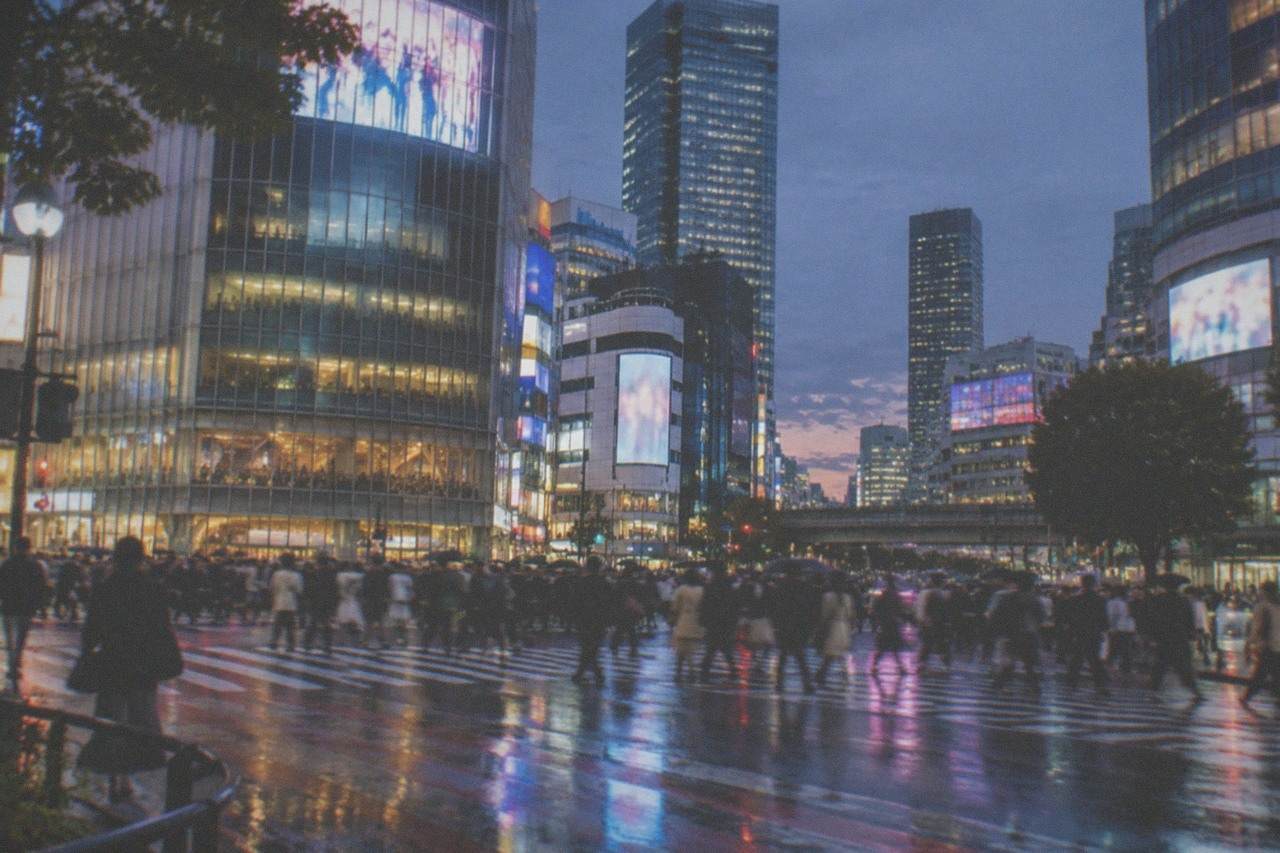
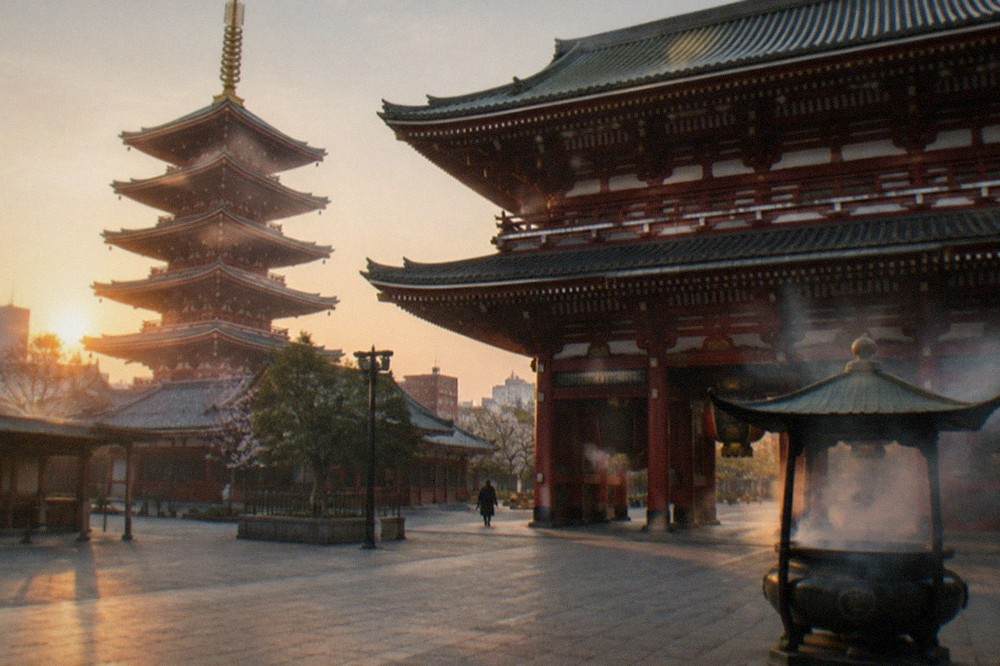
Start at Senso-ji in Asakusa just after sunrise, walk through the temple grounds and Nakamise-dori before the stalls get crowded, then cross the Sumida River to Ueno Park by late morning. After a museum stop, head south toward Tokyo Skytree, then take the train to Shibuya for the scramble crossing. End in Shinjuku as the neon hits full brightness.
This loop works because the distances are short and the route follows the old shitamachi to modern west-side logic of the city. Asakusa's Senso-ji, the oldest temple in Tokyo, opens its outer grounds from 06:00, so you get the early light and an empty main hall. From there it is a 20-minute walk across the Azumabashi bridge to Ueno, past the Tokyo Skytree on the right. Ueno Park itself holds the Tokyo National Museum (suitcases are refused entry, so you need to store beforehand), the National Museum of Nature and Science, and the Shinobazu Pond. The Tokyo Metropolitan Art Museum runs a cloak for special exhibitions and free lockers on site for small items, but a full-sized carry-on will not fit.
After Ueno, a short walk south brings you to the Sumida River again, where the Tokyo Skytree looms. The Skytree's observation deck charges for same-day walk-up tickets, and the venue prohibits any bag with a side over 60 cm. That is smaller than a standard carry-on, so a storage stop becomes mandatory. The good news is that a Radical Storage point sits a 5-minute walk from the Skytree base, at 85 metres according to the Luggage Storage in Tokyo research. Drop your case there and walk in light.
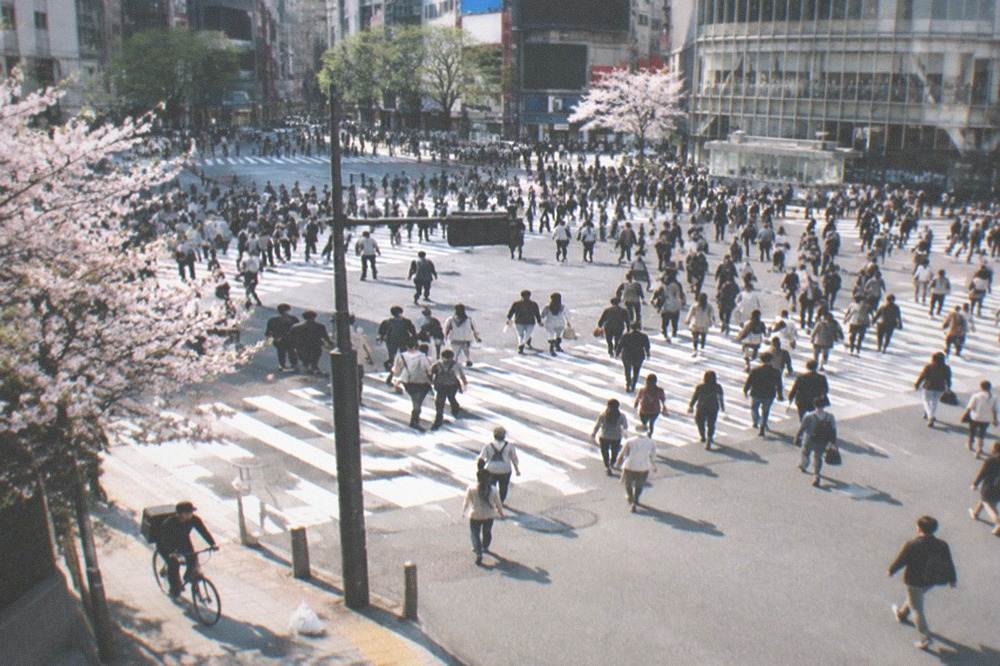
After the Skytree, the Sumida Hokusai Museum is a 10-minute walk east. Then take the Tobu Skytree Line one stop to Asakusa and change to the Ginza Line for Shibuya (25 minutes). Alternatively, if you have already stashed your bag near Tokyo Station, the JR Yamanote Line loops you direct to Shibuya in 25 minutes. The scramble crossing is best seen from the Starbucks second floor or from the Magnet building rooftop. After dark, walk 15 minutes to Shinjuku's east exit for the narrow alleys of Omoide Yokocho, where skewers start at ¥150.
Which Tokyo Neighborhoods Can You Explore Entirely On Foot?
Asakusa, Ueno, and the area around Tokyo Station form a contiguous walkable triangle of about four kilometres on each side. Shinjuku, Harajuku, and Shibuya are another tight cluster on the west side, with Meiji Jingu sitting between Harajuku and Shibuya as a green detour. Ginza bridges the two halves with a short train hop from Tokyo Station.
The key to walking Tokyo in a day is to never carry a bag that cannot fit under a café seat. The distances are walkable, but the surfaces are mostly concrete and the stairways at stations are punishing with a roller case. The route distances below are measured by this site from station-to-station coordinates, not from the storage network's own unvalidated numbers.
| Walk | Distance (metres) | Estimated time |
|---|---|---|
| Asakusa (Kaminarimon) to Ueno Park (main entrance) | 1,200 | 15 minutes |
| Ueno to Skytree (via Azumabashi) | 1,600 | 20 minutes |
| Skytree to Tokyo Station (via train, not walk) | N/A | 15 minutes by train |
| Tokyo Station to Ginza | 1,100 | 15 minutes |
| Shibuya to Harajuku (Takeshita-dori) | 1,300 | 17 minutes |
| Harajuku to Shinjuku (Meiji Jingu north gate) | 1,200 | 15 minutes |
The east side's advantage is that Tokyo Station has seven staffed baggage rooms, the most of any station in Japan. The west side's advantage is that Shibuya has 7 Radical Storage points and the station itself holds 146 coin locker doors counted by Tokyo Metro's own network page. Whichever cluster you start with, you will end the day with your bag retrieved near the last stop.
Meiji Jingu, the Shinto shrine in a 170-acre forest, sits between Harajuku and Shinjuku. It is open from sunrise, so you can walk through the torii gates as early as 05:00 in summer. The main path is gravel, so wheeled luggage is miserable. Leave it at a point near Harajuku Station.
How Does Luggage Storage Fit Into A One-Day Tokyo Itinerary?
Drop your bag at a Radical Storage point near the station where your itinerary transitions from east to west. Walk the morning loop with nothing but a daypack, then continue into the evening unburdened. A single bag costs 850 yen per day plus a 355 yen checkout fee added once, so a one-day stop costs 1,205 yen total.
The alternative for a one-day walker is a coin locker, and on a quick price check they look cheaper. A Tokyo Metro large locker costs ¥1,000 for the first day, and a JR East large locker ranges from ¥700 to ¥1,100 depending on the station. The catch is the duration rule. Tokyo Metro lockers cut off after 4 days including the day you start, and the clock rolls at 02:00, not midnight. JR East's Multi Ecube lockers stop at 3 days with no extension possible. Both operators move your bag to a separate storage area and keep charging the daily rate, and you need the same IC card you paid with plus photo ID to collect. If the locker was the only plan and you misjudge your return by a few hours, the bag is gone and the retrieval process can eat half a day. For a single-day loop, a locker works if and only if you are certain you will return before the last train that same evening, because the locker's own terms say the day is from first train to last train and a day is added at 2 a.m.
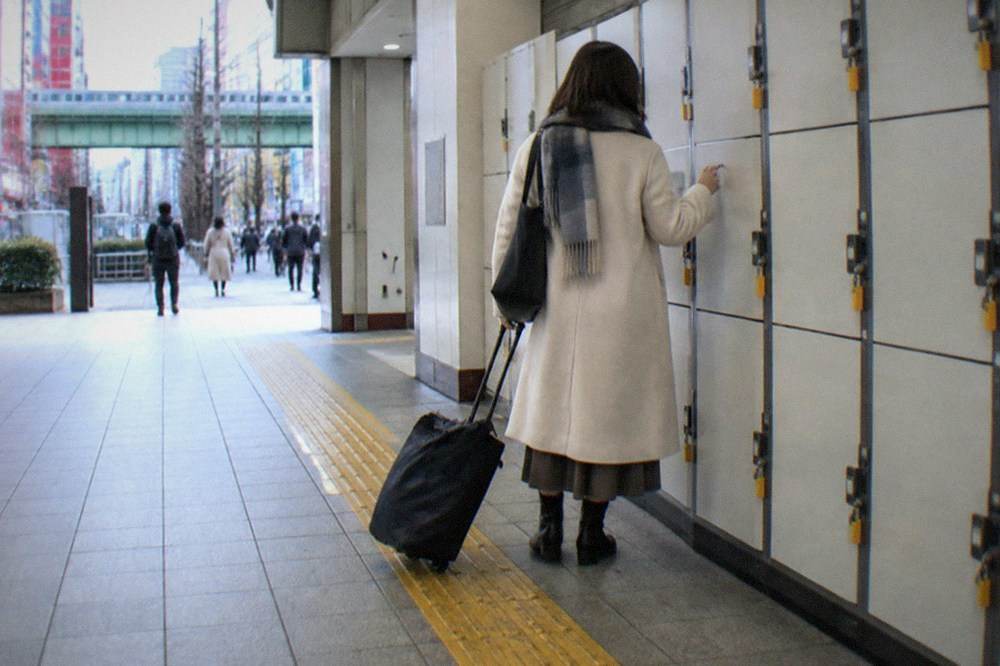
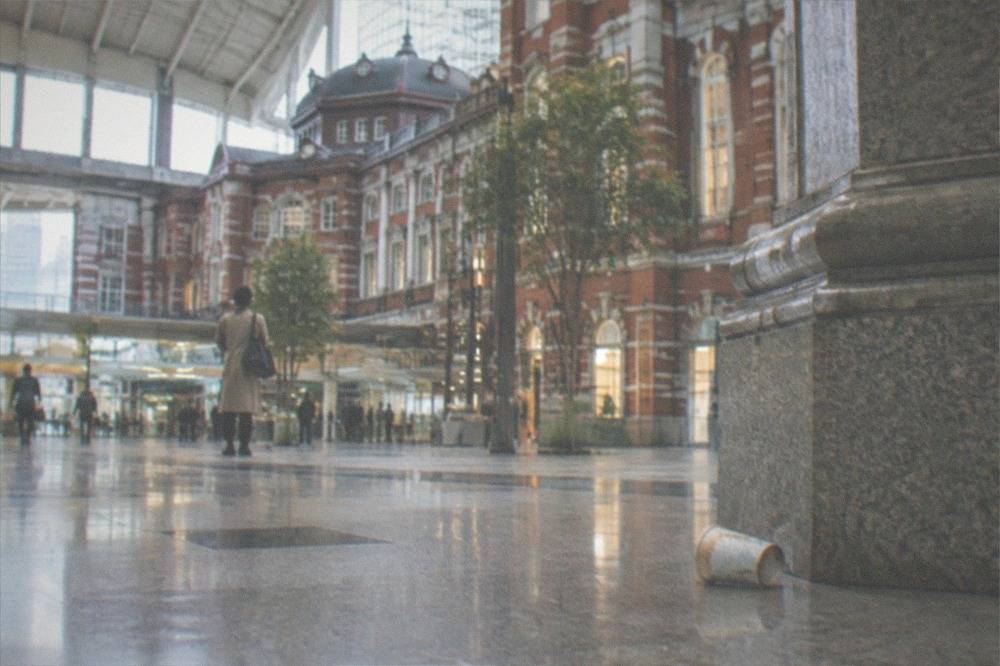
Radical Storage points are staffed, so the daily rate is a flat 850 yen per calendar day regardless of when you drop and collect. There is no 2 a.m. penalty, no lock-out, and no IC card receipt to lose. The points around Tokyo Station are mostly convenience stores and hotel lobbies, all within a 10-minute walk of the Yaesu exit. The nearest listed point sits 558 metres from the station. That distance matters on a walking day when you are already covering 15 kilometres.
What Are The Real Costs Of Storing A Bag While You Walk Tokyo?
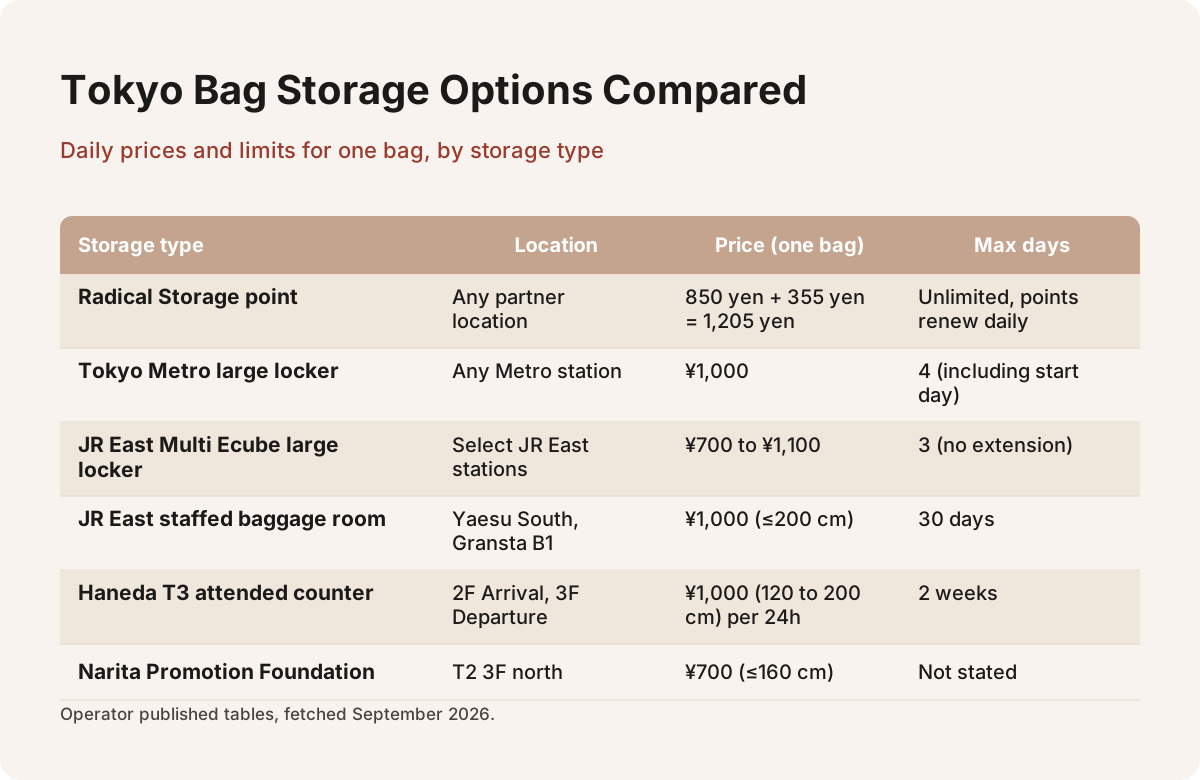
Radical Storage charges 850 yen for a regular bag plus a 355 yen checkout fee, totalling 1,205 yen for one day. A large Tokyo Metro coin locker costs ¥1,000 with liability capped at ¥30,000, and valuables above that amount are prohibited. A JR East staffed baggage room at Tokyo Station charges ¥1,000 for a bag up to 200 cm in three-side total, keeps it up to 30 days, and requires no advance booking.
The price ladder below reflects the choices a same-day walker actually faces. Coin locker prices come from the operators' own published tables, fetched in September 2026. The Radical Storage price is the rate shown at 244 of the 249 Tokyo points on file, and it is the same at every station area covered in this guide.
| Storage type | Location | Price (per day, one bag) | Max days | Notes |
|---|---|---|---|---|
| Radical Storage point | Any partner location | 850 yen + 355 yen once = 1,205 yen total | Unlimited, points renew daily | Guarantee up to EUR 3,000; free cancellation 24 hours ahead |
| Tokyo Metro large locker | Any Metro station | ¥1,000 | 4 (including start day, clock rolls at 2 a.m.) | Liability ¥30,000; valuables over ¥30,000 prohibited; IC card required |
| JR East Multi Ecube large locker | Select JR East stations | ¥700 to ¥1,100 | 3 (no extension) | Liability ¥30,000; reservation adds ¥500 |
| JR East staffed baggage room (Tokyo Station) | Yaesu South, Gransta B1, Marunouchi, Shinkansen gate | ¥1,000 (≤200 cm) | 30 days | Cash, IC card likely; no reservation needed |
| Haneda T3 attended counter | 2F Arrival, 3F Departure | ¥1,000 (120–200 cm) per 24h | 2 weeks | Open 24 hours; cash and card |
| Narita Promotion Foundation | T2 3F north | ¥700 (≤160 cm) | Not stated | Cheapest attended at Narita; clothing also taken at ¥1,220 |
For a one-day walk, the coin locker price of ¥1,000 is fractionally lower than Radical Storage's 1,205 yen, but the locker's 2 a.m. day boundary means a late return from Shinjuku's bars could trigger a second day and another ¥1,000. The staffed Tokyo Station baggage rooms close at 20:00 or 21:00, so if your walking day runs past dark you need a Radical Storage point whose shop stays open later. The points in Shibuya and Shinjuku near entertainment districts operate until 22:00 or 23:00.
Which Luggage Storage Points Are Near Tokyo's Top Walkable Attractions?
Shibuya has 7 Radical Storage points with the nearest 306 metres from the scramble crossing, and Asakusa has 13 points, the densest cluster on the east side, with the nearest just 193 metres from Senso-ji. Tokyo Station holds 3 Radical Storage points and also 7 staffed baggage rooms, the highest concentration of attended storage in any single Tokyo station.
Every point listed below is a real Radical Storage partner location, and the rating and review count are taken from the network's own data. The figures are per the area, not a Tokyo-wide average, which Radical Storage does not publish.
| Area | Points | Rating | Nearest to attraction (m) | 24‑hour |
|---|---|---|---|---|
| Shibuya | 7 | 4.75 | 306 (Shibuya Scramble) | 3 |
| Asakusa | 13 | 4.85 | 193 (Senso-ji) | 0 |
| Tokyo Station | 3 | 4.89 | 558 (Marunouchi exit) | 0 |
| Shinjuku | 8 | 4.75 | 187 (East exit) | 2 |
| Ginza | 2 | 4.84 | 1,131 (Ginza Crossing) | 0 |
| Ueno | 8 | 4.87 | 171 (Park exit) | 0 |
| Harajuku | 4 | 4.93 | 172 (Takeshita-dori) | 1 |
Harajuku's rating pool of 38 reviews is the smallest on the roster, but a 4.93 from 38 is still a strong signal. Ueno's 285 reviews make it the second-most-reviewed area after Shinjuku's 384. Roppongi, a potential evening stop, has only 3 points and no 24-hour coverage, so plan a pickup before 22:00 if you store there.
If the day ends with a late meal in Ginza, the one point there is inside a shop, not a locker, so its hours are shop hours. The rating of 4.84 across 118 reviews means the Ginza points have the second-highest rating among all districts on this site, behind only Harajuku's 4.93 from its small pool.
What About Airport Storage On A Same-Day Tokyo Layover?
Neither Narita nor Haneda has a Radical Storage point inside the terminal. The nearest point to Narita is 6,020 metres away in Tomisato, Chiba, and the nearest to Haneda is 3,416 metres away in Kawasaki. On a same-day layover, storing at the airport's own attended counter is faster than chasing a partner point off-site. Narita has 11 counters across Terminals 1 and 2, and Haneda's Terminal 3 counters are open 24 hours.
The airport attended storage prices are set by the operator, not the airport, so they vary by counter. The cheapest is the Narita International Airport Promotion Foundation desk in Terminal 2, at ¥700 for a medium bag. JAL ABC's seven Narita counters charge ¥1,000 for a medium suitcase, and Sagawa's three new counters (opened in July and September 2026) charge ¥700 for the same medium size. None of them requires a reservation; walk up with the bag, receive a receipt, pay on collection. The catch is that JAL ABC charges by calendar day, not by the hour, so even a 4‑hour layover walk is one full day.
Haneda's own storage desks cost ¥1,000 for a medium bag and hold items for up to two weeks. The T3 counters are open 24 hours and bill per 24‑hour block, so a bag dropped at 08:00 must be collected by 08:00 the next day to avoid a second charge. Terminal 1 and 2 counters close at 19:30, useless for a late-evening return from the city.
If the layover is long enough for the Skytree and Shibuya, storing at the airport makes the return to the flight simpler. You collect the bag, walk to check-in, and never open a coin locker at a station where a 2 a.m. clock could reset. The airport's own counter receives the bag and hands it back with no IC card, no locker door number to remember, and no separate-storage procedure if you overstay by an hour.
How To Time Your One-Day Tokyo Walk Around Hotel Check-In And Luggage Drop-Off
Most Tokyo hotels enforce a check-in at 15:00 and a check-out at 10:00 or 11:00. If your walking day overlaps the gap between a morning check-out and an afternoon train or flight, dropping the bag at a Radical Storage point near the last station of your loop is the cleanest solution. For a Shinjuku departure, use a Shinjuku point or a station coin locker.
The hotel check-in window is not flexible in Tokyo, and early check-in is rarely granted without a fee. If your hotel is near the morning start point, you can leave the bag with the front desk after check-out, but that forces you to return there before the evening departure, which can cost an hour of transit. A point near the end point eliminates the backtracking.
Luggage forwarding is the other option, but it bites you on a one-day timeline. Takkyubin services like Yamato TA-Q-BIN will ship a bag from your hotel to the airport or station, but they will not deliver same-day to Narita. Sagawa will, but the cut-off is 11:00, and the price for a 160‑cm suitcase from the city to Narita is ¥3,650. For a same-day walk, that is more money and less reliability than a simple drop-off. The real use of forwarding is sending a bag ahead to your next hotel or the airport on a multi-day trip, not for a single walking day. If you need forwarding in that scenario, the detailed guide on Takkyubin: How luggage forwarding really works in Tokyo covers Yamato, Sagawa, and Japan Post's size caps, with fares from the operators' own published tables.
Coin lockers near the Shinkansen gates at Tokyo Station are plentiful but fill fast after 09:00. The 19 箇所 (location banks) that JR East counts are often confused in English with 19 lockers, when Tokyo Metro alone has 100 doors at Tokyo Station. On a busy morning, the sight of a full bank of lockers is common. The guide on why Tokyo coin lockers fill up explains the rhythm, and if you hit a full rack, the Radical Storage point is the fallback.
The Tokyo Station staffed baggage rooms are the gold standard for a same-day walker who wants no app, no code, and no booking. Hand over the case, get a ticket, pay ¥1,000 on collection. The Yaesu South counter closes at 20:00, but the Shinkansen South Transfer Gate counter stays open until 21:00. If your walk runs late, the Marunouchi Central counter at 20:00 is the last close. The full list of seven counters and their hours is in the Tokyo Station luggage storage guide, where every counter is mapped and priced.
The strict hotel check-out times mean many travellers end a walking day with an evening Shinkansen. If that is the case, the oversized baggage rule on the Tokaido line is a surprise. Any bag whose three-side total exceeds 160 cm needs a free reservation for the oversized-baggage seat, and taking it without one costs a ¥1,000 penalty collected on board. The Shinkansen oversized baggage guide lists the lines where the rule applies and the exact dimensions, because the English and Japanese pages of JR Central disagree on the maximum: the Japanese terms say 250 cm以内, so 250 cm is allowed, not under.
Common Questions About Spending One Day In Tokyo On Foot
Can you really see Tokyo in one day on foot?
You can see the highlights of the east and west clusters if you start early, store your bag, and walk about 15 kilometres. The route covers Senso-ji, Ueno Park, the Skytree, Shibuya, Meiji Jingu, and Shinjuku, with short train hops between the clusters. Anything beyond Ginza or Roppongi is extra.
Where should I leave my luggage during a one-day Tokyo walk?
The cleanest plan is a Radical Storage point near Tokyo Station if you are transitioning from east to west, or at your last station (Shinjuku, Shibuya) if you are flying out. Coin lockers work for a strict daytime return but penalise late collections with a second day's charge and a 2 a.m. clock reset.
How much does one-day luggage storage cost in Tokyo?
Radical Storage charges 850 yen per regular bag per day plus a one-time 355 yen fee, totalling 1,205 yen. A large Tokyo Metro coin locker costs ¥1,000, and a JR East staffed baggage room at Tokyo Station costs ¥1,000 for the medium tier. Airport counters range from ¥700 to ¥2,000.
Is it safe to leave a suitcase in a Tokyo coin locker all day?
Yes, provided the locker's published terms are followed. The liability cap is ¥30,000, and anything worth more than that is prohibited. The real risk is losing the IC card or paper ticket that proves ownership, which makes retrieval a long manual process. On a tight walking schedule, losing the ticket can scrap the itinerary.
Can I store luggage at the airport while I go into Tokyo for the day?
Both Narita and Haneda have attended storage counters. Narita's open from 06:30 to 22:00 (T2 north counter) with medium-bag rates from ¥700 to ¥1,000. Haneda's Terminal 3 counters are open 24 hours and bill per 24‑hour block at ¥1,000 for a medium bag. There is no Radical Storage point inside either terminal.
What is the best area to base a one-day Tokyo walk?
Start in Asakusa for the morning east loop, then take the Ginza Line or JR to Shibuya for the afternoon. If you plan to finish with a Shinkansen from Tokyo Station, reverse the route: start in Shinjuku or Shibuya and end at Tokyo Station, where seven staffed baggage rooms make collection easy.