Which Is Better To See, Shibuya Sky Or Tokyo Skytree?
A bag-first comparison of Shibuya Sky and Tokyo Skytree: which deck refuses a suitcase, what storage costs near each, and how to choose between them.
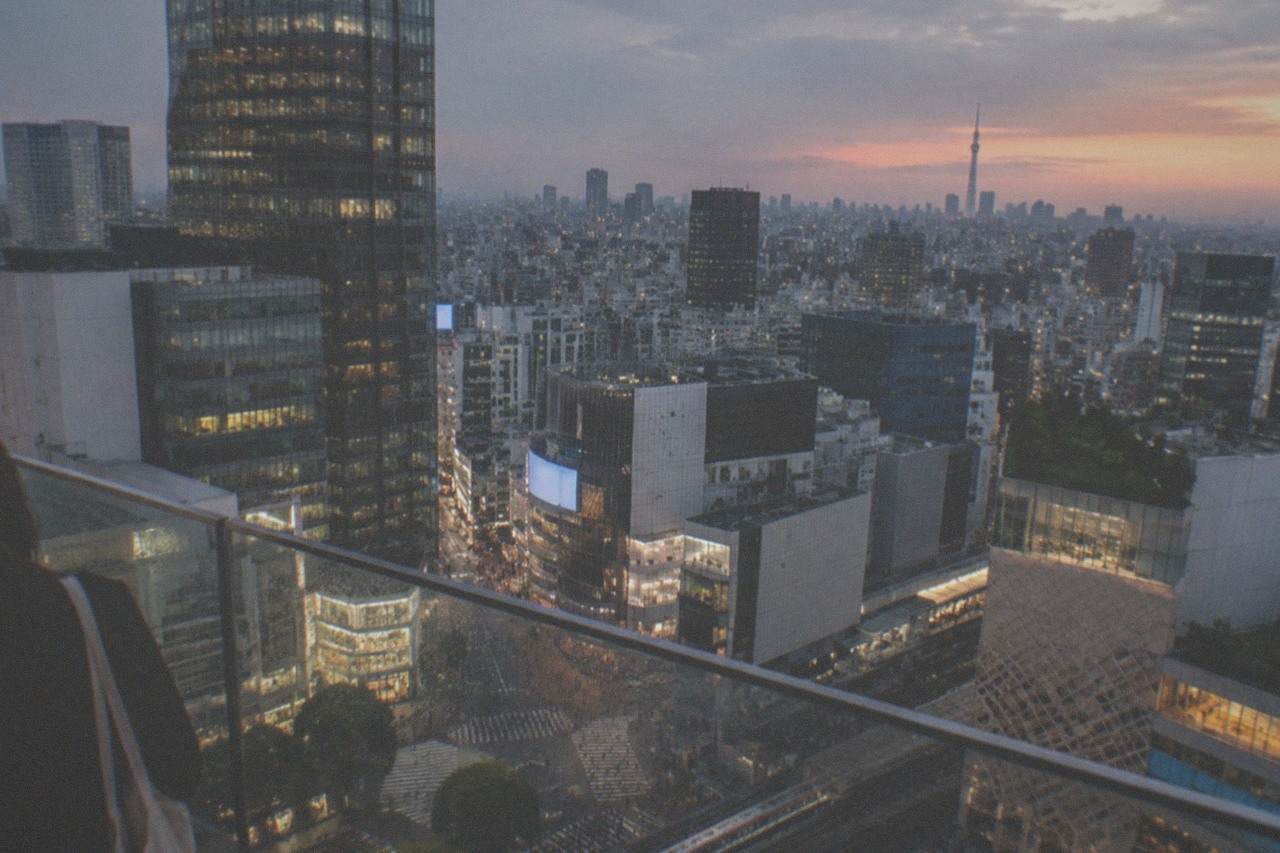
Which Is Better To See, Shibuya Sky Or Tokyo Skytree?
For the view itself, Tokyo Skytree wins on height and distance: enclosed decks on the east side of the city, with the river, Asakusa and, on a clear day, mountains far beyond the bay. Shibuya Sky wins on intimacy: an open-air deck directly above the scramble crossing, at its best near sunset. The honest tie-breaker is the bag in your hand, and it decides more than the weather does.
The two decks do genuinely different jobs. Tokyo Skytree stands in Oshiage, on the Sumida side of the city, and its enclosed decks look out over east Tokyo toward the river, the low-rise Asakusa rooftops and, on the clearest days, the mountain ranges that sit behind the bay. It is a panorama deck. You go up, you circle the glass, you take the long view. Shibuya Sky is the opposite temperament: a rooftop deck on top of the Scramble Square building, open to the air, with the famous crossing laid out below you like a circuit board and the city's towers stacked behind it. People go for the sunset, and the crossing is the show.
For a visitor carrying luggage, the comparison tilts on rules rather than views. Tokyo Skytree prohibits items with any side over 60 cm and enforces the limit with bag inspection at the entry, which is a hard line a checked suitcase cannot cross. Shibuya Sky has no tower gate of that kind to factor in, but it sits above a station complex where locker banks empty early and the evening peak moves like a tide. The research behind Luggage Storage in Tokyo tracks both sides of that split: seven Radical Storage points around Shibuya, three within reach of Tokyo Skytree, and the numbers look like this.
| Shibuya Sky side | Tokyo Skytree side | |
|---|---|---|
| Station coin lockers | 146 doors at Shibuya Station, the Tokyo Metro count | Paid lockers in Solamachi, the retail block under the tower |
| Attended counter nearby | None listed at Shibuya by any operator | Sagawa Express counter in Solamachi, 10:00 to 21:00, 800 to 1,300 yen by size |
| Radical Storage points | 7 points, nearest about 306 m | 3 points, nearest about 85 m |
| Area rating | 4.75 from 163 reviews | 4.77 from 132 reviews |
Neither column of that table is a verdict on the view. It is a verdict on how easily the day around the view can be arranged, and for a lot of visitors that is the part that goes wrong first.
Can You Get Into Either Viewpoint With A Suitcase?
No, not at Tokyo Skytree. The venue prohibits items with any side over 60 cm and enforces the rule with bag inspection at entry, so a cabin bag of about 55 cm passes and a checked suitcase does not. Shibuya Sky sits above a station rather than inside a secured tower; check its own visitor guidance before arriving with a case, and plan to store anything larger for either deck.
The Skytree rule is published plainly, and the venue means it. The English wording is "Items with any side over 60 cm", and both the Japanese and English pages draw the line the same way, refusing any side over 60 cm. Inspection happens at the door. A soft-sided weekender that compresses under the limit will go through; a 26-inch spinner with wheels will not, and arguing the centimetres with a member of entry staff is not a plan. The venue itself names the two alternatives on its own guest page, Skytree's visitor rules: the coin lockers in Skytree Town, or the attended Sagawa Express counter in Solamachi.
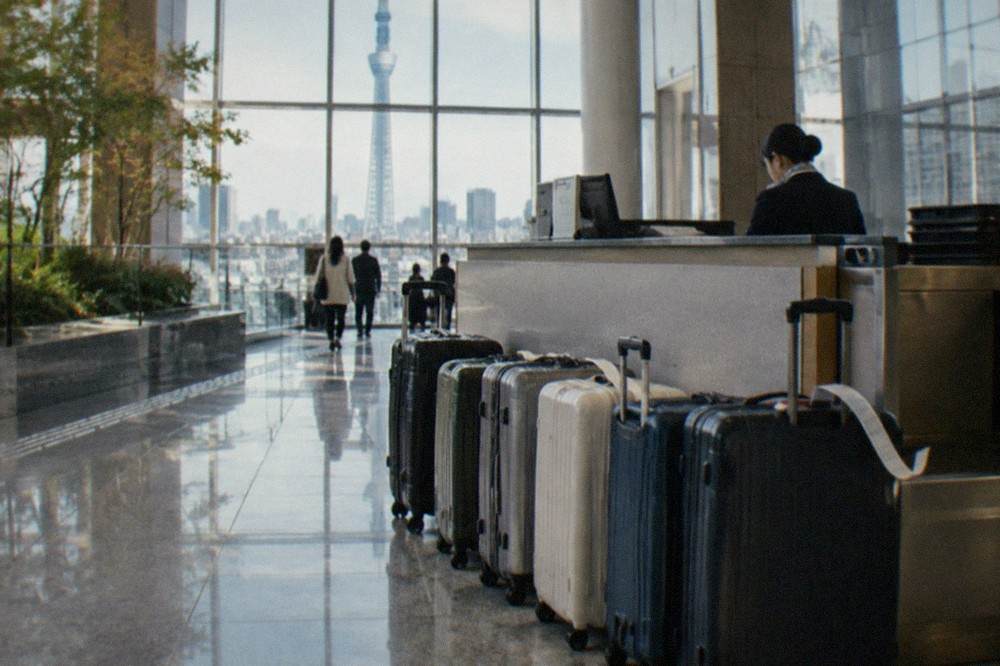
The Solamachi side of the street is well set up, and the prices are published. The Solamachi service page lists both options. The Sagawa counter, on the first floor of the tower's retail block, charges by size and keeps long hours:
| Bag size (3-side total) | Price per day | Counter hours |
|---|---|---|
| Up to 100 cm | 800 yen | 10:00 to 21:00 |
| Up to 160 cm | 1,000 yen | 10:00 to 21:00 |
| 161 cm and over | 1,300 yen | 10:00 to 21:00 |
The Solamachi coin lockers run cheaper for small loads: 300 yen for an XS door, 500 for S, 600 for M, 800 for L, 1,000 for XL, with a chilled locker at 100 yen. A daypack or a shopping haul fits the cheap end of that ladder. A full suitcase does not, and the 60 cm problem simply reappears as a 34 cm locker-depth problem.
Shibuya is the mirror image. The Tokyo Metro locker page for Shibuya Station counts 146 doors, a genuinely large bank, but no operator publishes an attended baggage room anywhere at Shibuya, so the staffed options in the area all belong to the Radical Storage network. The area holds seven Radical Storage points, the nearest about 306 metres from the station: five are automated locker points and two are staffed drops, and the area carries a 4.75 rating from 163 reviews. Shibuya Sky's own rules for large bags live on its own visitor page, and the practical move is to treat anything bigger than a daypack as a store-first item. The fuller picture of the deck's immediate options is in the site's piece on lockers at Shibuya Sky itself.
What Does Luggage Storage Cost Near Shibuya Sky And Tokyo Skytree?
At either deck, a Radical Storage point charges 850 yen per bag per day for a regular bag, plus a 355 yen per-bag fee charged once at checkout. One bag for one day comes to 850 plus 355, or 1,205 yen, on Radical Storage's own published figures. The price is identical in Shibuya and around Tokyo Skytree, and no area of the network discounts it.
That arithmetic matters, and understating it is the most common mistake in coverage of bag storage in Tokyo. Quoting the day rate alone makes a one-day booking look roughly a third cheaper than it is. There is also no hourly tariff: a two-hour visit between storing and collecting is billed as a full day at every point in the network. Radical Storage advertises a from-490-yen headline on its own materials, but that is a small-bag rate published at a handful of the Tokyo points, not what a traveller with a normal suitcase pays.
| Storage option | Near Shibuya Sky | Near Tokyo Skytree |
|---|---|---|
| Radical Storage point | 850 yen per bag per day plus a 355 yen one-off fee | Identical price, same network |
| Station or venue coin lockers | Tokyo Metro ladder, 300 to 1,000 yen, same prices at every Metro station | Solamachi lockers, 300 to 1,000 yen by size |
| Attended counter | None listed at Shibuya | Sagawa in Solamachi, 800 to 1,300 yen per day |
Around Shibuya, the seven Radical Storage points cluster close to the station itself, and the area's 4.75 rating from 163 reviews reflects a busy, well-used cluster. Two of the seven points are staffed drops where a person takes the bag; the rest are automated locker points where a code opens a door. For anyone whose day ends back at Shibuya for the evening trains, the loop is short: drop the case in the morning, do the deck at sunset, collect on the way down to the platform.
Around Tokyo Skytree the cluster is smaller but tighter to the attraction: three Radical Storage points, the nearest roughly 85 metres out, all three of them staffed drops rather than lockers, rated 4.77 from 132 reviews. Combined with the Sagawa counter in Solamachi, that gives the tower two genuinely different staffed options at two price levels, which is more choice than most Tokyo attractions can offer a visitor holding a 70 cm case and a hard refusal at the door.
One point of honesty that belongs in any comparison like this. Radical Storage's guarantee is not insurance: their own terms say so outright, and the same terms allow the company to withdraw the guarantee at any time. Payouts are capped at EUR 3,000 per claim, stated in euros exactly as the terms state it. A bag handed to a staffed partner point is in the custody of that shop, under a network guarantee that is a contractual promise rather than an insurance policy, and a reader deserves that distinction in plain words before handing over a suitcase.
Which Station Is Easier With A Bag, Shibuya Or Oshiage?
Oshiage, the stop for Tokyo Skytree, is the calmer ride: a smaller station built around the tower, with the deck a signposted lift ride above the retail block. Shibuya is a large hub where several rail operators meet under one tangle of passageways, and moving a suitcase through it at evening peak takes patience. Neither station is hostile to luggage; one is simply quieter.
Oshiage was rebuilt for the tower, and it shows. Arrivals surface into Solamachi directly, the lockers and the Sagawa counter are inside the same complex, and the whole storage-to-deck journey can happen without crossing an open street. For a visitor managing one suitcase and one backpack, that containment is a real advantage: everything that can go wrong with a bag at the tower is a two-minute walk from everything that fixes it.
Shibuya rewards a different kind of planning. The Scramble Square building sits directly over the station, so the distance from train to deck is short, but the station under it is a multi-level interchange shared by more than one operator, and a suitcase on a platform at six in the evening competes with some of the densest foot traffic in the city. The 146-door locker bank is large by any measure, yet it is not large at 6 p.m. on a Saturday. Anyone visiting the deck at sunset, the single most popular slot, is visiting at the exact hour the storage around it is most contested.
The order of operations fixes most of it. Store first, at a Radical Storage point booked before leaving the hotel or the previous stop, then enter the scrum with a daypack or nothing at all. A traveller who tries to find a free locker at 17:30 and then buy a sunset ticket has the day backwards, and the site's guide to why Tokyo coin lockers fill up explains the mechanics of exactly that failure.
What If The Lockers Near The Deck Are Already Full?
On the Shibuya side, the station's Tokyo Metro bank runs to 146 doors, and it empties early on busy days; around Tokyo Skytree, the Solamachi lockers sit beside a staffed Sagawa counter open 10:00 to 21:00. When the doors are gone, the Radical Storage points are the fallback: a staffed drop does not depend on a free locker, and a booked slot is held for the day.
The duration rules are worth knowing before relying on any locker. Tokyo Metro's published locker terms cap use at four days including the day you start, and the day rolls at 2 a.m., not midnight, with the first and last days each counting as a whole day however briefly the locker held the bag. JR East's Multi Ecube lockers cap it at three days, and their terms state plainly that paying more does not extend the period. When a locker period expires, the operator opens the box, moves the contents to separate storage at the same daily rate, holds them for 30 days, and requires the receipt, photo ID and the same IC card used to pay, with the separate storage fee payable in cash only. None of that is a trap most visitors ever meet, but every visitor who parks a bag for a multi-day stretch should know the clock exists.
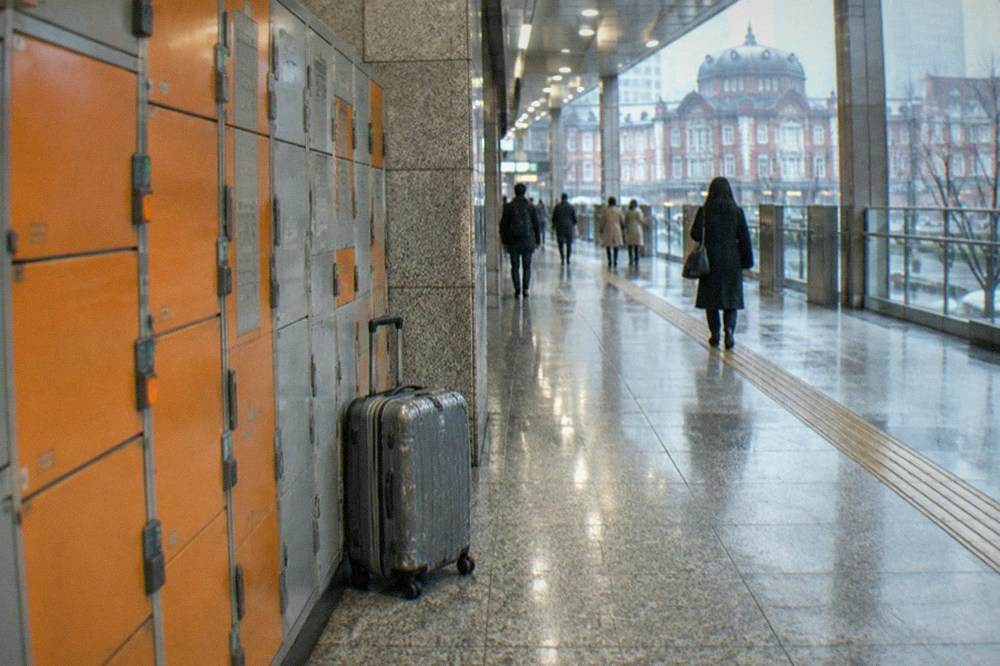
For visitors combining the tower with Asakusa, one recent closure changes the picture. The Asakusa Culture Tourist Information Center terminated its luggage storage service on 31 March 2026, with Taito City naming travellers' suitcases as one cause of street congestion, and a good deal of English travel content still lists the service as if it ran. A Skytree-and-Asakusa day now needs storage arranged at the tower itself, at a Radical Storage point, or at the Sagawa street-level counter in Asakusa, which charges 800 yen per day with no size tiers.
Ikebukuro, one stop north on the loop line from Shibuya, is worth naming as the easy-dropper of the big stations. It holds ten Radical Storage points, eight of them staffed drops and two lockers open 24 hours, the nearest about 227 metres from the station, rated 4.73 from 89 reviews. For a visitor whose day starts or ends on the north side of the loop, few stations in the city make dropping a bag less of an event.
What If You Fly Out The Evening You Visit A Deck?
Store the bag near the deck in the morning, collect before the point closes, and ride to the airport hands-free. One boundary to note: no Radical Storage point sits inside any terminal at Narita or Haneda. The nearest Haneda cluster is about 3.4 km away in Kawasaki, Kanagawa, and the nearest to Narita about 6.0 km away in Tomisato, Chiba.
The evening-flight day is the one where the deck choice pays off or falls apart. A sunset slot at Shibuya Sky and a 21:00 flight from Haneda are compatible only if the suitcase was parked somewhere with evening hours and the collect-back is timed honestly. The Radical Storage area around Haneda lists four points, all automated lockers, and the cluster publishes no rating yet, which is itself worth knowing: a smaller, quieter pool of reviews rather than a proven one. Inside the terminals, the airports' own attended counters are the real evening option. Haneda's Terminal 1 and Terminal 2 desks run 08:00 to 19:30 at 800, 1,000 or 2,000 yen per day by size, and the Terminal 3 desks, on both the arrival and departure floors, are open 24 hours and priced per 24 hours rather than per calendar day.
Narita is the harder evening, purely on geography. The nearest Radical Storage point to Narita sits about 6.0 km from the airport in Tomisato, Chiba, so a bag stored there is not a bag stored at the terminal. Narita's own answer is eleven attended counters across Terminal 1 and Terminal 2, run by three operators, with published prices from 500 yen for a small bag up to 2,000 yen for the largest tier at the priciest counter, and Terminal 3 has no attended baggage counter at all, only lockers. A day that ends at Narita should end with the bag either forwarded ahead from the city or handed to a terminal counter, not carried up any deck.
For the fuller choreography, the site's guide to your last day before a night flight works through the timings, the cut-offs and the collect-back windows in order.
How Do You Choose Between The Two Decks?
Choose Tokyo Skytree for height, the east-side panorama and a day that continues into Asakusa; choose Shibuya Sky for the crossing below your feet, open air and a sunset behind the towers. The practical sequence is the same either way: store the bag first, then book the slot that suits the light, then let the deck take care of the view.
If the deciding vote is the view alone, the two decks split cleanly by temperament. Skytree is the vista deck: enclosed, weather-proof, farther-seeing, with the river and the old-town rooftops on one side and the bay on the other. Shibuya Sky is the moment deck: open-air, wind and all, with the crossing turning underneath and the skyline going gold behind it. Photographers after the long shot go east. Visitors after the feeling of standing above the busiest crossing on earth go to Shibuya.
If the deciding vote is the bag, Skytree is paradoxically the easier of the two. Its rule is harsh at the door but generous behind it: three staffed Radical Storage points within about 85 metres, the Sagawa counter in the same building, and a compact station that never asks a suitcase to fight a crowd. Shibuya's rules are softer and its logistics rougher: 146 locker doors that vanish by mid-afternoon, two staffed Radical Storage drops among seven points spread around a station with several operators' worth of passageways, and a sunset crowd that arrives exactly when the storage does.
The honest summary is that neither deck punishes a visitor who plans, and both punish one who arrives at 17:00 with a 70 cm spinner. Store the case at a booked Radical Storage point in the morning, carry the daypack, buy the timed slot that matches the light, and the choice between the decks collapses back to what it should always have been: open air over the crossing, or the long glass view over the east of the city.
Common Questions About Shibuya Sky And Tokyo Skytree
Which is better to see, Shibuya Sky or Tokyo Skytree?
For height and the east-side panorama, Tokyo Skytree; for open air, the crossing and sunset, Shibuya Sky. For a visitor with a suitcase, Skytree is the more manageable of the two, with three staffed Radical Storage points within about 85 metres and an attended Sagawa counter in the same building.
Can I take a suitcase up Tokyo Skytree?
No. The venue prohibits items with any side over 60 cm and inspects bags at entry. A cabin bag around 55 cm passes; a checked suitcase does not. The venue itself points to the Skytree Town coin lockers and the Sagawa Express counter in Solamachi as the alternatives.
Are there lockers at Shibuya Sky?
Shibuya Station's Tokyo Metro locker bank counts 146 doors, and the surrounding area holds seven Radical Storage points, five of them automated lockers and two staffed drops, the nearest about 306 metres from the station. The deck's own visitor guidance covers what may be carried up.
How much is luggage storage near Tokyo Skytree?
A Radical Storage point charges 850 yen per bag per day for a regular bag plus a 355 yen fee charged once at checkout, so one bag for one day is 850 plus 355, or 1,205 yen. The attended Sagawa counter in Solamachi charges 800 to 1,300 yen per day by size, and its lockers run 300 to 1,000 yen.
Is the Radical Storage guarantee insurance?
No. Radical Storage's own terms state the guarantee is not insurance, allow the company to withdraw it at any time, and cap payouts at EUR 3,000 per claim. A stored bag is in the custody of a partner shop under that contractual guarantee, not an insurance policy.
Which deck is better at sunset?
Shibuya Sky. The deck is open-air and faces the skyline as the light drops, which is why sunset slots sell first. Tokyo Skytree's enclosed decks suit daytime distance views, and its storage options stay open later, with the Sagawa counter running to 21:00.