Why Is 7-Eleven Different In Japan?
A plain answer to why 7-Eleven in Japan feels nothing like the one at home, what a konbini will and will not do with your suitcase, and how the counter fits Japan's luggage delivery system.
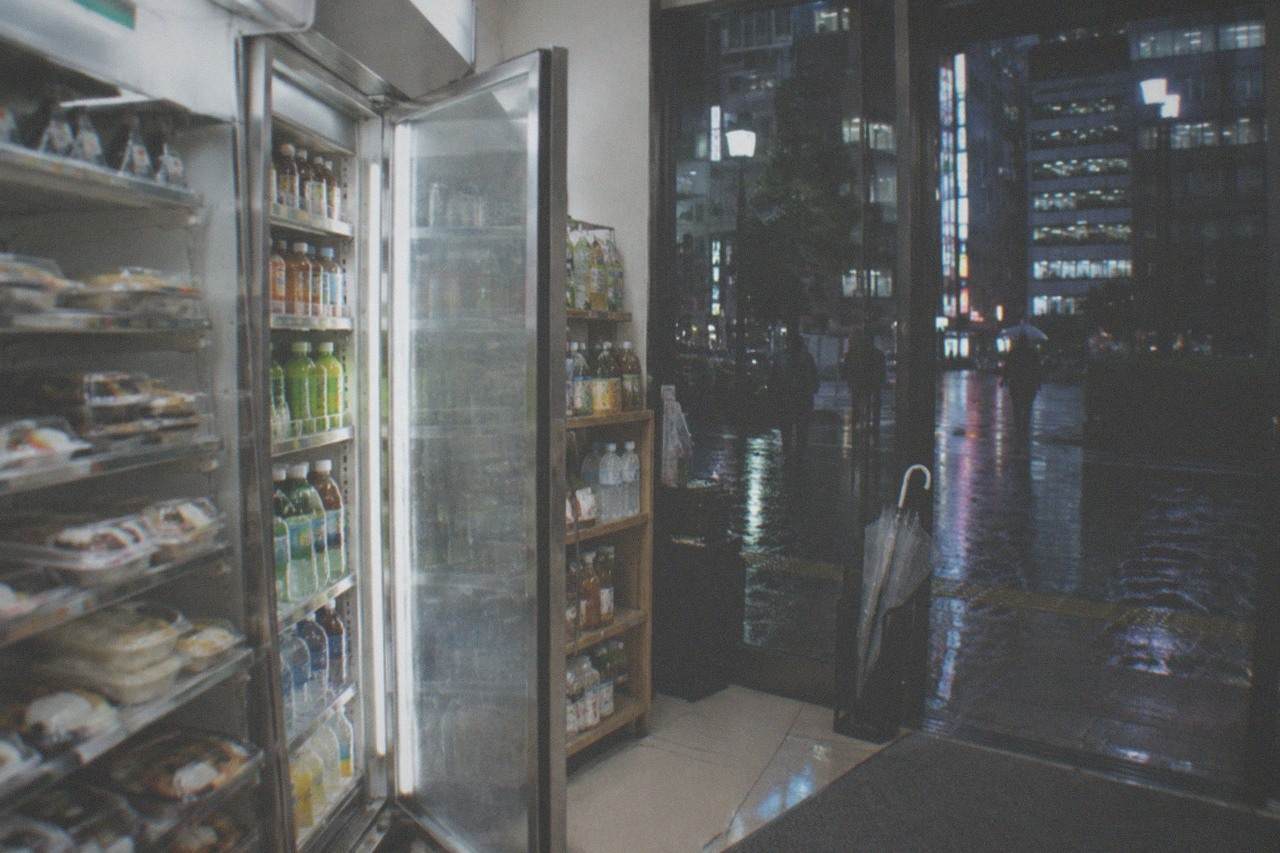
Why Is 7-Eleven Different In Japan?
Japan took a foreign brand and rebuilt it around fresh food, banking, ticketing, bill payment and parcel shipping, staffed by franchisees who receive deliveries of prepared meals several times a day, which is why a Tokyo 7-Eleven is closer to a small railway-station service centre than to the snack-and-gas model familiar in North America. The difference is not decoration. It is the range of things the counter does. A traveller notices it the first time the person at the register weighs a parcel, prints a shipping label, sells a museum ticket, takes a utility bill payment and heats a boxed lunch, all in one small room.
The chain's Japanese operation grew up inside a dense railway-and-walking culture where a shop two minutes from a station entrance can serve hundreds of people a day. That density is what makes the counter model work: parcel volumes are high enough that shipping becomes a core service rather than a sideline. The same logic is why luggage questions and convenience-store questions collide in search results. People carrying bags through Tokyo keep passing 7-Eleven signs and reasonably ask whether the shop can take the suitcase off their hands for the afternoon.
That is the question this page answers honestly, because the answer shapes a day of travel in Tokyo more than most people expect. The short version: the konbini is a logistics machine, but it is a delivery machine, not a storage machine. It hands your bag to a courier network. It does not keep it behind the counter while you go sightseeing.
The distinction matters because the two services look identical from the doorway. Both involve handing a bag over. One ends with the bag on a truck to a hotel or an airport. The other would end with the bag sitting in a back room until evening, and that second thing is not something the shop offers. The rest of this article covers what the counter does do, what it costs, where the limits sit, and what to do with a bag when storage rather than shipping is the goal.
What Can A Japanese 7-Eleven Do That The One At Home Cannot?
A Japanese 7-Eleven is a counter for outgoing parcels, ticketing, printing, bill payment, cash machines and hot food restocked multiple times daily, and every one of those services exists because the shop sits inside Japan's densest courier and railway networks, which the suburban store at home does not. The parcel side is the part a traveller actually touches. Every Seven-Eleven in Japan accepts outgoing Yamato Transport parcels, and Yamato is the carrier whose TA-Q-BIN network moves suitcases between hotels, airports and homes across the whole country.
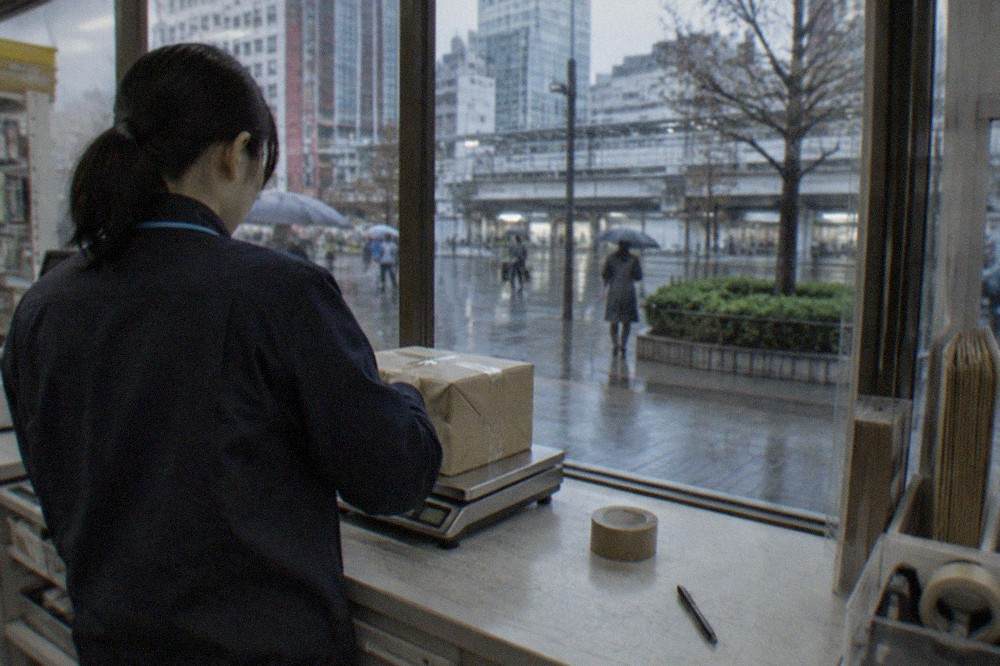
That single arrangement explains most of the konbini's reputation. A visitor can walk into a 7-Eleven anywhere in the country with a suitcase, fill in a digital or paper waybill, pay at the register, and the bag enters the largest door-to-door courier network in Japan. The traveller never visits a depot and never needs Japanese on the phone. The shop becomes, in effect, a parcel desk with long opening hours.
The services stack on top of each other. The ticket machines sell admission and event tickets, the multifunction copiers print boarding passes and documents, the cash machine works with foreign cards, and the fresh-food deliveries mean the shelves turn over constantly through the day. None of this is exotic to a Japanese customer. It is ordinary. But it is the ordinary that the question is really pointing at: the brand name is the same, the institution is different.
For a reader carrying luggage, the practical takeaway sits on one line. The konbini can move a bag across the country, and the right place to park a bag for a few hours in a district such as Shibuya is a dedicated storage point. Shibuya is covered by 7 Radical Storage points rated 4.75 across 163 reviews, with the nearest 306 metres from the station, and the full picture of what those points do and do not offer is on the Shibuya storage page.
Can You Store Luggage At A 7-Eleven In Japan?
No. A 7-Eleven in Japan will accept a bag for shipping through the Yamato counter, but no 7-Eleven provides storage: there is no hourly or day rate, no back-room left-luggage service, and no way to drop a suitcase in the morning and collect it that evening, because the shop is a courier drop-off point and not a keeper of bags. The confusion is understandable. A counter that takes your bag and gives you a receipt looks exactly like a left-luggage desk. The receipt is a waybill. The bag leaves the shop.
This is the single most common gap between what visitors expect and what the shop does, and it is worth stating plainly because the cost of getting it wrong is a wasted morning. Someone who plans to drop a bag at a konbini near Tokyo Station, spend the day in Asakusa, and pick the bag up before dinner will find there is nothing to pick up. The bag was on a truck at the first delivery window.
The honest alternative depends on what the day needs. For a few hours hands-free in a specific district, a staffed Radical Storage point is the direct answer: the real rate in Tokyo is 850 yen per bag per day for a regular bag plus a 355 yen per-bag fee charged once at checkout, so one bag for one day is 850 plus 355, which comes to 1,205 yen. That arithmetic is on Radical Storage's own published figures. Radical Storage advertises "from 490 yen/day", but that is a small-bag rate found at 11 points only, not what a traveller with a normal suitcase pays at the 244 of 249 Tokyo points that publish the regular rate.
For a full day or an overnight gap, station baggage rooms also matter: Tokyo Station has several attended JR East Logistics counters, with 30-day maximum storage at 500 yen for a bag under 100 cm and 1,000 yen for a bag under 200 cm per day. The details of which stations genuinely have a staffed room, and which giant stations have none, are covered in the guide to leaving bags at Japanese train stations. The deeper rundown of what 7-Eleven itself will hold, from refrigerated parcels to luggage-size rules, is in the storage-at-7-Eleven answer.
How Does A Konbini Counter Handle Luggage Delivery?
Every Seven-Eleven in Japan sends parcels through Yamato Transport's TA-Q-BIN service, and the counter's real advantage is that the traveller gets a nationwide carrier without visiting a depot, because Yamato's size and weight bands, waybills and pickup windows are all published and uniform across the network. A suitcase is charged at its measured size within hard caps of a 200 cm three-side total, 30 kg, and no single side over 170 cm, per Yamato's own size and fare rules.
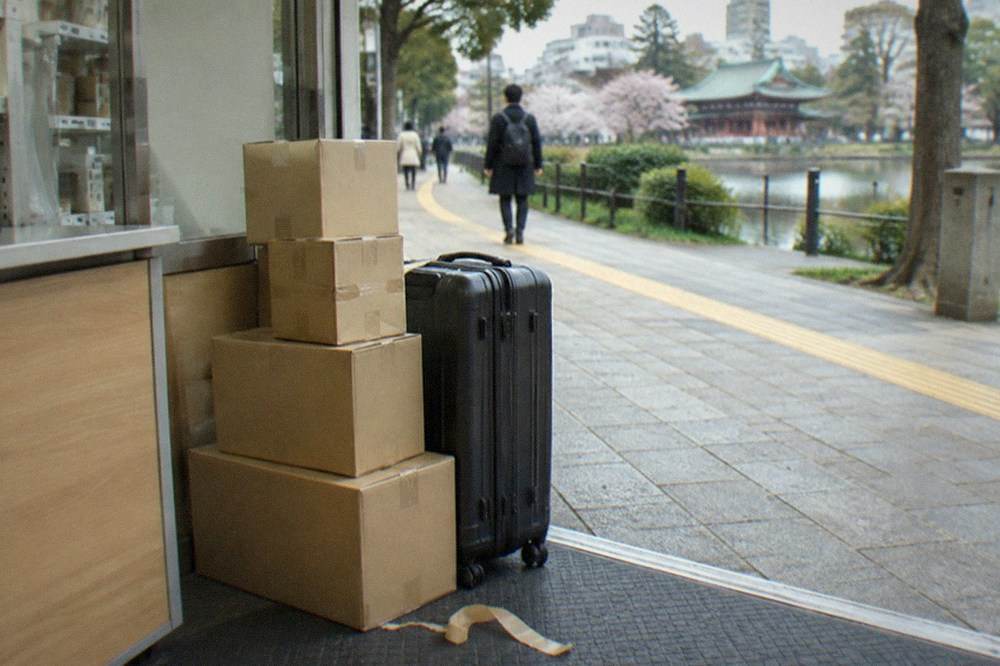
The way it works at the counter is straightforward. The customer fills in a waybill, the shop weighs and measures the bag, the fare is set by the greater of the three-side total and the actual weight, and payment happens at the register. Yamato's published bands start at 60 cm or 2 kg and rise in steps: 120 cm or 15 kg, 140 cm or 20 kg, 160 cm or 25 kg, 180 cm or 30 kg, and 200 cm or 30 kg. A typical mid-size checked suitcase lands in the 140 to 160 bands. A large suitcase reaches 160 or 180.
Two carrier details genuinely matter to a luggage question. First, the choice of konbini is a choice of carrier, and the carriers differ. Seven-Eleven and FamilyMart are Yamato drop-off points, while Lawson, the third big chain, takes parcels through Japan Post's Yu-Pack instead. Second, the shop is not a full-service depot. It is an unattended counter with a scale and a register, and a few categories of parcel cannot enter through it at all.
The konbini acceptance rules, in short:
| At a Seven-Eleven counter | Status | Why |
|---|---|---|
| Outgoing TA-Q-BIN parcel, standard size bands | Accepted | The shop is a Yamato drop-off point |
| Parcel of 180 size band or above | May be refused | Some stores cannot take oversize items, set store by store |
| Cool TA-Q-BIN, Time Service, return-leg parcel | Not accepted | Yamato excludes these from convenience-store drop-off |
| Storing a bag for a few hours | Not a service | The counter ships bags, it does not hold them |
| Payment of the separate-storage fee for an expired station locker | Cash only, at the locker operator | That fee is settled with the operator, never with a shop |
The delivery-cut side is where the konbini's convenience ends and the planning begins. Yamato's airport services, covered in detail in the 7-Eleven luggage delivery answer, run on morning cut-off times, so a bag handed over at a konbini counter does not join same-day airport delivery at all. Standard TA-Q-BIN from a convenience store is a next-service-day product in practice, and no transit time for any lane has been published by the carrier, so no honest page can promise a delivery day. Plan the shipping day before the flying day, or use the airport operators' attended counters instead.
What Does It Actually Cost To Send A Bag From A 7-Eleven?
Sending a suitcase from a Seven-Eleven through Yamato costs the published TA-Q-BIN fare for its size band, cash tariff, tax included: 1,730 yen within Tokyo at the 120 band, rising to 3,690 yen at the 200 band, and 2,170 to 5,410 yen from Tokyo to Kyoto or Osaka, with 100 yen off for carrying the parcel into the shop yourself. Those are the carrier's own Kanto figures, and the konbini adds no markup on top of them. What the counter sells is access, not a discount fare.
The full cash tariff for the bands a suitcase falls into:
| Size band (three-side total / weight) | Tokyo to Tokyo, same prefecture | Tokyo to Kyoto or Osaka |
|---|---|---|
| 120 (≤120 cm / ≤15 kg) | 1,730 yen | 2,170 yen |
| 140 (≤140 cm / ≤20 kg) | 2,090 yen | 2,780 yen |
| 160 (≤160 cm / ≤25 kg) | 2,410 yen | 3,160 yen |
| 180 (≤180 cm / ≤30 kg) | 3,030 yen | 4,480 yen |
| 200 (≤200 cm / ≤30 kg) | 3,690 yen | 5,410 yen |
Three adjustments apply at the counter, all from Yamato's own pages. Carrying the parcel in yourself, which is exactly what a konbini drop-off is, takes 100 yen off. A digital waybill takes another 60 yen off. Two or more parcels to one address take 100 yen off each, which is the rule that matters to a family splitting one suitcase into two boxes. Sending a parcel to an airport rather than a street address adds 660 yen, tax included.
The honesty note that belongs beside any fare table: this is the tariff as the carrier publishes it today, and Yamato has revised the tariff annually since 2023. Fares move. The structure of bands and caps has stayed stable, so the planning logic survives a revision, but the exact yen figures should be read from the waybill screen at the counter rather than memorised.
Liability is the other figure worth knowing before handing a suitcase to anyone. Yamato's liability for a TA-Q-BIN parcel runs to 300,000 yen, tax included, per parcel, and that figure is the ceiling of the declared-value field on the waybill rather than a flat promise of the parcel's value, per the carrier's own liability terms. A single package worth more than 300,000 yen is refused outright.
What Can A Konbini Counter Not Take?
A konbini counter cannot take oversize or overweight items, chilled or frozen parcels, return-leg shipments, same-day airport deliveries, or anything above the 200 cm and 30 kg national caps, and it cannot hold a bag for even an hour, so the counter is the wrong answer for every storage-shaped question a traveller has. The oversize point bites hardest in luggage planning. Yamato's own caveat is store-specific rather than a single network cap: some convenience stores cannot accept shipments of the 180 size band or above, so a large suitcase may be refused at one shop and accepted at another.
The reason is physical. A konbini back room is small, shelves are restocked several times a day, and the parcel staging area behind the counter has room for boxes, not for a stream of 160 cm suitcases. The shop is a high-throughput drop point. A depot, a hotel front desk or an attended counter with a storeroom is where the big bags can actually be handed over.
The practical translation for a Tokyo trip is a decision rule. If the plan is "bag goes from this address to that address over one or two days", the konbini counter works. If the plan is "bag stays somewhere in this district while it is visited", the konbini counter does not work, and the right move is a staffed storage point in that district. Radical Storage points in Tokyo are staffed partner businesses, shops and hotels that hold bags inside their premises during opening hours, and the district pages on this site list them with their real ratings and review counts.
One more delivery-side limit that is easy to miss: the convenience-store channel sits at the cheap end of Yamato's pricing because it is the slow, standard service. The airport same-day products, the hotel-to-hotel Shinkansen products and the express tiers are all booked through their own channels, with their own cut-off times and their own, much higher fares. A traveller who needs a bag at an airport counter on the same evening cannot get there by way of a konbini.
Which Carrier Fits An Oversized Suitcase, Then?
Sagawa Express is the only one of the three national carriers that will take a genuinely oversized case, at a 260 cm three-side total and 50 kg, while Yamato caps at 200 cm and 30 kg and Japan Post's Yu-Pack at 170 cm and 25 kg, so an unusually large or heavy bag leaves Japan through Sagawa's own counters rather than through a convenience store. The comparison is the clearest way to see why the konbini question has a different answer for big bags, per each carrier's own published fare tables.
| Carrier | Maximum three-side total | Maximum weight | Notes for a suitcase |
|---|---|---|---|
| Yamato TA-Q-BIN | 200 cm | 30 kg | Konbini drop-off available, no 180+ guarantee per store |
| Sagawa Express large-size | 260 cm | 50 kg | No 120 band; 160 band (30 kg) is 2,570 yen Kanto to Kansai |
| Japan Post Yu-Pack | 170 cm | 25 kg | The Lawson channel; 170 band is 3,750 yen to Kansai |
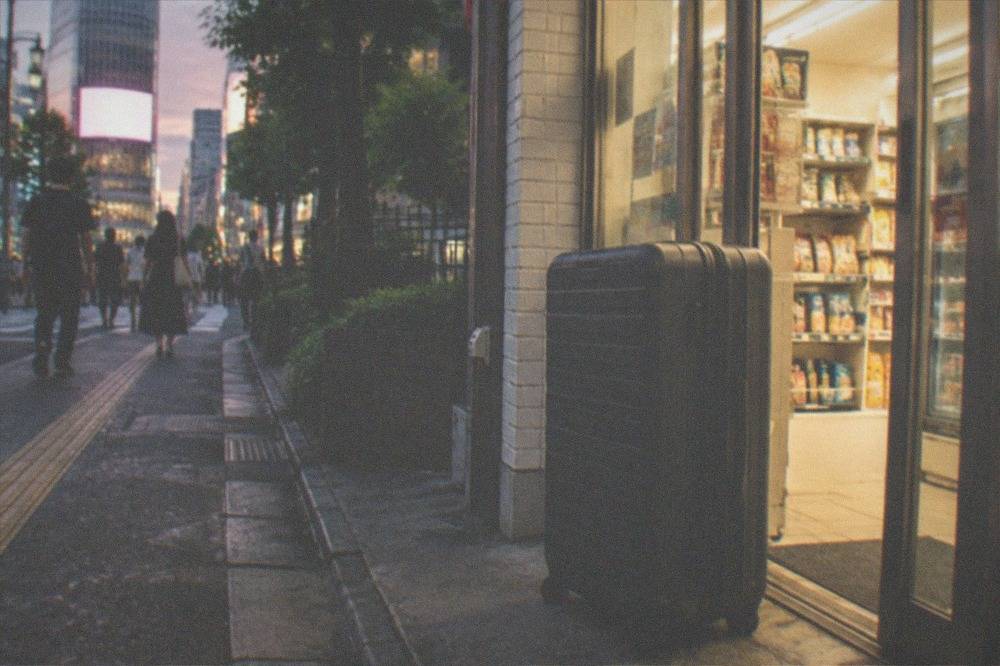
The weight caps are what surprise people more than the sizes. A packed 28-inch suitcase can sit close to 20 kg, which every carrier takes, but a family packing one case to 32 kg has already exceeded two of the three networks. Sagawa's large-size service exists precisely for that case, and its counters, including the attended airport and station desks run by Sagawa, are where it is booked. That is a channel difference, not a brand difference: the shop on the corner simply cannot weigh, label or stage a 50 kg item.
For a normal suitcase, the choice is usually between Yamato through the konbini and simply storing the bag for the day. The fare table answers half of that comparison and the storage arithmetic answers the other half. One day of storage at the real Tokyo rate is 1,205 yen all-in for one regular bag. Sending that same bag to Kyoto at the 160 band is 3,160 yen. Neither is the wrong choice; they solve different problems, and the price gap is the measure of how different.
Where Does Storage Fit If Delivery Is Not The Answer?
When the day's need is hands-free hours rather than a bag arriving elsewhere, the answer is a staffed storage point in the district being visited: Radical Storage points run 850 yen per bag per day plus a 355 yen once-per-bag checkout fee, staffed and inside real businesses, with per-district ratings and review counts published on each district page. That is the structural difference from every delivery channel described above. Storage keeps the bag within reach of the afternoon; shipping moves it out of the day entirely.
The districts a visitor is most likely to be walking through are covered in depth elsewhere on this site. Ginza, for instance, is a compact shopping district where a hands-free afternoon is the whole point, and it has 1 Radical Storage point rated 4.84 across 118 reviews, with the nearest point 1,131 metres from the station. The arithmetic is the same everywhere in the city, the rating picture is not, and the district pages carry the real numbers for each.
The airport picture deserves one honesty note, because the narita-airport option shows up in the same breath. Radical Storage has no point inside any terminal at either airport. The nearest point to Narita is about 6.0 km away in Tomisato, Chiba, and the nearest to Haneda is about 3.4 km away in Kawasaki, Kanagawa, across a prefecture boundary. Inside the terminals themselves, the right answer is the airports' own attended counters: Narita has 11, with the Promotion Foundation desk in Terminal 2 publishing 500 yen for a small bag and 700 yen for a medium per day, and Haneda's own operator publishes 800 yen for a small bag and 1,000 yen for a medium at Terminals 1 and 2, with the Terminal 3 desks open 24 hours.
Put together, the two networks solve the two halves of a Tokyo luggage day. The konbini counter, the airport counters and the forwarding services all move a bag somewhere else. The staffed points in Shibuya, Ginza, Asakusa and the station districts hold it for the hours in between. A traveller who understands that split never stands at a register with a suitcase and a confused question again. This page is part of Luggage Storage in Tokyo, where the storage half of that split is the whole subject.
Common Questions About 7-Eleven In Japan
Why is 7-Eleven different in Japan?
Japan rebuilt the brand around a dense railway-and-walking culture: the shop is a counter for fresh food restocked several times daily, ticketing, printing, bill payment, cash machines and Yamato parcel shipping. The suburban snack-and-gas model familiar in North America is not what the Tokyo store does. The institution, not just the menu, is different.
Can I store my luggage at a 7-Eleven in Japan?
No. A 7-Eleven accepts a bag for shipping through the Yamato counter, but there is no hourly or day storage, no back-room left-luggage service and no way to collect the bag later the same day. The receipt you get is a waybill, and the bag leaves the shop on the courier's next pickup. For a few hours of storage, use a staffed storage point in the district instead.
Is Lawson the same as 7-Eleven for sending luggage?
No. Seven-Eleven and FamilyMart hand parcels to Yamato Transport's TA-Q-BIN network, while Lawson takes parcels through Japan Post's Yu-Pack instead. The size caps differ too: Yamato takes up to 200 cm and 30 kg, and Yu-Pack up to 170 cm and 25 kg. Choosing the chain is choosing the carrier.
How much does it cost to send a suitcase from a convenience store?
It costs the Yamato TA-Q-BIN fare for the suitcase's size band, cash tariff, tax included: for example 2,090 yen within Tokyo at the 140 band and 2,780 yen from Tokyo to Kyoto or Osaka, with 100 yen off for dropping the parcel at the shop yourself and 60 yen off for a digital waybill. There is no konbini markup on the fare.
Can a convenience store take a very large suitcase?
Not reliably. Yamato caps all parcels at a 200 cm three-side total and 30 kg, and some convenience stores refuse items in the 180 size band and above, with the limit set store by store. Sagawa Express is the only one of the three national carriers that takes up to 260 cm and 50 kg, through its own counters rather than a konbini.
Is it cheaper to store a bag or to send it from a konbini?
For one regular bag, storage in Tokyo costs 850 yen per day plus a 355 yen once-per-bag checkout fee, which is 1,205 yen for a single day, computed on Radical Storage's own published figures. Sending that same bag to Kyoto at the 160 band costs 3,160 yen. Storage buys reachable hours; forwarding buys an empty trip to the next city.