Where To Store Luggage In Tokyo For A Few Hours: Every Real Option
A few hours with your hands free in Tokyo costs less than most visitors expect, but only if you know which of the four real routes fits your bag, your station and your clock.
Short answer
For a few hours, Tokyo offers Radical Storage staffed points at 850 yen per bag per day plus a 355 yen one-off checkout fee, coin lockers from 300 yen at Tokyo Metro stations, attended station counters from 500 yen, and airport desks from 500 yen. There is no hourly tariff: a few hours always counts as one full day.
Where Can I Store My Luggage In Tokyo For A Few Hours?
For a few hours in Tokyo the realistic choices are a Radical Storage staffed point at 850 yen per bag per day plus a 355 yen one-off checkout fee, a station coin locker from 300 yen at Tokyo Metro stations, or an attended counter at a major station or airport. There is no hourly tariff anywhere on this list: a few hours is billed as one full day.
Tokyo is unusually generous with short-term bag storage, but every option bills by the day, not by the hour. A traveller who drops a suitcase at 10:00 and collects it at 14:00 pays exactly what a traveller who stores it overnight pays. That single rule shapes every comparison in this guide, and it is why the cheapest route depends on bag size and location rather than on duration.
The four routes worth weighing are the Radical Storage network of staffed shop and hotel drop-off points, the coin lockers inside almost every rail station, the attended baggage rooms run by rail operators at a handful of giant stations, and the airport counters for anyone starting or ending a trip at Narita or Haneda. Each has a different price ladder, a different size ceiling and a different set of hours, and the honest answer for one reader is routinely the wrong answer for another. A cabin bag near a Metro locker bank costs a few hundred yen. A checked suitcase anywhere near a museum district needs a staffed hand, because most lockers simply cannot take it.
The storage points listed on this site are all real Radical Storage partner locations, and this site neither owns nor operates any of them. Radical Storage is the network whose name sits behind each booking, so a reader handing over a suitcase knows whose terms and whose guarantee apply. That matters more in Tokyo than in most cities, because the alternative, a coin locker, is a machine with a printed liability cap and nobody behind it.
How Much Does A Few Hours Of Bag Storage Actually Cost?
A staffed Radical Storage point in Tokyo costs 850 yen per bag per day for a regular bag, plus a 355 yen per-bag checkout fee charged once, so one bag for one day is 850 plus 355, which is 1,205 yen. Radical Storage advertises from 490 yen per day, but that is a small-bag rate published at only 11 of the 249 Tokyo points on file.
The arithmetic matters. Quoting the day rate alone understates a one-day booking by roughly a third, and against the advertised 490 yen figure the real one-day cost for a normal suitcase is about two and a half times higher. The 355 yen fee is charged once per bag at checkout and does not scale with the number of days, so a three-day booking pays it once, not three times.
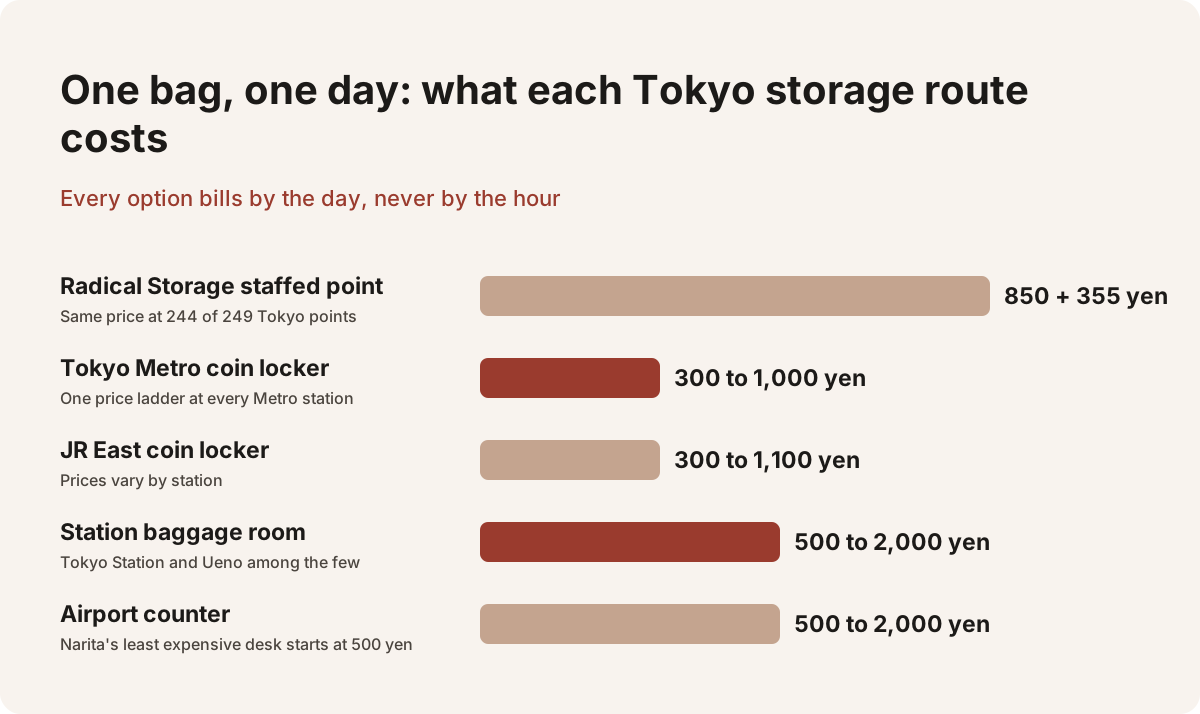
| Route | Typical cost for one bag | Notes |
|---|---|---|
| Radical Storage staffed point | 850 yen per day plus 355 yen once | Same price at 244 of 249 Tokyo points; no hourly rate |
| Tokyo Metro coin locker | 300 to 1,000 yen per day | One price ladder at every Metro station; only the size mix varies |
| JR East coin locker | 300 to 1,100 yen per day | Prices vary by station; large tier reaches 1,100 yen |
| Station baggage room | 500 to 2,000 yen per day | Tokyo Station and Ueno among the few; up to 30 days at JR East Logistics desks |
| Airport counter | 500 to 2,000 yen per day | Narita's least expensive desk starts at 500 yen |
One point of confusion deserves a plain explanation. A location card showing 750 yen is not cheaper than a card showing 850 yen. Staffed partner points display the small-bag rate, while automated lockers display the regular rate, and both sit on the same underlying 750, 850 and 1,100 yen tiers. The like-for-like figure for a normal suitcase is 850 yen, and comparing two cards on their displayed prices is a mistake. The small print also matters at the low end: 490 yen is a genuine published rate, but only at eleven Tokyo points, and only for a small bag.
Coin lockers win on price for a single day at the small and medium sizes. A Metro locker at 600 yen for the day undercuts a staffed point comfortably, provided the bag fits and a locker is free. The staffed point wins the moment the bag is oversize, the locker banks are full, or the drop-off lands outside a station's staffed hours. The Tokyo luggage storage prices guide breaks the full fee structure down line by line for longer stays.
Which Tokyo Areas Have The Most Storage Points?
Asakusa carries 13 Radical Storage points rated 4.85 across 268 reviews, Ikebukuro 10, Akihabara 9 with the nearest point 31 m from the station, and Shinjuku 8 rated 4.75 across 384 reviews. Ratings and review counts belong to Radical Storage, and the only real Tokyo network total is 2,758 reviews across 249 points, with 111 of those points holding no reviews at all.
Density decides convenience when the clock is short. The nearer the point, the less of a precious afternoon is spent walking. The busiest sightseeing districts are well covered, though not evenly, and a couple of areas a visitor would assume are saturated turn out to be thin.
| Area | Points | Radical Storage rating | Reviews | Nearest point |
|---|---|---|---|---|
| Asakusa | 13 | 4.85 | 268 | 193 m |
| Ikebukuro | 10 | 4.73 | 89 | 227 m |
| Akihabara | 9 | 4.88 | 171 | 31 m |
| Shinjuku | 8 | 4.75 | 384 | 187 m |
| Ueno | 8 | 4.87 | 285 | 171 m |
| Shibuya | 7 | 4.75 | 163 | 306 m |
| Tokyo Station | 3 | 4.89 | 213 | 558 m |
| Ginza | 2 | 4.84 | 118 | 1,131 m |
Ginza deserves honesty rather than cheerleading. The district carries a single Radical Storage point, rated 4.84 across 118 reviews, and the nearest sits 1,131 m out, which is a real walk with a suitcase on a hot afternoon. For Ginza specifically, a reader planning a few free hours should weigh the district's one staffed point against the station's own locker banks before walking anywhere. The full Ginza bag storage options page lists exactly what is there. Hours also vary point to point: 146 of the 249 Tokyo points are not open 24 hours, so a late-evening drop-off needs a point whose published hours actually cover it, and the 24-hour storage guide covers that case in full.
Akihabara is the opposite story and the strongest in the roster for pure convenience: nine staffed points, a 4.88 rating across 171 reviews, and the nearest point 31 m from the station, effectively the other side of the ticket gate. Asakusa combines density, 13 points, with a rating of 4.85 across 268 reviews, and its nearest point sits 193 m out. Shinjuku's 384 reviews are the largest review pool of any area, attached to 8 points at a 4.75 rating, with 2 of those points being lockers and 6 staffed.
What Do Tokyo Coin Lockers Cost, And How Does The Day Count?
Tokyo Metro lockers run 300, 500, 600, 900 and 1,000 yen per day, the same prices at every Metro station, while JR East lockers vary by station and run 300 to 1,100 yen across five tiers. The Metro maximum stay is 4 days including the start day, the Multi Ecube maximum is 3 days, and paying more never extends the period.
The single-ladder Metro price is a genuinely useful fact that most English coverage gets wrong. Metro Commerce publishes one price ladder across all 141 station rows on its tariff page, metocan.co.jp/locker/, and only the mix of door sizes differs from station to station. JR East is the opposite: proven live variance runs from 700 yen for an M locker at Tokyo and Shinjuku down to 600 yen for the same tier at Omiya and Hodogaya, and JR East's own media property documents an added 100 to 200 yen on M and L lockers in peak season.
| Operator | Tier prices | Duration rule | Day boundary |
|---|---|---|---|
| Tokyo Metro | 300 / 500 / 600 / 900 / 1,000 yen | 4 days including the start day | A day is added at 02:00 |
| JR East Multi Ecube | 300 to 1,100 yen by station | 3 days, paying more does not extend it | A day is added at 02:00 |
| Toei reservation service | +100 to +300 yen surcharge | Reserve from 2 hours ahead | 7 stations only |
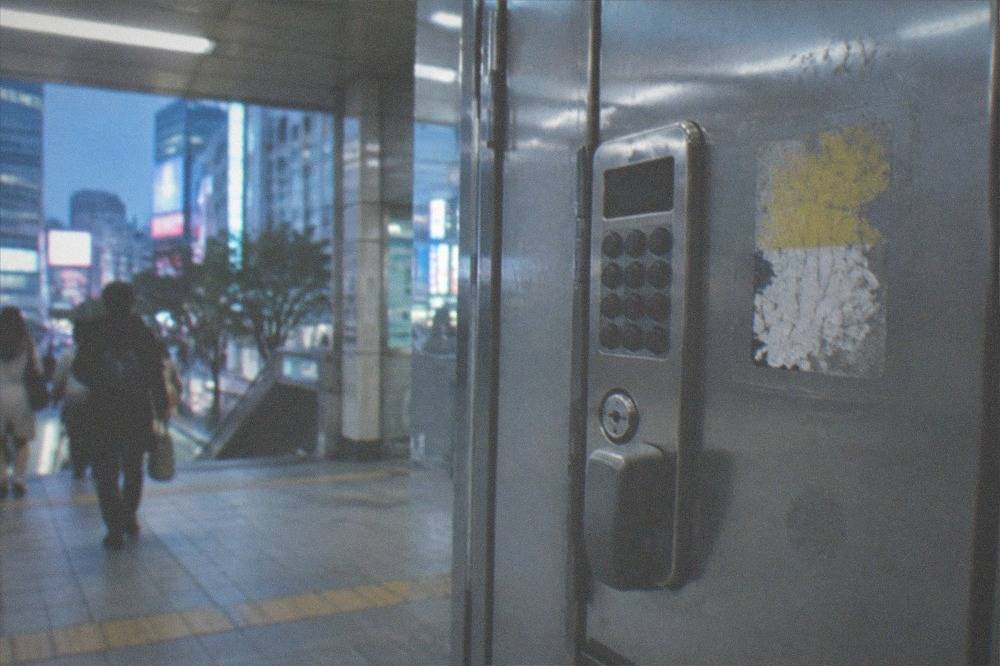
The day-counting rule is the trap for a few-hours visitor. The locker day runs from first train to last train, a new day is added at 2 a.m. rather than midnight, and the first and last days each count as a whole day however briefly the locker was used. For a same-afternoon drop this is harmless. For anything that drifts past the last train, it is the difference between one day and two.
Two mechanical rules finish the picture. Retrieving a bag ends the rental on a Multi Ecube locker: the door cannot be reopened to put it back, and a multi-day reservation is forfeited with no refund, with a 15-minute reopen button as the only grace. And the printed retrieval ticket should be kept safe, because the operator's own FAQ says it unlocks the door regardless of how the locker was paid. The coin locker payment guide covers cards, IC payment and the cash-only corners of the system, and the duration rules explained walk through the expiry process in detail.
What If Your Suitcase Will Not Fit A Locker?
A Toei large locker offers 856 x 342 x 663 mm inside, and a JR East large offers 86 x 34 x 65 cm, with depth around 34 cm the binding constraint for a hard-shell case. The JR East LW tier at 86 x 56 x 65 cm is the only common tier that takes a wide checked suitcase, and staffed points take bags no locker will hold.
Depth, not width, is what rejects a suitcase. A 26-inch spinner is typically around 30 cm deep with its wheels, so it clears the 34 cm depth and then fails the height on standard tiers. That is why travellers report "no lockers" at exactly the stations that have hundreds of doors: the lockers exist, the tier that fits does not. The rest of the planning pages sit on Luggage Storage in Tokyo.
| Locker tier | Internal size | What it takes |
|---|---|---|
| Toei standard | 325 x 342 x 663 mm | Backpack, small day bag |
| Toei large | 856 x 342 x 663 mm | Cabin suitcase upright |
| JR East M | 50 x 34 x 65 cm | Carry-on plus souvenirs |
| JR East L | 86 x 34 x 65 cm | Standard checked case on edge |
| JR East LW | 86 x 56 x 65 cm | Wide checked case lying flat |
For a genuinely large bag, the staffed routes are the answer. Radical Storage's staffed points take the case a locker rejects, at the same 850 yen per day plus the 355 yen checkout fee, with 6 of Shinjuku's 8 points staffed and 9 of Akihabara's 9. Akihabara's all-staffed roster and its nearest point 31 m from the gates make it the cleanest large-bag drop in the roster.
Venues create the same problem from the other direction. Tokyo Skytree prohibits any item with a side over 60 cm, enforced by bag inspection at entry, per the operator's own guest rules page. The paid Sagawa counter in Solamachi, open 10:00 to 21:00, charges 800 yen for a bag up to 100 cm, 1,000 yen to 160 cm and 1,300 yen above that, per Sagawa's own service page. The oversized luggage guide collects the oversize options in one place.
Can You Store A Bag For A Few Hours At The Airports?
Haneda Terminal 3 runs attended storage open 24 hours at 800, 1,000 and 2,000 yen per 24 hours, while Terminals 1 and 2 charge the same tiers per day between 08:00 and 19:30. Narita has 11 attended counters across Terminals 1 and 2 and none at all in Terminal 3, with operator prices from 500 to 2,000 yen per piece per day.
The airport picture is better than most guides admit, but it has sharp edges. No Radical Storage point sits inside any terminal at either airport: the nearest to Haneda is about 3.4 km away in Kawasaki, Kanagawa, across a prefecture boundary, and the nearest to Narita about 6.0 km away in Tomisato, Chiba. For terminal storage, the airports' own counters are the real product.
| Airport desk | Hours | Price per piece per day |
|---|---|---|
| Haneda T3, 2F and 3F | Open 24 hours | 800 / 1,000 / 2,000 yen per 24h |
| Haneda T1 and T2, B1F | 08:00 to 19:30 | 800 / 1,000 / 2,000 yen per day |
| Narita Promotion Foundation, T2 | 06:30 to 22:00 | 500 / 700 / 1,100 yen |
| Sagawa, Narita T1 and T2 | Published per counter | 500 / 700 / 1,150 yen |
| JAL ABC, Narita T1 and T2 | Counter hours | 800 / 1,000 / 2,000 yen |
Details that change decisions: the Promotion Foundation desk is the least expensive attended storage at Narita, and the airport's own English page names it without printing a price, so the 500 to 1,100 yen ladder comes from the operator's own tariff. JAL ABC counts by calendar day, not by hours, so a part-day is a full day, and payment is on collection. Yamato's one Haneda attended point, in Terminal 2, publishes no limit on the storage period, which sits unresolved against the airport's own sitewide two-week rule; both are operator statements, and readers needing more than two weeks should confirm at the desk, per Haneda's facility page.
For a few hours between a landing and a city hotel, the radical alternatives in the roster still matter: the Haneda area carries 4 Radical Storage points, all automated lockers rather than staffed desks, with no published rating and no reviews yet, and the nearest sitting 3,416 m from the terminal cluster. The honest read is that those points serve the airport's surroundings, not the terminals, and the airport's own desks serve the terminals.
Staffed Point Or Coin Locker: Which Should You Pick For A Few Hours?
Pick a coin locker when the bag fits a tier, the station has free doors and the hours work: 300 to 1,000 yen at Metro beats 1,205 yen all-in at a staffed point. Pick a staffed point when the bag is oversize, the locker banks are full, or you want a human receipt. Locker liability is capped at 30,000 yen, and the Radical Storage Guarantee is not insurance, capped at EUR 3,000 per claim.
The liability difference is contractual, not statutory, and it is worth knowing before either choice. Four rail operators, Metro Commerce, JR East Smart Logistics, Tokyu and Keio, publish an identical 30,000 yen cap on compensation for locker contents, and the locker terms ban anything worth 30,000 yen or more in the first place, so the cap and the ban are the same number. The Radical Storage Guarantee is not insurance, its own terms say so in clause 9.2.2, and payouts are capped at EUR 3,000 per claim under clause 9.4, with clause 9.2.1 permitting withdrawal at any time.
| Factor | Coin locker | Staffed Radical Storage point |
|---|---|---|
| One-day cost, regular bag | 300 to 1,100 yen | 850 yen plus 355 yen once |
| Oversize acceptance | Tier-limited, about 34 cm deep | Takes bags lockers reject |
| Hours | First train to last train | Varies by point; 146 of 249 not open 24 hours |
| Protection | 30,000 yen contractual cap | Guarantee, not insurance, EUR 3,000 per claim |
| Retrieval | Ticket or IC card | Booking and receipt |
| Payment | Cash, IC, some cards | Booked and paid online |
Practical tie-breakers follow. Metro publishes 4,830 locker doors network-wide, with 146 doors at Shibuya, 127 at Ueno and 100 at Tokyo Station, so scarcity is seasonal and size-specific rather than absolute, and the why lockers are full guide explains when the crunch bites. Staffed points shine in the evenings and at festival weekends, when the large tiers empty first. For a stay measured in weeks rather than hours, the long-term storage guide is the right page.
Where Does A Bag Get Turned Away In Tokyo?
Tokyo Skytree refuses any item with a side over 60 cm, teamLab Planets caps free lockers at 23 x 34 x 37 cm and wire-locks oversize cases in an open stroller area, and the Mori Art Museum has no cloakroom at all, only free 52nd-floor lockers. Tokyo Disneyland and DisneySea bar carts and suitcases resort-wide, and the Nippon Budokan confirms it has no coin lockers, in its own Q&A.
Venue rules are what force a bag into storage in the first place, and they are stricter than the transport system. The Tokyo National Museum refuses suitcases from the grounds, not just the galleries, per its Japanese page, though the English page implies bags can be checked inside; the Japanese rule turns a visitor away at the Main Gate. teamLab Borderless prohibits items over 50 cm, with the Japanese wording catching a bag of exactly 50 cm that the English does not.
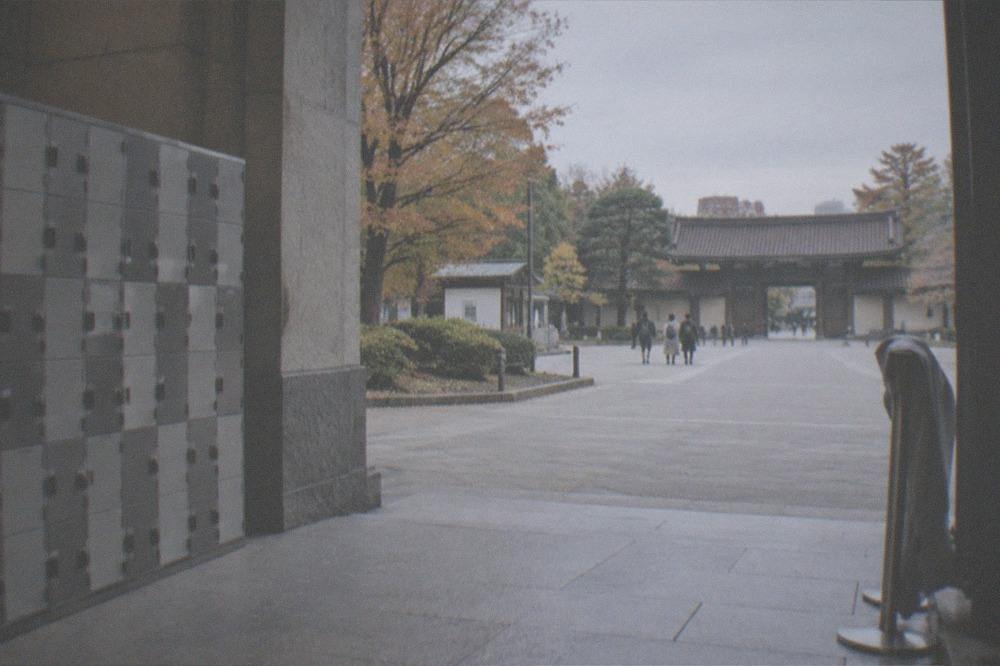
Two absences cost people real time. The Asakusa Culture Tourist Information Center ended its luggage service on 31 March 2026, dated and explained by Taito City, yet a large volume of live English travel content still tells readers it exists. And no JR East baggage room operates at Shinjuku, Shibuya or Ikebukuro, so the natural assumption that every giant station has one fails outside Tokyo Station, which has seven, and Ueno, which has one inside the Park Gate.
The pattern across every rule above is a hard size ceiling at roughly cabin-bag scale. A visitor whose day pairs a museum or observation deck with a checked suitcase should plan the drop before the visit, not at the gate, and the day trips without your bag guide covers the hands-free routing end to end.
Common Questions About Storing Luggage In Tokyo For A Few Hours
Where can I store my luggage in Tokyo for a few hours?
Use a Radical Storage staffed point at 850 yen per bag per day plus a 355 yen one-off checkout fee, a Tokyo Metro coin locker from 300 yen, an attended station counter from 500 yen, or an airport desk. Asakusa, Ikebukuro, Akihabara and Shinjuku carry the densest Radical Storage coverage, with Akihabara's nearest point 31 m from the station.
Is there hourly luggage storage in Tokyo?
No. Neither Radical Storage nor the rail operators publish an hourly tariff, and a few hours is billed as one full day. Radical Storage charges 850 yen per bag per day plus a 355 yen checkout fee once, and Metro lockers bill one day regardless of how briefly the locker is used, with a day added at 02:00.
How much does it cost to store a bag in Tokyo for a few hours?
One bag for one day at a staffed Radical Storage point is 850 plus 355, which is 1,205 yen. A Metro coin locker costs 300 to 1,000 yen for the day, a JR East locker 300 to 1,100 yen, and the least expensive attended Narita counter starts at 500 yen. The advertised 490 yen rate applies to small bags at only 11 Tokyo points.
Where can I leave a large suitcase for a few hours in Tokyo?
Take it to a staffed Radical Storage point, which accepts cases lockers reject, or to an attended counter such as the Sagawa desk at Solamachi, 800 yen for a bag up to 100 cm and 1,300 yen above 161 cm. For lockers, only the JR East LW tier at 86 x 56 x 65 cm takes a wide checked case, and staffed desks at Tokyo and Ueno Stations take bags up to 30 days.
Can I store luggage at Haneda or Narita for a few hours?
Yes. Haneda Terminal 3 runs attended storage open 24 hours at 800, 1,000 and 2,000 yen per 24 hours, and Terminals 1 and 2 offer the same tiers per day from 08:00 to 19:30. Narita has 11 attended counters in Terminals 1 and 2, from 500 yen at the Promotion Foundation desk, and none in Terminal 3. No Radical Storage point sits inside any terminal at either airport.
Are Tokyo coin lockers safe for a few hours?
They are widely used and mechanically reliable, but liability is capped at 30,000 yen contractually at Metro Commerce, JR East Smart Logistics, Tokyu and Keio, and the terms ban storing anything worth 30,000 yen or more. Keep the retrieval ticket: the operator's FAQ says it unlocks the door regardless of payment method, and losing it is expressly the user's loss.